I’m thrilled to share some exciting news — Achiever Magazine has featured me among “The 10 Most Visionary Business Leaders Making Waves in Industry, 2026.”
This recognition is much more than a personal milestone. It reflects the incredible journey of Syntezia Sàrl and the communities of values AgileNetup and Hack Your Style that believes in blending innovation, human creativity, and sustainability to build a better business future.
Being acknowledged alongside such forward-thinking leaders is both humbling and energizing.
It’s a reminder of why purpose-driven innovation matters — not just for growth, but for shaping meaningful progress that benefits people and the planet.
A heartfelt thank you to the Achiever Magazine team for showcasing these inspiring stories and for giving a voice to entrepreneurs and leaders who are making a difference in their fields.
🏙️ Crafting a Greener Urban Economy: A Blueprint for Sustainable Prosperity
The future of global prosperity is intrinsically linked to the sustainability of our cities.
As urban centers continue to grow, the need to transition from a linear, « take-make-waste » model to a green and circular urban economy has never been more urgent.
A greener urban economy is not merely an environmental policy; it is a comprehensive strategy for economic growth that enhances well-being, promotes equity, and protects the planet’s ecological limits.
Foundational Principles of a Green Urban Economy
A successful transition is built on a few core, interconnected principles:
The Planetary Boundaries Principle: The economy must operate within the ecological limits of the planet. This means safeguarding, restoring, and investing in natural capital—like air, water, and biodiversity—and employing the precautionary principle to avoid irreversible damage.
The Circularity Principle: Moving away from a linear system, the green economy is inherently circular. This involves designing out waste and pollution, keeping products and materials in use at their highest value through reuse, refurbishment, and recycling, and regenerating natural systems.
The Well-being Principle: The primary purpose of a green economy is to create genuine, shared prosperity that supports the well-being of all residents. This includes not just financial wealth but also social, physical, and natural capital, ensuring access to essential services and opportunities for green and decent livelihoods.
The Justice Principle: Transition must be inclusive and equitable, sharing both benefits and costs fairly across generations and communities. It promotes a just transition, ensuring vulnerable groups are not left behind.
Key Strategies for a Green Urban Transformation
To operationalize these principles, cities must adopt multi-faceted, interconnected strategies across several key sectors:
1. Sustainable Infrastructure and Energy 💡
The built environment is a major energy consumer. Greening this sector is paramount.
Energy-Efficient Buildings: Implement stringent green building certification standards (like LEED or BREEAM) for all new construction and mandate retrofitting programs for existing buildings.8 This includes using high-quality insulation, efficient HVAC systems, and passive solar design.
Renewable Energy Integration: Decouple energy use from fossil fuels.9 Promote the integration of renewable energy technologies like solar panels and wind turbines into building designs and city infrastructure.10 For example, the city of Zurich gets about 90% of its power from renewable sources.11
Green Infrastructure (GI): Integrate nature-based solutions into city planning.12Green roofs (like those mandated in Basel, Switzerland), urban forests, and permeable pavements manage stormwater runoff, reduce the Urban Heat Island Effect, and improve air quality.13
2. Smart and Sustainable Mobility 🚲
Rethinking how people and goods move reduces emissions and enhances public health.14
Prioritize Public Transit and Active Transport: Invest heavily in efficient, electric public transit systems.15 Create extensive networks of dedicated cycling lanes and pedestrian-friendly streets, fostering a culture of active commuting.16Copenhagen, Denmark, is a world leader, with over half its residents commuting by bicycle.17
Embrace Smart Traffic Solutions: Utilize modern technologies for real-time tracking and smart traffic management to optimize flow and reduce congestion.18
Incentivize Electric Vehicles (EVs): Promote the adoption of electric vehicles and ensure a robust, city-wide network of charging stations.19Oslo, Norway has seen over 80% of its new car sales be electric, driven by strong incentives.20
3. Waste Management and Circularity ♻️
A green economy views waste as a resource.
Comprehensive Recycling and Composting: Implement comprehensive and easily accessible programs for recycling and composting.21
Adopt Circular Economy Policies: Implement policies that reduce single-use plastics and encourage product stewardship, where manufacturers are responsible for the entire lifecycle of their products.22 This aligns with the three circular economy principles: eliminate, circulate, and regenerate.
Innovative Waste-to-Resource Programs: Initiatives like Curitiba, Brazil’s « Green Exchange Program, » where residents trade recyclables for fresh produce, create both environmental and social benefits.23
4. Urban Agriculture and Local Food Systems 🍎
Localizing food production increases resilience and minimizes food miles.
Urban Farming and Gardens: Transform underutilized lots into productive community gardens, rooftop farms, and vertical farms.24 This not only provides fresh, healthy food but also creates green jobs and enhances community cohesion, as seen in projects like Growing Home, Inc. in Chicago.
Support Local and Sustainable Businesses: Provide incentives and support systems for local enterprises that adhere to sustainable production and consumption practices.
Benefits: Beyond Environmental Protection
The transition to a greener urban economy delivers powerful benefits that make cities more prosperous and resilient:
Benefit Category
Impact
Economic
Increased property values near green spaces; job creation in green sectors (e.g., green infrastructure, renewable energy); reduced energy and infrastructure costs for the city (e.g., less spent on stormwater management).
Social
Improved public health (reduced air pollution, increased physical activity); enhanced social cohesion and stronger community ties; a more equitable distribution of environmental benefits.
Environmental
Mitigation of the urban heat island effect; cleaner air and water; increased biodiversity within the city; and significant carbon sequestration.
Creating a greener urban economy is a complex, long-term project that requires collaboration among city governments, businesses, and citizens. By prioritizing smart, sustainable urban planning and embracing the principles of circularity and justice, cities can successfully transition to a model that delivers prosperity for all, within the limits of our planet.
🇪🇸 The Barcelona Superblocks Project: Reclaiming the City for People
The Barcelona Superblocks (or Superilles in Catalan) project is a compelling case study in creating a greener, more livable urban economy through radical urban redesign. It serves as a direct, actionable model for the principles of sustainability, circularity, and well-being discussed previously.
What is a Superblock?
A Superblock is an urban planning unit that typically groups nine standard city blocks (a 3×3 grid) into a single, larger neighborhood unit. The core concept is to redirect through-traffic to the perimeter roads, effectively reclaiming the inner streets for residents and community use.
Structure: It transforms the traditional road hierarchy. The surrounding streets handle major vehicle traffic, while the interior streets become « green streets » or citizen spaces.
Mobility: Vehicle access inside the Superblock is severely restricted to residents, delivery vehicles, and emergency services, with a maximum speed limit of 10 km/h (about walking speed).
Space Reallocation: This shift in mobility frees up to 70% of public space previously dedicated to cars (roads and parking).
🌿 Impact on Sustainability and Well-being
The Superblocks project is a holistic environmental and social intervention that delivers measurable benefits:
Area of Impact
Key Benefits & Statistics
Economic/Social Value
Air Quality
Significant reduction in air pollutants. The Sant Antoni Superblock saw a 33% reduction in NO2 levels (Nitrogen Dioxide, a key traffic pollutant).
Reduced public health costs associated with respiratory illnesses and premature deaths.
Noise Pollution
Interior streets see a sharp drop in noise levels, sometimes by 4 dB or more.
Improved quality of life, better sleep, and reduced mental health strain related to constant noise exposure.
Green Space
Reclaimed street areas are transformed into public squares, playgrounds, and urban green spaces, helping to combat the city’s low per-capita green space ratio.
Increased biodiversity, reduction of the Urban Heat Island Effect, and improved aesthetic appeal of the neighborhood, which can boost local property values.
Physical Activity
Safe, pleasant streets encourage walking and cycling. The policy promotes active transportation over sedentary commuting.
Improved public health outcomes from increased physical activity.
Social Cohesion
New public spaces become hubs for social interaction, community events, leisure, and play for children.
Stronger local communities and a more vibrant public life, fostering a sense of belonging and equity.
📈 Economic and Urban Planning Implications
The Superblocks model is a prime example of « tactical urbanism »—implementing low-cost, adaptable, and often temporary changes to test and refine a long-term urban vision.
Low Cost, High Impact: The initial interventions (changing signage, traffic direction, adding street furniture) are relatively low-cost compared to major infrastructure projects (like building subways or new highways). This makes the model financially viable and scalable.
Support for Local Business: By creating a more pedestrian-friendly environment, the Superblocks have been observed to increase foot traffic, which in turn supports local cafes, restaurants, and small retail shops. The shift prioritizes the local economy over drive-through commerce.
Redefining Mobility: The project is integrated with a broader city-wide strategy, including the expansion of the orthogonal bus network and the bike lane network, ensuring that while private vehicle use is disincentivized, efficient public transport alternatives are readily available.
The Barcelona Superblocks demonstrate that radical, people-centric urban redesign is a powerful, economically sound, and sustainable path for developing a greener urban economy. It successfully reclaims valuable public space and shifts the priority of the city from the movement of cars to the well-being and interaction of its citizens.
🇩🇰 Copenhagen’s Cycling Infrastructure vs. Barcelona’s Superblocks: Two Paths to a Greener Urban Economy
The green urban initiatives in Copenhagen and Barcelona offer two distinct, yet highly effective, blueprints for prioritizing people and the planet over private cars. While Barcelona’s Superblocks represent a radical, localized territorial intervention, Copenhagen’s cycling infrastructure is a comprehensive, network-based overhaul of an entire city’s mobility system.
Comparison of the Models
Feature
Copenhagen: Cycling Infrastructure
Barcelona: Superblocks (Superilles)
Primary Focus
Mobility (Mode Shift): Making cycling the fastest, safest, and most convenient way to commute.
Urban Space (Place-making): Reclaiming public space from cars to create local social and green hubs.
Neighborhood-level Clusters: Redesigning traffic flow within 3×3 block grids.
Goal
Achieve a 50% modal share for cycling for commuter trips (goal by 2025/2030) and $\text{CO}_2$ neutrality (goal by 2025).
Drastically reduce vehicular traffic, noise, and air pollution, and ensure every resident has a green space within 200m.
Mechanism
Infrastructure Investment: Heavy and sustained investment in high-quality, segregated, and connected cycle tracks.
Traffic Management: Redesigning the traffic grid (Cerdà’s grid) to reroute through-traffic to the perimeter.
1. Copenhagen: The Network-First Approach 🚲
Copenhagen’s strategy is built on the premise that people will cycle if it is demonstrably safer, faster, and easier than driving or using public transport.
Dedicated and Segregated Infrastructure: The key is the extensive network of raised, curbed cycle tracks that separate cyclists from both pedestrian sidewalks and vehicle traffic. This provides a high level of physical and perceived safety, making cycling accessible for all ages and abilities.
The Socio-Economic Case: Copenhagen has meticulously tracked the economic benefits of its cycling culture. Studies consistently show that the socio-economic benefit of a kilometer cycled outweighs the cost of a kilometer driven by car (due primarily to health savings from physical activity). Society gains DKK 4.79 (approx. €0.64) for every kilometer cycled.
Green Waves and Superhighways: The city uses Intelligent Transport Systems (ITS) to create « green waves » on major roads, where traffic lights are timed to allow cyclists traveling at an average speed of 20 km/h to pass through multiple intersections without stopping. Cycle Superhighways extend this efficient network into the wider metropolitan area.
2. Barcelona: The Place-making Approach 🌳
The Superblocks initiative focuses on redesigning the urban fabric to reclaim space from the « arrogance of the car » and return it to public life.
Reclaiming Public Space: By eliminating through-traffic within the nine-block unit, Barcelona transforms intersections into public squares and the interior streets into green, pedestrian-priority corridors. This directly addresses the critical lack of green space in the densely populated city.
Decentralized Benefits: The benefits are highly localized and tangible: residents in Superblock areas experience significant reductions in noise pollution and $\text{NO}_2$ levels, leading to quantifiable improvements in health and quality of life. The Institute for Global Health estimated that wide-scale Superblock implementation could prevent hundreds of premature deaths annually.
Forcing Modal Shift: Unlike Copenhagen, which entices people to cycle, Barcelona’s model forces a reduction in car use by making it highly inconvenient (rerouted traffic, 10 km/h speed limits inside the blocks). This creates a new mobility environment where walking, cycling, and public transport are the default, best options for local trips.
Synergies for a Greener Urban Future
Both models offer critical lessons for a greener urban economy:
Investment Justification: Copenhagen demonstrates that investment in sustainable mobility has a high, measurable socio-economic return, primarily through health savings and reduced congestion costs.
Multifunctional Space: Barcelona shows the power of repurposing urban space. By viewing a street as a flexible public asset rather than a fixed traffic conduit, cities can maximize ecological, social, and economic value simultaneously.
Holistic Design: The most resilient green cities will likely adopt elements of both: an efficient, city-wide, safe Copenhagen-style network for commuting and through-travel, combined with Barcelona-style decentralized placemaking to create vibrant, healthy neighborhood centers.
💰 The Economic Case for Cycling: Copenhagen’s Socio-Economic Calculation
You’re asking for the core economic justification behind Copenhagen’s aggressive promotion of cycling. The city uses a detailed Cost-Benefit Analysis (CBA) framework that calculates the socio-economic return of cycling compared to other modes of transport, primarily driving.
The key finding is not just that cycling is cheaper to support than driving, but that it generates a significant net benefit for society, while driving creates a net cost.
The Calculation: Net Societal Gain per Kilometre
Copenhagen’s analysis, as conducted by local and national authorities, quantifies the total impact of travel by factoring in various costs and benefits that are usually externalized (i.e., not paid for directly by the traveler).
The most commonly cited result shows that for every kilometer traveled:
Cycling: Society realizes a net gain of DKK 4.79 (Danish Kroner, approximately €0.64 or $0.69).
Driving a Car: Society incurs a net loss of DKK 0.69 (approximately €0.09 or $0.10).
This dramatic difference is due to the costs and benefits that are included in the calculation:
Negative Impact (due to sedentary lifestyle contribution)
Air Quality
Reduced emissions and associated public health costs.
Large Benefit (zero emissions)
Significant Cost
Climate Change
CO2 emissions and global warming costs.
Benefit (zero emissions)
Cost
Congestion
Time lost by others due to delays.
Benefit (takes up less space, less likely to cause congestion)
Significant Cost
Infrastructure
Maintenance and construction of roads/paths.
Cost (less than car infrastructure)
Cost (highest)
Accidents
Economic costs of injuries and fatalities (treatment, lost work).
Cost
Cost (higher risk of severe accidents)
The Dominant Factor: Public Health 🏥
The single largest differentiator in this socio-economic analysis is the Public Health Benefit derived from physical activity.
Reduced Healthcare Costs: Regular physical activity (like cycling) significantly reduces the incidence of chronic diseases, including type 2 diabetes, cardiovascular disease, and certain cancers. This translates directly into lower national healthcare expenditures.
Increased Productivity: Healthier citizens take fewer sick days and are more productive during their working hours. This provides a direct boost to the national economy.
Longevity and Quality of Life: The extended, healthier life years realized by cyclists are assigned a high economic value in the calculation.
Crucially: The health benefit of cycling far outweighs the costs associated with things like cycle track maintenance or the slight increase in accident risk compared to being sedentary.
Why the Loss for Cars? 📉
The negative value assigned to driving is primarily driven by three externalized costs:
Congestion Costs: The time lost by all travelers due to a single car on the road is a huge burden on the economy.
Air Pollution Costs: The local emissions lead to direct health damages and healthcare expenses for the public.
Climate Costs: The contribution to global CO2 emissions is factored in as an economic cost.
Copenhagen’s financial case for cycling is robust because it recognizes that transport policy is fundamentally a public health policy and an environmental policy. By making the active, sustainable choice the most economically beneficial for society, the city has created a virtuous cycle of investment, health, and green prosperity.
📈 The Economic Justification for Copenhagen’s Cycle Superhighways
The Cycle Superhighways (CSH) project in the Greater Copenhagen Region is a powerful example of using the detailed socio-economic benefits of cycling to justify a massive public infrastructure investment. This isn’t just about building bike lanes; it’s about creating a regional network that directly competes with car and public transport for long-distance commuters.
Key Financial Metrics and Returns
The economic case for the CSH network, which involves over 850 km of planned high-quality routes across 30 municipalities, is overwhelmingly positive:
Socio-Economic Surplus: The entire planned network is estimated to yield a socio-economic surplus of approximately $765 million (€765 million).
Internal Rate of Return (IRR): The project is estimated to have an Internal Rate of Return (IRR) of 11% to 23%. This figure represents the project’s profitability compared to the cost of capital. Crucially, this IRR often exceeds that of major road, railway, or subway projects in Denmark, demonstrating that it is one of the country’s most profitable public infrastructure investments.
Health Savings: The estimated annual savings in societal health costs alone reach approximately $40 million (€300 million DKK), due to the increased physical activity of thousands of commuters.
🏥 How the Economic Benefits Are Generated
The high return on investment is achieved by focusing on the same non-local, external benefits highlighted in the general cost-benefit analysis:
1. Targeting Long-Distance Commuters
The primary goal of the CSH is to attract commuters who travel 5 to 30 kilometers one-way—the distance where cars traditionally dominate. The CSH achieves this by prioritizing Speed, Comfort, and Safety for the cyclist:
Speed: Routes are direct with minimal stops. They use « green waves »—traffic lights timed to remain green for cyclists traveling at a steady speed (e.g., 20 km/h)—to eliminate frustrating waiting times.
Comfort: The routes feature smooth surfaces, consistent quality across municipal borders, and dedicated rest/service points.
Safety: The paths are often curb-separated and wide, ensuring a high level of both physical and perceived safety, making them attractive to new and less experienced cyclists.
2. Converting Car Commuters (Modal Shift)
The economic model is validated by the successful conversion of drivers. Evaluations of the completed CSH routes show an average increase in cyclists of around 23%, with approximately 14% of the new cyclists previously traveling by car.
By switching from car to bike for a long commute, society gains two economic advantages simultaneously:
The net loss incurred by the car trip (congestion, pollution, health costs) is eliminated.
The net gain generated by the cycle trip (health benefits, zero emissions) is realized.
The combined impact creates a significant socio-economic surplus.
3. Reducing System-Wide Costs
The CSH acts as an efficient means of congestion reduction in the heavily trafficked Capital Region. Congestion costs the region billions annually. By shifting tens of thousands of commuters off the roads, the CSH improves travel times for all remaining road users (freight, public transit, and cars), further boosting overall regional productivity.
The Governance Innovation
A key factor often overlooked is the institutional success of the CSH. The network spans 30 municipalities that all share different budgets and priorities. The project is governed by a cross-municipal collaboration that ensures a consistent, high-quality standard across all jurisdictional borders. This coordinated approach prevents « bike-lane gaps » that often undermine the effectiveness of single-city projects.
By providing a clear, evidence-based economic case focusing on public health and time savings, Copenhagen secured the necessary political buy-in and funding to create a regional network that serves as a global standard for greener urban mobility.
🤖 The Digital Engine: Smart City Technology in a Green Urban Economy
The transition to a greener urban economy is powered by Smart City technology—the integration of the Internet of Things (IoT), Artificial Intelligence (AI), and Big Data Analytics into urban infrastructure. This technology enables cities to move beyond fixed, reactive management systems to dynamic, data-driven optimization, drastically reducing resource use and waste, and creating new opportunities for green economic growth.
Core Technological Pillars and Green Applications
Smart city components provide the tools to monitor and manage resources with precision, leading to higher efficiency and a lower ecological footprint across every major urban sector.
1. Smart Energy and the Grid 💡
The goal is to move from centralized, polluting power generation to decentralized, clean energy management.
Smart Grids: These two-way communication networks monitor energy demand in real-time. They can integrate variable renewable energy sources (solar, wind) by managing energy flow and allowing buildings to feed excess power back into the system.
Smart Buildings (BMS):IoT sensors in commercial and residential buildings monitor occupancy, temperature, and light levels. A Building Management System (BMS) uses this data and AI algorithms to adjust heating, ventilation, and lighting automatically, leading to energy savings often exceeding 30%. The Edge in Amsterdam is a prime example, often cited as one of the world’s greenest and smartest buildings.
Smart Lighting: Streetlights with IoT sensors dim or turn off when roads are empty, significantly reducing electricity consumption (up to 70% in some cases) while maintaining public safety.
2. Sustainable Resource Management 💧🗑️
Technology minimizes waste and optimizes the use of precious resources like water.
Smart Water Systems: Sensors are embedded throughout the water supply network to detect pressure drops and flow anomalies in real-time. This enables cities (like Barcelona) to instantly identify and repair leaks, preventing massive water loss and reducing costs.
Smart Waste Management:IoT-enabled sensors in public trash bins monitor fill levels. This data is fed into an optimization platform that calculates the most efficient collection routes for sanitation trucks. This reduces fuel consumption, traffic congestion, and CO2 emissions by eliminating unnecessary collection trips (Source: Barcelona achieved a 30% reduction in collection costs).
Environmental Monitoring: A network of air quality sensors across the city provides real-time data on NO2, and ozone. This data informs policy decisions, such as rerouting traffic or guiding the placement of urban green spaces to maximize air purification benefits.
3. Intelligent Transportation Systems (ITS) 🚦
ITS uses data to manage traffic dynamically, prioritizing collective transport and reducing gridlock.
Adaptive Traffic Signals: AI-powered traffic lights adjust signal timings based on real-time vehicle flow and pedestrian density collected from sensors and cameras. This maximizes throughput, minimizes idling time, and reduces tailpipe emissions.
Smart Parking: Sensors indicate the real-time availability of parking spots. Drivers use an app to navigate directly to an open space, reducing the time spent circling city blocks—a major contributor to congestion and localized pollution.
Economic and Governance Benefits
The digital layer of a smart city provides more than just environmental savings; it forms the basis of a modern, efficient, and innovative economy:
Data-Driven Governance: Real-time data on resource use, pollution, and mobility allows city planners to make evidence-based decisions and measure the success of their green policies accurately. This shifts planning from reactive to predictive, for example, using Digital Twins—virtual replicas of the city—to simulate the impact of new infrastructure before construction.
New Green Industries: The deployment of smart city infrastructure creates demand for technology companies specializing in IoT hardware, data analytics, AI software, and systems integration, stimulating high-tech job creation within the green economy.
Operational Cost Savings: By eliminating waste (in energy, water, and fuel) and improving maintenance schedules (through predictive analytics), smart technologies yield significant, recurrent cost savings for city budgets.
The smart city is thus not just a greener city, but a more resilient, cost-effective, and innovation-driven hub that can adapt dynamically to challenges like population growth and climate change.
🛡️ Governance Challenges in Smart Green City Implementation
Implementing Smart City technologies to achieve a greener urban economy presents several significant governance challenges, particularly concerning data management, equity, and public trust. Cities must navigate these issues carefully to ensure the technology serves the common good rather than creating new forms of exclusion or vulnerability.
1. Data Privacy and Security Concerns 🔒
Smart cities rely on the collection and analysis of vast amounts of data—from energy consumption and travel patterns to public surveillance. This presents a major challenge to individual privacy.
Mass Surveillance: The extensive use of CCTV, facial recognition, and mobility tracking can lead to concerns about mass surveillance and the potential for misuse by authorities.
Data Aggregation and Anonymization: Cities must establish strict protocols to ensure data is effectively anonymized and aggregated so that useful trends can be identified without linking information back to individuals. The challenge lies in ensuring that anonymization techniques are robust against sophisticated re-identification attacks.
Cybersecurity: Smart infrastructure is interconnected, making it a lucrative target for cyberattacks. A security breach could not only compromise citizen data but also disrupt critical services like the power grid, water supply, or traffic control systems, leading to significant economic and safety consequences.
2. Digital and Socio-Economic Equity ⚖️
The benefits of smart, green technology must be distributed fairly, avoiding the creation of a two-tiered city where only certain neighborhoods or populations benefit.
The Digital Divide: If access to the new smart services (e.g., smart mobility apps, smart home incentives) requires high-speed internet or specific devices, this can exacerbate the existing digital divide, penalizing low-income or elderly residents.
Uneven Distribution of Infrastructure: Cities may prioritize smart deployments in commercial districts or affluent neighborhoods, leading to « smart ghettos » where marginalized areas continue to suffer from old, inefficient, and polluting infrastructure.
Job Displacement: Automation inherent in some smart technologies (e.g., automated waste collection) can lead to job displacement in traditional sectors, necessitating robust just transition programs for retraining and upskilling workers for the new green tech economy.
3. Ethical Oversight and Public Trust 🤝
Without public acceptance, smart initiatives—no matter how effective—are unlikely to succeed long-term.
Algorithmic Bias: The AI and machine learning algorithms used to manage city systems are only as fair as the data they are trained on. Biased data can lead to unfair or discriminatory outcomes in resource allocation, policing, or service provision.
Transparency and Explainability (XAI): City governments must be transparent about what data is being collected, how it is used, and how decisions are made by AI systems. Citizens must be able to understand and challenge decisions that affect them.
Democratic Accountability: Smart city projects are often led by private technology firms. The governance model must ensure that elected officials—not private companies—maintain control over the city’s data, strategic vision, and infrastructure. Cities must implement strong regulatory frameworks and public consultation processes to build and maintain trust.
To overcome these challenges, cities like Amsterdam and London have established Data Trusts and Ethical Charters to guide technology use, demonstrating a commitment to human-centric and legally compliant smart city governance.
Yes, cities are increasingly relying on innovative green financing mechanisms to fund large-scale, costly smart and green infrastructure projects, moving beyond traditional municipal budget allocations and federal grants. These mechanisms often blend public and private capital while linking financial returns to measurable environmental outcomes.
💵 Key Innovative Green Financing Mechanisms for Cities
The shift toward a greener urban economy requires mobilizing vast sums, which has led to the development of several sophisticated financial instruments and models:
1. Green Bonds and Sustainability Bonds
Green Bonds are a key debt instrument used by municipalities and public utilities to raise capital directly from investors specifically for environmentally beneficial projects.
Mechanism: The city issues a bond (a loan) to investors. The critical difference is that the proceeds must be earmarked exclusively for eligible green projects, such as:
Renewable energy (e.g., solar farms, district heating).
Energy efficiency (e.g., deep building retrofits).
Clean transportation (e.g., electric buses, bicycle superhighways).
Sustainable water management (e.g., wetland restoration).
Investor Appeal: Green Bonds attract a growing class of ESG (Environmental, Social, Governance) investors who prioritize sustainable returns, often allowing cities to achieve lower interest rates compared to general obligation bonds due to high demand.
Sustainability Bonds: A variation that funds projects with both green and social benefits, such as a low-carbon public transport project that specifically serves underserved neighborhoods. Paris has used sustainability bonds to finance projects that improve essential services and clean transport in deprived areas.
2. Energy Performance Contracting (EPC)
This mechanism transfers the financial risk of energy efficiency upgrades from the city to a private company.
Mechanism: An Energy Service Company (ESCO) finances, designs, installs, and manages energy-saving infrastructure (e.g., updating HVAC, replacing lighting with LEDs) in municipal buildings.
Repayment: The ESCO’s investment and profit are repaid over a long-term contract (typically 8–15 years) using the guaranteed energy savings realized by the upgrades.
Benefit: The city receives new, efficient infrastructure and lower energy bills without requiring upfront capital investment, making it ideal for budget-constrained local governments.
3. Property Assessed Clean Energy (PACE) / Property-Linked Finance (PLF)
PACE is an effective public-private partnership model primarily used to finance green upgrades for private buildings.
Mechanism: A city or municipal development fund provides upfront financing (or facilitates private financing) to commercial and residential property owners for clean energy, water efficiency, and resiliency projects (like solar panels or high-efficiency boilers).
Repayment: The property owner repays the financing through a special assessment added to their property tax bill over a long term (up to 20–30 years).
Security: Crucially, the debt is attached to the property, not the owner. If the property is sold, the new owner assumes the repayment obligation and the continued benefit of the efficiency improvements. This mitigates the risk for lenders and encourages deep retrofits.
These instruments tie investor returns directly to the environmental outcomes of a project, a form of pay-for-performance financing.
Mechanism: Investors provide upfront capital for green infrastructure, often for projects with inherent performance uncertainty (e.g., using green infrastructure like bioswales to manage stormwater).
Performance Tiers: If the project exceeds its pre-defined environmental goals (e.g., water quality improvement or reduced runoff), investors receive a higher return. If the project underperforms, the city or utility pays a lower rate.
Benefit: This model aligns investor interests with public goals, encourages innovation, and transfers performance risk away from the taxpayer. Washington D.C. used an EIB to fund green infrastructure for stormwater management.
5. Municipal Green Banks and Revolving Funds
A municipal Green Bank is a public or quasi-public entity established to use limited public funds to attract and leverage private capital into local clean energy markets.
Mechanism: Green Banks offer innovative financing products like loan guarantees, credit enhancements, and subordinated debt that reduce the risk for private lenders, making green projects more « bankable. »
Revolving Funds: In an Internal Revolving Fund (like the one used in Stuttgart, Germany), cost savings from energy efficiency projects are captured in a dedicated account and reinvested into future municipal green projects, creating a self-sustaining funding cycle.
These diverse financial tools are essential for cities to address the substantial investment gap needed to achieve climate goals and secure a prosperous, resilient, and green urban future.
Public-Private Partnerships (PPPs) are a crucial model for structuring the risk and financing of large-scale green infrastructure projects, particularly in the smart city context. They are essential when the complexity, capital requirement, and long-term operating expertise needed exceed the capacity of the municipal government alone.
🤝 How Public-Private Partnerships Finance Green Infrastructure
A PPP is a long-term contract between a public entity (the city) and a private party (a consortium of private companies) for the provision of a public asset or service, where the private party assumes substantial financial, technical, and operational risk.
1. Risk Allocation: The Core of the PPP Model
The primary function of a successful PPP is to allocate risks to the party best equipped to manage them. For green projects, this looks like the following:
Risk Category
Typically Assumed By
Rationale
Example Green Project Application
Construction/Technical
Private Partner
They have the expertise, technology, and project management skills to ensure on-time and on-budget delivery.
Building a new Waste-to-Energy facility or a city-wide Smart Grid.
Demand/Revenue
Public Partner (often) or Shared
Revenues often depend on policy decisions, regulated user fees, or public usage projections.
Operating a Clean Water Treatment Plant where tariffs are set by the city.
Financing
Private Partner
They secure the necessary capital from banks, equity, or bonds, allowing the city to keep the debt off its balance sheet.
Upfront investment for a Large-Scale District Heating System.
Regulatory/Political
Public Partner
Only the government can control regulatory changes, permitting, and land use.
Securing permits for offshore wind farm components that power the city.
2. Financing Structures for Green PPPs
PPPs leverage private finance through two main project delivery models:
a. Build-Own-Operate-Transfer (BOOT)
This is a common model for large infrastructure where the public sector hands off the entire lifecycle:
Build/Finance: Private consortium designs, builds, and finances the asset (e.g., a new electric bus fleet and charging depots).
Own/Operate: The private firm operates and maintains the asset for a concession period (e.g., 20–30 years), collecting fees or availability payments to recoup their investment and profit.
Transfer: The asset is transferred to the city at the end of the contract term, typically for a nominal fee.
b. Availability Payment Model
This model is favored when the private entity should not bear the risk of public usage (e.g., roads or public buildings).
Mechanism: The private partner builds and maintains the green asset (e.g., energy-efficient municipal buildings). The city makes periodic « availability payments » to the partner only if the asset meets defined performance standards (e.g., operational 99% of the time, meeting required energy efficiency targets).
Benefit: The city’s payment is directly linked to the performance and sustainability of the asset, incentivizing the private partner to build a high-quality, long-lasting, and efficient structure.
3. Advantages for Green City Projects
PPPs accelerate the deployment of green projects due to several key advantages:
Speed and Efficiency: Private sector expertise often results in faster project completion, reducing the time spent generating negative environmental impacts and accelerating the realization of public benefits.
Innovation: The private sector is incentivized to bring cutting-edge, low-carbon technologies (like the latest in smart water management or renewable energy integration) to the project to maximize efficiency and profit margins.
Reduced Burden on Public Budget: PPPs allow cities to procure essential green assets without immediately allocating a large amount of public debt, smoothing cash flow and dedicating tax revenues to core social services.
PPPs, when structured with transparent contracts and clear performance metrics tied to environmental outcomes, are a powerful tool for scaling up the ambitious infrastructure required for a truly green urban economy.
⚠️ Challenges and Criticisms of Public-Private Partnerships (PPPs)
While Public-Private Partnerships (PPPs) are a powerful mechanism for financing and delivering green infrastructure, they are not without significant challenges and criticisms. These issues, primarily related to long-term costs, transparency, and accountability, must be actively managed by the public sector to ensure the best outcome for the city and its citizens.
1. High Long-Term Costs and Financial Risk
A major criticism of the PPP model is that it often results in higher overall costs for the public sector in the long run compared to traditional public procurement.
Cost of Private Finance: Private finance (equity and debt) is typically more expensive than municipal borrowing (which benefits from low, tax-exempt interest rates). The private partner includes a risk premium and a required profit margin in the contract price, often leading to a higher total cost over the contract’s 20- to 30-year lifetime.
Contingent Liabilities: While PPPs keep debt off the city’s balance sheet initially, they create large, long-term contingent liabilities (future financial obligations like availability payments). If the private partner fails, the city may be forced to step in and assume the costs, placing an unforeseen burden on future generations.
2. Lack of Flexibility and Adaptability
Green and smart city projects, by their nature, require flexibility to adapt to rapid technological change (e.g., changes in battery technology, solar efficiency, or data standards).
Contractual Rigidity: PPP contracts are complex, rigid, and designed to cover a fixed scope for decades. Renegotiating these contracts to incorporate new, more efficient, or cheaper technologies can be extremely difficult, time-consuming, and expensive, hindering a city’s ability to maintain a truly cutting-edge green infrastructure.
Focus on Minimum Standards: The private sector is primarily incentivized to meet the minimum performance standards defined in the contract to maximize profit, potentially discouraging innovation beyond the contract’s scope once the asset is operational.
3. Transparency, Accountability, and Public Trust
The complex structure and private nature of financing can reduce public oversight and accountability.
Reduced Transparency: Detailed financial documents, risk assessments, and performance data are often considered proprietary by the private consortium. This lack of transparency can make it difficult for the public and oversight bodies to properly scrutinize the deal’s value-for-money and environmental performance.
Accountability Gap: When problems arise (e.g., a smart water system malfunctions or a public transit line is delayed), accountability can become fragmented between the public body, the private operator, and the maintenance subcontractor. This makes it challenging for citizens to identify who is responsible and demand corrective action.
Focus on Profit over Public Service: Critics argue that placing essential public services (like water or waste management) under the control of profit-driven entities can lead to a trade-off where cost-cutting measures compromise service quality or long-term public interest for short-term financial gains.
Mitigating the Risks
To mitigate these criticisms, cities must adopt a robust governance framework:
Internal Expertise: Cities need strong internal technical and legal expertise to effectively negotiate complex contracts and monitor performance throughout the project lifecycle.
Value for Money (VFM) Analysis: Thorough, independent analyses must prove that the PPP model offers better value than traditional procurement, especially by quantifying the value of risk transfer and life-cycle management.
Clear Exit Clauses and Buyout Options: Contracts must include clear and favorable provisions allowing the city to take over the asset if the private partner defaults or significantly underperforms on environmental metrics.
By being mindful of these pitfalls, cities can structure PPPs that effectively leverage private capital and expertise while safeguarding the public interest and the long-term goals of a greener urban economy.
📝 Blueprint for a Greener Urban Economy: A Synthesis
Creating a greener urban economy requires a holistic, integrated approach that simultaneously addresses strategy, infrastructure, technology, and finance. It is a shift from isolated environmental projects to a systemic, circular, and data-driven model that places environmental health and social equity at its core.
Here is a summary of the essential components we’ve discussed:
1. Foundational Strategy: The « Why » and « What » 🎯
This defines the guiding principles that must underpin all urban planning and economic activity.
Circularity: Shifting from a linear « take-make-waste » model to a circular one, where resources are reused and regenerated, and waste is designed out of the system.
Decoupling:Decoupling economic growth from resource consumption and environmental degradation.
Just Transition: Ensuring the transition to a green economy is equitable, providing support and retraining for workers in declining sectors and ensuring environmental benefits are shared across all communities.
Planetary Boundaries: Operating within the ecological limits of the planet, safeguarding and investing in natural capital (e.g., urban forests, clean water).
2. Infrastructure and Mobility: The Physical Change 🏗️
This involves physically redesigning the urban environment to reduce emissions and increase resilience.
Sustainable Mobility: Prioritizing active transport (like Copenhagen’s cycle superhighways) and efficient, electric public transit. Initiatives like Barcelona’s Superblocks demonstrate how reclaiming space from cars can improve local air quality and social cohesion.
Green Infrastructure (GI): Integrating nature-based solutions—such as green roofs, permeable pavements, and urban parks—to manage stormwater, reduce the Urban Heat Island Effect, and enhance biodiversity.
Energy-Efficient Buildings: Mandating stringent green building standards for new construction and executing large-scale retrofitting programs for existing housing stock.
3. Technology and Data: The Digital Enabler 🤖
Smart technology provides the tools for dynamic, efficient resource management, turning the city into a living laboratory for sustainability.
Smart Grids: Utilizing two-way energy management systems to integrate distributed renewable energy and balance supply and demand in real-time.
IoT for Resource Efficiency: Employing IoT sensors in waste bins, water pipes, and municipal buildings to optimize collection routes, detect leaks, and automate energy use, resulting in significant operational cost savings.
Intelligent Transportation Systems (ITS): Using AI and data analytics to manage traffic signals adaptively, reduce congestion, and prioritize public transport.
4. Governance and Finance: The « How » to Fund and Manage 💵
This ensures the long-term viability, ethical operation, and funding of green initiatives.
Innovative Financing: Using specialized instruments to attract private capital, such as:
Green Bonds: Earmarking debt for specific environmental projects.
Energy Performance Contracting (EPC): Repaying private investment using guaranteed energy savings.
PACE/PLF: Allowing property owners to finance green upgrades via their property tax bills.
Public-Private Partnerships (PPPs): Leveraging private sector expertise and finance for complex, long-term infrastructure projects (e.g., smart grids, clean transit) while rigorously managing risk allocation and ensuring public interest is paramount.
Ethical Governance: Establishing clear frameworks, like Data Trusts and Ethical Charters, to manage data privacy, prevent algorithmic bias, and maintain public trust and democratic accountability over smart city technologies.
By strategically combining these four pillars, cities can transform from environmental burdens into engines of sustainable prosperity, achieving economic stability and a higher quality of life for all residents.
We’re witnessing a profound shift that promises to reshape our economic future: the move from compliance-driven sustainability to innovation-driven regeneration.
For too long, « sustainability » has been viewed as a set of rules, a box to tick, a cost to bear.
Companies have strived to reduce their negative impact, often driven by regulations and the fear of penalties. While essential, this approach inherently frames environmental and social responsibility as a limitation.
The Industrial Renaissance Project is flipping that script entirely.
It’s about recognizing that the future of economic progress isn’t a zero-sum game between people, planet, and profit. Instead, it’s a systems-level redesign opportunity – one where innovation becomes the engine of positive impact.
This is where our transformative Innovation Labs come in. These immersive strategy spaces are where the magic happens, allowing participants to:
Prototype entirely new business models that are inherently regenerative, generating value for all stakeholders.
Unlock novel financing architectures, moving beyond traditional funding to fuel truly impactful ventures.
Reimagine supply chains as dynamic systems, not linear flows, fostering circularity and resilience.
What does this mean for a canton like Geneva?
For a region renowned for its international organizations, finance, and innovation, this shift is monumental. Geneva is uniquely positioned to lead this charge:
From Burden to Opportunity: We can move beyond merely adhering to environmental standards to actively fostering businesses that create positive environmental and social impact. This opens doors for entirely new industries and job creation in green tech, circular economy solutions, and regenerative agriculture.
Economic Diversification & Resilience: By embracing regeneration, Geneva can diversify its economic base, reducing reliance on traditional sectors and building a more robust, future-proof economy. Our Innovation Labs will be crucial in nurturing these nascent industries.
Enhanced Global Attractiveness: In a world increasingly focused on responsible practices, Geneva’s commitment to innovation-driven regeneration will amplify its appeal as a magnet for ethical investment, top talent, and conscious tourism. We become a global beacon for what a truly regenerative economy looks like.
Leveraging Our Strengths: Geneva’s strong academic institutions, its financial prowess, and its role as an international hub provide fertile ground for this evolution. We can leverage these assets to become a living laboratory for sustainable urban development and responsible business.
The time for incremental change is over. The Industrial Renaissance Project calls for a bold, innovative leap forward.
Here in Geneva, we’re ready to answer that call, turning challenges into unparalleled opportunities for a truly regenerative future.
Meet a visionary architect of sustainable change featured in Europe’s Top Leaders List.
We are thrilled to announce that Yves Zieba, a prominent figure in ethical innovation and sustainable transformation, has been featured in the prestigious publication, « The Trailblazers: Europe’s Top Visionary Leaders to Watch in 2025. »
This recognition underscores his profound impact and forward-thinking approach in shaping the future of business and society.
« The Trailblazers » series highlights individuals who are not just adapting to change but are actively driving it, setting new benchmarks for leadership and innovation across Europe.
Yves Zieba’s inclusion is a testament to his unwavering commitment to integrating ethical practices with cutting-edge technology, fostering a more sustainable and impactful global landscape.
Who is Yves Zieba?
Yves Zieba is a multifaceted professional renowned for his expertise in strategy consulting, innovation advising, and sustainability.
With a rich background that includes studies at esteemed institutions like ESCP Business School, IMD, and London Business School, Yves Zieba has honed a unique blend of business acumen and a deep commitment to societal improvement.
He is the founder of his own consulting and innovation firm, established in 2015, with a clear mission: to help businesses embed sustainability and ethical practices into their core operations. His work champions Environmental, Social, and Governance (ESG) principles, focusing not only on reducing environmental impact but also on addressing critical social issues such as inequality and diversity.
Why is Yves Zieba a « Trailblazer »?
His visionary leadership is marked by several key characteristics that align perfectly with the ethos of « The Trailblazers »:
Ethical Innovation: He advocates for a holistic approach to innovation, ensuring that technological advancements serve a greater purpose beyond profit. His focus is on creating solutions that benefit both businesses and the communities they serve.
Sustainable Transformation: Yves is a strong proponent of the Blue Economy and other sustainable models, guiding companies towards decarbonization and nature-based solutions. He is actively involved in projects that contribute to the UN Global Goals.
Global Network Vision: Looking ahead to 2025 and beyond, Yves Zieba is actively working on establishing a global open innovation network. This ambitious initiative aims to connect businesses, startups, and social enterprises that share a common commitment to sustainability, facilitating access to resources, funding, and knowledge for groundbreaking solutions.
Mentorship and Empowerment: Beyond his direct consultancy, Yves is dedicated to mentoring young entrepreneurs and sharing his vast knowledge. He believes in empowering the next generation of leaders to take bold steps towards a more responsible future.
Digital Transformation with a conscience: His expertise extends to advanced digital transformation, including AI, blockchain, IoT, and quantum computing, always with an emphasis on sustainable IT and responsible implementation.
A Glimpse into Yves’s Vision for 2025
For Yves Zieba, 2025 is not just another year; it’s a pivotal moment for redefining the intersection of business and sustainability. He envisions a future where collective action drives solutions to the world’s most pressing challenges. His planned sustainability-focused incubators are set to nurture innovative ideas in clean energy, green tech, and social equity, laying the groundwork for a truly impactful shift.
We encourage everyone to delve into « The Trailblazers » to gain deeper insights into the minds of leaders like Yves Zieba, who are setting the pace for positive change across Europe.
Le salon Vivatech 2025 vient de fermer ses portes, laissant derrière lui une impression durable de progrès technologique et d’innovation foisonnante.
Cette édition a une fois de plus démontré la capacité du salon à se positionner comme un carrefour mondial de l’innovation, attirant des géants de la technologie, des startups prometteuses et des délégations internationales venues présenter leurs avancées.
L’Intelligence Artificielle en chef de file
Sans surprise, l’Intelligence Artificielle (IA) a dominé les conversations et les démonstrations. Omniprésente, elle s’est manifestée sous diverses formes : de l’IA générative capable de créer du contenu textuel et visuel en un clin d’œil, aux systèmes d’IA embarqués améliorant l’efficacité énergétique ou la détection précoce de maladies.
De nombreuses entreprises ont mis en avant leurs solutions basées sur l’IA pour optimiser les processus industriels, personnaliser l’expérience client ou encore proposer des assistants virtuels toujours plus performants.
L’accent a été mis sur des IA plus éthiques et transparentes, avec un effort collectif pour adresser les préoccupations liées à la confidentialité des données et aux biais algorithmiques.
L’occasion idéale pour lancer mon e-book sur les 100 cas d’usage de l’IA en entreprise :
La Réalité Virtuelle et Augmentée : Une immersion toujours plus réelle
La Réalité Virtuelle (RV) et la Réalité Augmentée (RA) ont également eu leur part de projecteurs, offrant des expériences immersives bluffantes. Les progrès en matière de matériel ont permis des casques plus légers, des résolutions d’écran améliorées et des interactions plus naturelles.
Le Meta Quest a notamment attiré l’attention avec des démonstrations de ses dernières avancées, montrant comment la RV peut transformer le divertissement, l’éducation et même la collaboration professionnelle.
Les applications en RA, notamment pour l’assistance à la maintenance industrielle ou l’amélioration de l’expérience d’achat en magasin, ont également été très présentes.
Les géants français à l’honneur
Les grands groupes français ont une nouvelle fois démontré leur engagement en faveur de l’innovation :
L’Oréal a présenté des innovations de pointe en matière de beauté augmentée et personnalisée, grâce à l’IA et à la data. On a pu voir des diagnostics de peau basés sur l’IA, des simulateurs de maquillage en réalité augmentée et des solutions pour des produits cosmétiques ultra-personnalisés.
LVMH, fidèle à sa réputation, a exposé des innovations alliant luxe et technologie. De la traçabilité des produits via la blockchain à des expériences client immersives en magasin grâce à la RA, le groupe a montré comment la technologie peut sublimer l’artisanat et l’expérience haut de gamme.
Orange a mis en avant ses avancées en matière de connectivité 5G et 6G, essentielles pour le déploiement de l’IA et de la RV. Leurs démonstrations incluaient des solutions de cybersécurité avancées, des services de cloud edge et des applications de l’IoT pour les villes intelligentes.
TotalEnergies et Engie ont souligné leurs efforts pour accélérer la transition énergétique grâce à la technologie. Les innovations présentées portaient sur l’optimisation de la production d’énergies renouvelables via l’IA, le stockage d’énergie, les solutions de mobilité électrique et la gestion intelligente des réseaux énergétiques.
L’effervescence des startups
Vivatech est avant tout le salon des startups, et cette édition n’a pas dérogé à la règle. Des milliers de jeunes pousses venues du monde entier ont présenté leurs idées disruptives, couvrant un large éventail de secteurs : la santé connectée, l’agritech, la fintech, l’edtech, les RH et bien d’autres.
La diversité des solutions proposées, souvent axées sur la durabilité et l’impact social, a démontré la vitalité de l’écosystème entrepreneurial mondial.
Les espaces dédiés aux pitchs et aux rencontres investisseurs étaient particulièrement animés, soulignant l’importance de Vivatech comme tremplin pour ces entreprises en devenir.
Les pavillons des pays : Un aperçu de l’innovation mondiale
Les différents pavillons des pays présents ont offert un panorama fascinant des stratégies nationales en matière d’innovation. Chaque pavillon mettait en lumière les forces technologiques spécifiques de son pays, des initiatives gouvernementales en faveur de la recherche et développement, et les startups les plus prometteuses.
On a pu observer des délégations venues d’Europe, d’Asie, d’Amérique du Nord, d’Afrique et du Moyen-Orient, chacune présentant des innovations uniques, des technologies vertes développées en Scandinavie aux solutions de smart cities proposées par les pays asiatiques.
Cette diversité a renforcé le caractère international de Vivatech et a favorisé les échanges interculturels et les partenariats mondiaux.
En conclusion, Vivatech 2025 a confirmé sa position de rendez-vous incontournable pour l’innovation.
En mettant en lumière les dernières avancées en IA et RV, en présentant les efforts des grands groupes pour se réinventer, et en offrant une scène aux startups du monde entier, le salon a esquissé les contours d’un futur toujours plus connecté, intelligent et, espérons-le, durable.
Une révolution inspirée par les neurosciences et les technologies émergentes
L’éducation est à un tournant décisif.
Les avancées en neuroscience, en particulier la compréhension de la neuroplasticité, redéfinissent notre approche de l’apprentissage.
Ce changement de paradigme, associé à des technologies innovantes comme l’intelligence artificielle (IA) et la réalité virtuelle (VR), ouvre des perspectives fascinantes pour créer un environnement d’apprentissage plus inclusif et efficace. Je partage avec vous ce que j’ai pu découvrir à l’occasion du 50ème anniversaire du Salon International des Inventions de Genève. Une des catégories était consacré à l’éducation et aux « edtech ».
Neuroplasticité et apprentissage actif
La neuroplasticité nous enseigne que le cerveau humain est capable de se réorganiser en réponse à l’expérience.
Cette capacité d’adaptation signifie que l’apprentissage peut se produire à tout moment de la vie.
Des jeux éducatifs interactifs, tels que ceux développés par le projet Kahoot!en Norvège, exploitent cette dynamique en engageant les étudiants dans des quiz ludiques.
En Suisse, des plateformes comme LearningApps permettent de créer des exercices interactifs adaptés aux différents styles d’apprentissage, renforçant ainsi la mémorisation et la compréhension des concepts.
Conception Universelle des Apprentissages (CUA)
La CUA est essentielle pour créer des environnements d’apprentissage accessibles à tous. En intégrant des outils d’apprentissage interactifs, comme ClassDojo, qui offre des retours instantanés et un suivi personnalisé, les enseignants peuvent mieux répondre aux besoins des élèves.
En France, l’utilisation delivres numériques adaptéspour les élèves dyslexiques a montré des résultats prometteurs, illustrant l’importance de l’inclusion dans le système éducatif.
L’Intelligence Artificielle (IA) : Un tuteur intelligent
L’IA a le potentiel de transformer l’éducation en offrant des solutions personnalisées. Des plateformes comme Squirrel AI en Chine adaptent le contenu pédagogique en fonction des performances des élèves, permettant un apprentissage sur mesure.
En Europe, des projets similaires émergent. Par exemple, des universités suisses développent des systèmes d’IA capables d’analyser les réponses des étudiants et de fournir des recommandations d’apprentissage spécifiques.
IA et analyse des données
L’utilisation de l’IA permet également une analyse approfondie des données d’apprentissage.
En suivant les interactions des élèves avec le contenu, les systèmes peuvent identifier les lacunes de compréhension et proposer des ressources supplémentaires.
Cela favorise non seulement un apprentissage individualisé, mais encourage également l’auto-réflexion chez les étudiants.
Réalité Virtuelle : immersion et engagement
La réalité virtuelle (VR) offre des expériences d’apprentissage immersives qui peuvent transformer la manière dont les étudiants interagissent avec le contenu.
Des universités en Suisse, comme l’Université de Lausanne, utilisent la VR pour simuler des environnements historiques, permettant aux étudiants de « vivre » l’histoire au lieu de la lire.
Ce type d’apprentissage immersif augmente l’engagement des étudiants et facilite une compréhension plus profonde des concepts.
Prototypes VR et usines virtuelles
Des prototypes de VR, comme les usines virtuelles, permettent aux étudiants d’interagir avec des processus de production en temps réel.
Ces environnements virtuels offrent une formation pratique sans les contraintes d’un cadre physique, préparant ainsi les étudiants aux défis du monde professionnel.
Des projets pilotes en Europe montrent que les étudiants peuvent acquérir des compétences techniques en manipulant des outils virtuels dans des simulations réalistes.
Eye Tracking et personnalisation de l’apprentissage
Une autre innovation prometteuse est l’utilisation de la technologie d’eye tracking en VR. En suivant le regard des étudiants, les systèmes peuvent déterminer quelles parties du contenu attirent leur attention et adapter l’expérience en conséquence.
Cela permet de créer des parcours d’apprentissage encore plus personnalisés, en identifiant les éléments qui suscitent le plus d’intérêt et ceux qui nécessitent une attention accrue.
Engagement étudiant.e et créativité
L’intégration de ces technologies favorise également l’engagement des étudiants. Les méthodes d’enseignement traditionnelles sont souvent perçues comme passives, mais les outils interactifs et immersifs encouragent une participation active. Des projets de recherche au sein de l’Espace Européen de l’Éducation (ESA) mettent en avant des prototypes innovants qui exploitent cette notion d’engagement. Par exemple, des plateformes de réalité augmentée permettent aux étudiants de collaborer sur des projets en temps réel, transformant l’apprentissage en une expérience communautaire.
Soutien ciblé et accessibilité
Les technologies assistives, telles que les logiciels de reconnaissance vocale et les applications d’apprentissage personnalisées, jouent un rôle crucial dans l’inclusivité de l’éducation.
En Suisse, des projets comme Read&Write offrent un soutien ciblé aux élèves en difficulté, leur permettant d’accéder à des ressources éducatives de manière autonome.
Ces outils favorisent l’autonomie des élèves, tout en leur fournissant les moyens nécessaires pour surmonter les obstacles.
Conclusion : Une éducation transformée
L’avenir de l’éducation sera marqué par une intégration harmonieuse de la neuroscience, de la technologie et de la créativité. En Europe et en Suisse, des exemples concrets d’innovation montrent que nous sommes déjà sur la bonne voie.
En adoptant ces nouvelles méthodes et outils, nous pouvons non seulement améliorer l’apprentissage, mais aussi préparer les étudiants à devenir des penseurs critiques et créatifs, capables de s’adapter aux défis du XXIe siècle.
L’éducation doit évoluer pour devenir un écosystème d’apprentissage inclusif et dynamique, où chaque étudiant peut réaliser son potentiel.
Grâce à la science et à la technologie, nous avons l’opportunité de transformer cette vision positive en réalité, ouvrant ainsi la voie à une nouvelle ère éducative, plus inclusive, plus motivante pour les apprenants.
Innover, c’est souvent un réflexe de survie pour les entreprises.
Un produit qui ne se vend pas comme prévu, il faut innover pour en créer un autre.
Un processus qui n’est pas efficace ou qui prend trop de temps, il faut trouver une meilleure façon de parvenir au même résultat.
Un client pas satisfait, on doit regarder comment améliorer son expérience.
Sans innovation, bye bye les revenus futurs de l’entreprise, car la compétition ne dort pas.
Bref, innover, c’est le nerf de la guerre économique.
Pour y parvenir, avec l’expérience, j’ai pratiqué avec mes clients plusieurs méthodes (effectuation, design thinking, pensée systémique, intelligence collective, design fiction…).
Quel retour d’expérience à ce jour ?
Quelle est finalement la meilleure méthode ?
Comment choisir la bonne méthode selon le contexte du client (tel qu’elle ou il l’exprime) ?
Choisir la méthode d’innovation la plus appropriée dépend de plusieurs facteurs.
Voici quelques critères à considérer :
1. Objectifs du projet
Nature du problème : S’agit-il d’un problème complexe ou d’un défi bien défini ?
Type de solution recherchée : Recherchez-vous une solution technique, sociale, ou organisationnelle ?
2. Contexte et environnement
Culture d’entreprise : Certaines méthodes sont mieux adaptées à des ambiances collaboratives (ex. : design thinking).
Ressources disponibles : Temps, budget et compétences de l’équipe peuvent influencer le choix.
3. Implication des utilisateurs
Degré d’engagement des utilisateurs : Si l’implication des utilisateurs est primordiale, le human-centered design ou le design thinking sont des choix judicieux.
Tests et itérations : Si vous avez besoin de prototypes rapides, le design sprint peut être efficace.
4. Complexité et incertitude
Cas d’incertitude : Pour des environnements incertains, l’effectuation peut aider à naviguer à travers le flou.
Pensée systémique : Si vous devez comprendre des systèmes complexes et leurs interactions, cette approche est particulièrement utile.
5. Innovation radicale vs. incrémentale
Innovation radicale : Des méthodes comme le design fiction peuvent être utilisées pour explorer des idées futuristes.
Innovation incrémentale : Le design thinking ou le human-centered design sont souvent plus adaptés pour des améliorations progressives.
6. Durée et intensité du processus
Projets à court terme : Des méthodes comme le design sprint sont conçues pour produire des résultats rapides.
Projets à long terme : Approches plus approfondies comme la pensée systémique peuvent nécessiter un engagement plus long.
Conclusion
En résumé, il est crucial de bien définir le contexte, les objectifs et les ressources avant de choisir une méthode d’innovation. Parfois, une combinaison de plusieurs méthodes peut également être la solution la plus efficace.
Et vous, comment abordez-vous le challenge de l’innovation dans votre organisation ?
C’est une des questions que nous avons explorées à l’occasion de la table ronde à l’Espace André Malraux de Nantua, un magnifique écrin, tout proche du lac, dans un des haut lieux de la gastronomie, de la nature et de la résistance, pendant une soirée débat dans le cadre du MAIF numérique éthique tour qui présentait des solutions pédagogiques et numériques pour les petits et pour les grands.
Le soleil était au rendez vous sur les rives du lac de Nantua et aux abords de la médiathèque et de l’espace André Malraux.
Il y avait foule pour découvrir les robots, les casques de réalités virtuelles, les stands de sensibilisation à la cyber sécurité, aux risques de harcèlement en ligne. Cette journée était une belle occasion de présenter les solutions de recyclage des appareils électroniques et les imprimantes 3D des fablabs voisins, mais aussi de mettre en valeur les filières et les matériaux naturels comme le bois local, et de trouver des alternatives pour sortir du plastique.
Très impressionné par le travail de préparation, d’animation, de sensibilisation des conseillers numériques de Haut Bugey Agglomération, et par la mobilisation des acteurs de l’écosystème de Nantua à cette occasion.
Le numérique éthique tour fédéré par la MAIF propose notamment d’aller de ville en ville avec un camion et des stands/présentoirs amovibles en bois très bien conçu. Une sorte de fablab itinérant pour aller à la rencontre des territoires et des citoyen.ne.s.
Ce tour faisait escale à Nantua cette semaine, et j’ai eu le plaisir de participer à la table ronde sur l’impact de l’intelligence artificielle sur les métiers d’aujourd’hui et de demain. Après avoir été chaleureusement accueilli par Monsieur le Maire de Nantua, Jean-Pascal Thomasset, nous avons pu explorer les nouveaux risques et les belles opportunités que l’intelligence artificielle créé, notamment du point de vue de l’avenir des métiers.
Ravi de revoir pour l’occasion, Pascal Minguet Deschamps, avec qui nous avons pu échanger lors de cette table ronde. Nos parcours se croisent décidemment lors de belles occasions, souvent sur les sujets de médias, de santé, de protection de la nature, de gastronomie, de tiers-lieux et de fablabs et j’apprends beaucoup à chacun de nos retours d’expérience !!!
A l’évidence, l’IA représente une opportunité à saisir pour l’avenir d’une ville de 4000 habitants, telle que Nantua et pour une agglomération telle que celle du Haut Bugey.
Les questions posées par le public ont porté sur les conséquences éthiques et sociétales de l’IA.
Ravi d’avoir pu soutenir cette belle initiative de sensibilisation à l’importance du numérique éthique et durable. Les sujets sont très proches de ceux que nous traitons dans les chartes et dans les labels de l’Institut du Numérique Responsable (INR / l’ISIT) en France ou en Suisse.
Je n’oublie pas que la MAIF avait déjà été il y a 10 ans notre premier assureur lorsque nous étions quelques pionniers à vouloir faire de l’innovation numérique dans des espaces ouverts et inclusifs, (des fablabs, des makers spaces ou des hackerspaces : anglicismes pour ateliers partagés et lieux de créativité et d’innovation ouverte), et dans des tiers-lieux et que leurs conseils nous ont sensibilisé aux risques à couvrir dans de tels espaces créatifs et à la responsabilité des dirigeants de tels lieux hybrides.
A l’époque, ils nous ont ouvert la porte et ont accepté de nous assurer quand d’autres assureurs ne comprenaient pas ce que voulait dire « fablab » ou refusait tout simplement de couvrir (comprendre?) un concept qui ne rentre pas dans leurs cases.
Notre format coordonné et animé de main de maître par Odile Verdure Labeille, (Conseillère Numérique France Services), sur l’intelligence artificielle et sur les métiers de demain, est désormais bien rodé !!!
Au plaisir de poursuivre les débats aux quatre coins de la Région Auvergne Rhône-Alpes, de la France ou sur les chemins de l’Europe ou de la francophonie 😉 !!!
Comment créer la rencontre entre les soignants, les patients et les « innovateurs » ?
Comment orchestrer cette collaboration pour qu’elle soit fructueuse en terme d’idées et de projets ?
Quelles avancées concrètes peuvent ressortir d’une telle initiative ?
Je me posais ces questions et quelques autres avant d’aller participer le week-end dernier au Defisource 2021 organisé par Silab et l’Ecole La Source à Lausanne (#defisource #silab #ecolelasource).
Sans préjuger des résultats du Day D (aujourd’hui!) et du format de pitch de 4 minutes qui se déroulera aujourd’hui en live sur YouTube, je peux déjà témoigner du niveau d’engagement des équipes, du bon sens (qui manque parfois cruellement dans d’autres format purement « tech ») et de l’originalité de leur propositions.
Lorsque le « groupe cible » se trouve être des patients ou des soignants ou les deux (modèle bi-face), évidemment cela raisonne fort et on se retrouve assez logiquement en posture d’empathie, les besoins semblent parfois évidents et avérés.
Cela ne nous a pas empêché de travailler sur les mêmes modèles (faisabilité, viabilité économique, attractivité de la proposition de valeur, segmentation des groupes clients, modèle économique, préparation au pitch).
Côté technologique, ce ne sont pas les options qui manquent, objets connectés pour détecter et alerter, réalité virtuelle, format moderne de transformation de compétences (lorsque l’on doit changer de fonction très rapidement et assimiler de nouveaux savoirs et de nouvelles compétences en un temps éclair), robotique, scan et impression 3D pour le médical, pour ne citer que quelques options technologiques, croisées pendant ce camp d’entraînement intensif pour l’apprentissage de différents types de compétences.
C’était également une sorte de « rentrée des classes » présentielles des coachs de l’écosystème et donc forcément un vrai plaisir pour moi de les retrouver. Difficile d’imaginer meilleure ambiance et meilleures conditions pour co-créer, développer, tester et expérimenter ses idées que le Silab.
L’autre bonne nouvelle, c’est que vous pouvez vous aussi participer à l’aventure, rien de plus simple, il vous suffit de vous connecter sur YouTube pour voir les pitchs de 4 minutes (les équipes ont travaillé très dur pour en arriver là).
Sans spoiler les projets, je crois bien que l’équipe du défi source a trouvé la formule gagnante, et je vous promet que cela promet (sic) !
Le CES2021 sera un CES à distance, pour le monde entier, sur nos propres écrans. Pas de super voyage à Las Vegas pour cette édition.
Le CES continuera par contre à faire ce qu’il fait de mieux : présenter les dernières innovations et idées technologiques et établir le programme de ce qui se passera dans le secteur au cours des mois et des années à venir.
Big data connections. IOT – internet of things. Future technology digital concept on blurred abstract background of world map night city scape
Beaucoup de choses sont en place pour permettre à 5G de vraiment dominer les débats au CES, d’autant plus que ce salon se veut plus virtuel et s’appuie davantage sur des panels et des discussions que sur des démonstrations de gadgets. Les opérateurs commencent à avoir une couverture nationale de la 5G dans certains pays. Tous les fabricants de téléphones, y compris et surtout Apple, sont à bord. Au-delà de l’annonce de Samsung, vous ne verrez probablement pas beaucoup d’appareils 5G au salon. La discussion portera essentiellement sur les applications à long terme de la 5G, comme par exemple, la façon dont nous exploitons la 5G pour résoudre certains des problèmes exposés par le coronavirus. Les discussions porteront également sur l’utilisation de la 5G pour réduire la fracture numérique, ainsi que pour améliorer les expériences en matière de télémédecine , d’apprentissage et de travail à distance ou télétravail.
Comment voler la vedette et faire le buzz pendant ce CES 21 ?
Le petit jeu reste le même : dénicher les produits les plus convaincants et les histoires les plus importantes, et déterminer les 3 ou 4 priorités sur lesquelles se positionner maintenant pour être compétitif dans 3-5 ans.
Pour vous préparer au spectacle virtuel de cette année, voici un aperçu de ce à quoi vous pouvez vous attendre au CES 2021.
La 5G sera importante, encore une fois
Big data connections. IOT – internet of things. Future technology digital concept on blurred abstract background of world map night city scape
En temps normal, Samsung a le plus grand stand du salon, l’événement de presse le plus spectaculaire et un flot de nouvelles annonces sur les téléviseurs, les appareils audio, les ordinateurs, les appareils électroménagers et les chatbots bizarres comme ceux de l’année dernière sur l’IA au néon. Samsung organise un événement Samsung Unpacked – apparemment pour son prochain smartphone phare, le Galaxy S21 – le même jour que l’ouverture du salon virtuel du CES, le jeudi 14 janvier. Samsung co-localise essentiellement son plus grand événement mobile de l’année au CES pour 2021.
Le plus gros gadget sera au centre de l’attention.
Les constructeurs automobiles utilisent le CES comme plateforme pour parler de ce qu’ils appellent la « numérisation et l’électrification » de la voiture depuis plus d’une décennie maintenant. Ce sont surtout les plus grands constructeurs automobiles du monde qui en parlent, qui fabriquent de beaux prototypes mais qui ont traîné des pieds pour réaliser de réels progrès.
Cependant, l’élan s’accélère en 2021, qui est une année charnière pour les véhicules électriques. Les constructeurs automobiles convertissent certaines des marques les plus emblématiques de l’industrie en VE, notamment la Mustang, la Ford F-150 et le Hummer. Tesla vient d’atteindre le demi-million de véhicules vendus en 2020, un chiffre longtemps décrié et mis en doute par l’industrie automobile. Le mardi 12 janvier, Mary Barra, PDG de General Motors, prononcera le discours d’ouverture du CES et de nouvelles annonces de véhicules vont être faites.
Les OLED transparents vont créer le buzz avec de nouveaux cas d’usage
Avec le télétravail et le confinement, comme nous sommes plus nombreux à la maison, à observer les chaînes d’informations (ou les dernières séries de Netflix!), les téléviseurs sont très demandés. C’est pourquoi nous sommes toujours attentifs aux prochaines attractions télévisuelles au CES. Il y a toujours une télévision massive ou une télévision à enrouleur ou une autre nouvelle technologie d’écran impressionnante – bien que rusée – qui devient le fleuron du CES. Cette année, il s’agira probablement des écrans OLED transparents de LG. Ceux-ci passent de 10 % à 40 % de transparence, ce qui ouvre de nouvelles possibilités pour de nombreux cas d’utilisation créative. Parmi ceux que LG présentera au CES 2021, citons un lit intelligent où l’écran OLED s’élève du pied de lit, une fenêtre de métro intelligente où les plans et les horaires sont superposés sur la vitre, et une cloison de restaurant entre les cabines où vous pouvez voir de grandes images des articles du menu et même regarder un chef cuisiner préparer votre repas.
La pandémie mondiale et un wagon de solutions miracles plus ou moins pertinentes
Les entreprises vont proposer de nombreuses technologies pour aider les gens à faire face aux craintes liées à COVID-19 (ou à ses variants, mutants… diverses et variés). Elles s’attaquent aussi à la situation de confinement ou d’enfermement dans la vie et au travail et à l’apprentissage à domicile. Dans les domaines de la santé et de la maison intelligente, nous allons notamment découvrir des masques high-tech, des purificateurs d’air intelligents, davantage d’appareils mains libres, des lampes UV-C pour tuer les germes. Les fabricants d’ordinateurs vont certainement se pencher sur toutes celles et tous ceux qui travaillent à domicile pour leur proposer des appareils et des accessoires qui leur faciliteront la vie au travail. Les vendeurs de divertissement à domicile proposeront des téléviseurs, des barres de son et des appareils et services de diffusion en continu à un public qui n’a toujours pas accès à la quasi-totalité de ses divertissements dans le salon.
Moins de fournisseurs que les années précédentes
Cette année, le CES virtuel mettra en vedette environ 2 000 fournisseurs. Pour situer le contexte, le salon de l’année dernière à Las Vegas en comptait 4 500.
Le CES souffre donc, comme tous les grands salons et congrès. Cette édition en ligne sera une première. Voyons le résultat en terme d’audience et si le CES21 parvient à se réinventer dans ce modèle 100 % en ligne.
Entretien qui sera diffusé aujourd’hui à 10h40, 12h40, 16h40 sur 92.2
En répondant aux questions de Karine Pollien, j’ai pu revenir sur la genèse du projet initié pendant le hackathon Resilience Hack d’open geneva, la recherche de partenaires, la sélection des meilleures solutions, la préparation de la campagne et la recherche des 20 récompenses (objets, ateliers, parcours, coaching en ligne, rencontres) que nous proposons en contreparties jusqu’au 7 novembre 2020 pour encourager les genevoises et les genevois à soutenir les créatrices et les créateurs de mode durable et de luxe durable.
Au delà de la campagne, notre objectif est de métamorphoser les genevoises et les genevois en consommactrices et en consammacteurs en leur faisant découvrir ou redécouvrir toute la qualité de ce qui existe localement, avec des circuits courts et sans déchet.
Vous pouvez nous aider de nombreuses façons, en nous présentant des designers, en nous aidant à trouver un espace, avec votre temps, vos compétences, vos machines ou vous pouvez nous aider financièrement en échange de récompenses.
Nous interviewons volontiers les consommatrices et les consommateurs qui ont déjà modifié leurs habitudes de consommation.
Nous cherchons également des partenaires technologiques, médias et financiers pour pouvoir mettre en oeuvre les solutions de résilience que nous avons préparé en réponse à la crise du COVID19.
Parce que les structures porteuses des designers sont parfois de petite taille, il est parfois facile de croire que peu d’emplois sont en jeu. Après nos entretiens, nous savons qu’au contraire, de nombreux emplois sont directement et indirectement concernés.
C’est pour cela que notre équipe se mobilise.
Découvrez les récompenses jusqu’au 7 Novembre 2020 sur ces liens :
Mardi prochain, le 4 février 2020, j’ai le plaisir de participer au BlueInvest Day 2020, qui se déroulera à Bruxelles.
Comment la nouvelle Europe post-Brexit va-t-elle s’y prendre pour mettre en place le nouveau Green Deal ?
Quelles sont les start-ups et les scale-ups qui vont briller lors du concours de pitch ?
Quels seront les dispositifs clés d’accompagnement de l’innovation pour l’économie bleue ?
Nous découvrirons cela sur des sujets aussi importants que :
L’énergie propre de l’océan.
Solutions, procédés et technologies innovants dans le domaine des énergies renouvelables et de l’énergie des océans.
L’océan intelligent.
Technologies, produits et solutions numériques de la prochaine génération dans le domaine de l’intelligence artificielle, de la robotique, des ports et terminaux intelligents, de la télédétection et de la navigation.
Nourriture et aliments pour animaux provenant de l’océan.
Nouvelles denrées alimentaires et nouveaux aliments pour animaux innovants issus de l’aquaculture et de ressources biologiques aquatiques renouvelables.
Bioéconomie bleue et solutions vertes.
Nouveaux produits, nouvelles technologies, solutions innovantes et processus ingénieux issus de ressources biologiques aquatiques renouvelables, y compris les emballages et les produits médicaux/pharmaceutiques. Elle couvre également les solutions visant à « écologiser » les industries maritimes traditionnelles, les déchets marins, l’économie circulaire, la gestion du capital naturel/des ressources océaniques, entre autres.
Le BlueInvest Day se tiendra à Bruxelles le 4 février 2020. Vous pouvez nous y rencontrer le jour de l’évènement ou les jours suivants à Bruxelles en dehors de l’événement. Nous serons heureux de vous parler de votre projet, de votre portefeuille d’investissement, de votre idée innovante ou de votre dernière entreprise. Cette journée annuelle BlueInvest Day 2020 réunira des innovateurs, des entrepreneurs, des investisseurs business coach et des facilitateurs de la Blue Economy. Notre objectif sera de vous offrir de nouvelles opportunités commerciales concrètes et une visibilité accrue.
20 des meilleures start-ups et PME européennes de l’économie bleue se présenteront sur la scène principale devant un jury d’investisseurs pour les BlueInvest Awards. Rencontrez les fondateurs de produits, solutions et technologies de nouvelle génération, hautement innovants et perturbateurs pour l’économie bleue.
La journée BlueInvest offrira également de nombreuses opportunités pour des solutions, des projets et des initiatives qui favorisent l’économie circulaire, la décarbonisation, la lutte contre le changement climatique ou qui sont en rapport avec les objectifs de développement durable, que vous soyez ou non sur la scène principale.
Les présentations seront diffusées en direct pour une exposition maximale aux clients et partenaires potentiels. Les finalistes bénéficieront d’un coaching et d’un retour d’information de la part de nos spécialistes du secteur avant l’événement.
Pendant l’évènement, vous pourrez entrez en contact avec des capitaines d’industrie, des investisseurs d’impact et des représentants de haut niveau du gouvernement, du secteur public, du secteur privé, des PME, des extrapolations et des start-ups. Parmi les sujets dont nous aimerions discuter avec vous, citons notamment :
En 2025, un ordinateur portable de 1000 $ aura la puissance de calcul d’un cerveau humain et dans un proche avenir 40% des emplois aux États-Unis pourrait être automatisé. Sentez-vous le même sentiment d’urgence pour aider vos « digital natifs » à être prêts pour saisir les opportunités d’un avenir numérique qui sera nécessairement dans un monde différent et transformé?
Voici notre manifeste « Digital Atelier »:
Notre mission est d’éveiller les « Digital Natives » à leur faire réaliser leur plein potentiel.
Nous constatons l’accélération de la technologie qui va déclencher et créer un monde nouveau et singulier, redéfinir notre économie, réinventer la structure sociale, les relations humaines, l’emploi, l’éducation et le divertissement.
Nous voulons que nos enfants s’épanouissent, et qu’ils soient heureux. Il leur faudra bien plus que des compétences de codage. La conscience de soi, la pensée critique, les valeurs humaines, la faculté d’être en contact avec la réalité seront des compétences primordiales dans un monde où l’intelligence artificielle et la robotisation surpassent déjà les humains.
Nous voulons que les enfants deviennent des pionniers, qu’ils créent leur monde, qu’ils l’inventent, et qu’ils ne le subissent pas.
Ils ont été passifs en regardant la télévision, ont pris en main les applications mobiles et les réseaux sociaux de leur génération. Nous aimerions désormais qu’ils fassent, créent, pensent et sentent.
Nous développons une expérience qui stimule la curiosité naturelle des Digital Natives. Ce ne sera pas un apprentissage linéaire. Ne vous attendez pas à des quiz pour valider votre apprentissage.
Nous vous guidons à travers le labyrinthe de contenu sélectionné pour leur qualité, pour construire des compétences diverses et vous encourager à plonger dans des sujets qui suscitent votre curiosité ou pour lesquels vos enfants manifestent de l’intérêt.
Nous voulons déclencher des discussions entre les autochtones et les « immigrants numériques » – parents, enseignants. Digital Atelier cherche à renforcer les relations humaines. Notre succès sera complet lorsque vous verrez l’étincelle dans les yeux de vos enfants.
Nous sommes très heureux de partager avec vous le contenu que nous avons trouvé, testé et partagé avec nos propres enfants … espérons que vous apprécierez !
Notre livre augmenté est disponible sur Amazon ou sur TheBookEdition, pour moins de 5 dollars pour le ebook et moins de 14 dollars pour le livre physique, nous avons voulu qu’il soit réellement accessible à tous. Il fonctionne avec les smartphones IOS et Android sur lesquels il suffit d’installer une app gratuite de reconnaissance d’image. La majorité de nos contenus sont des vidéos en anglais.
This year, we have prepared a little surprise for you, an augmented book full of great discoveries.
The book enables you to access a wide range of content, (videos, pictures and articles). We have selected them to stimulate your curiosity and your critical thinking.
Parents will surely learn a good deal from it, when showing it to their 10-15 years old kids.
Everything you always wanted to know about gaming, robotics, sense of beauty, algorythmic, science



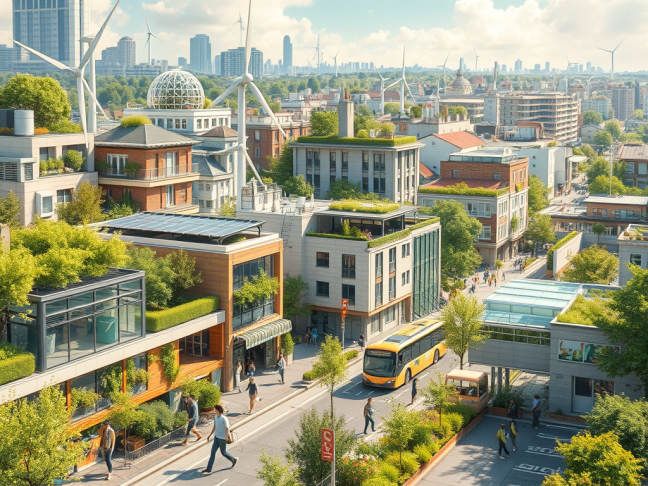












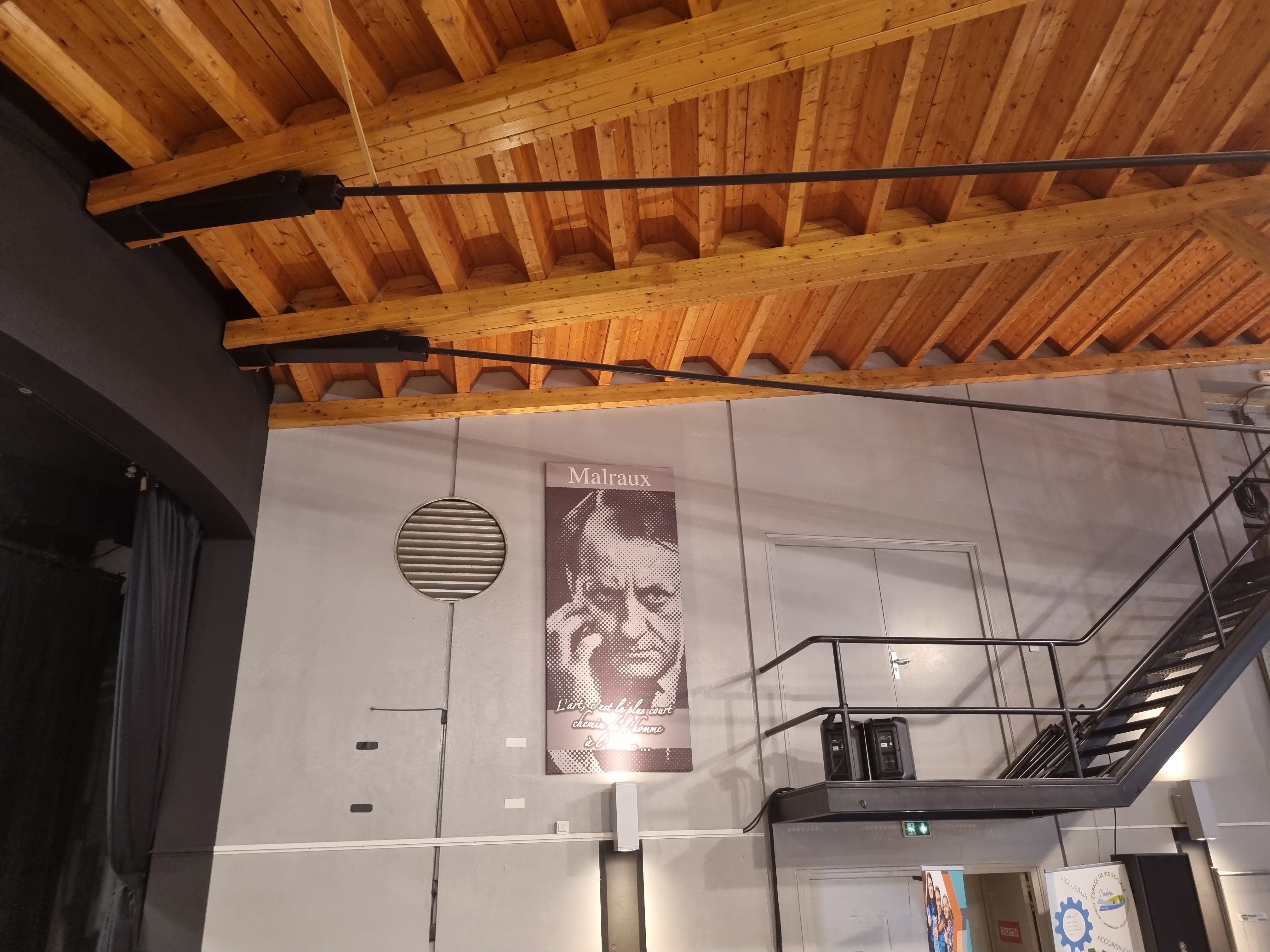
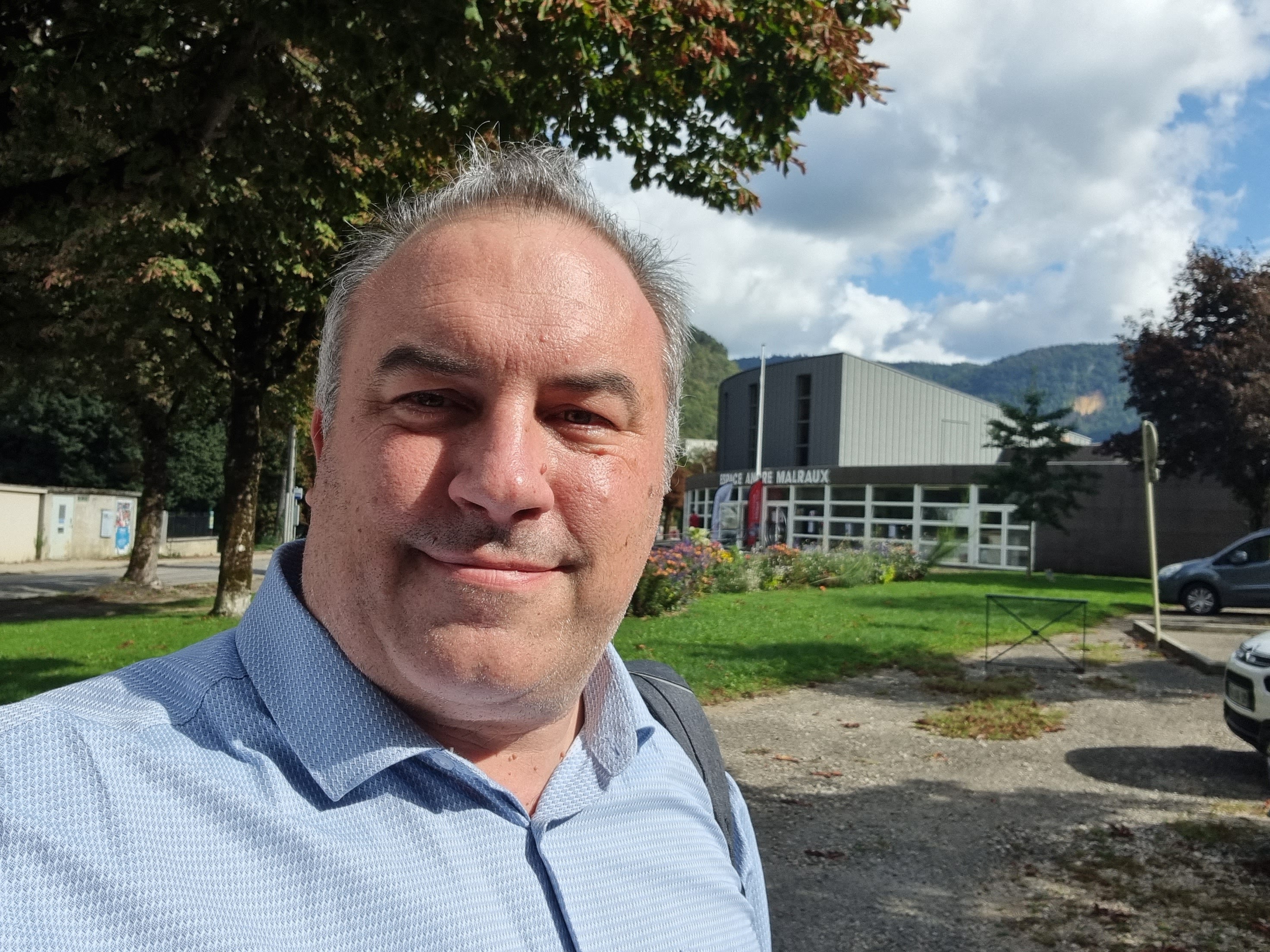
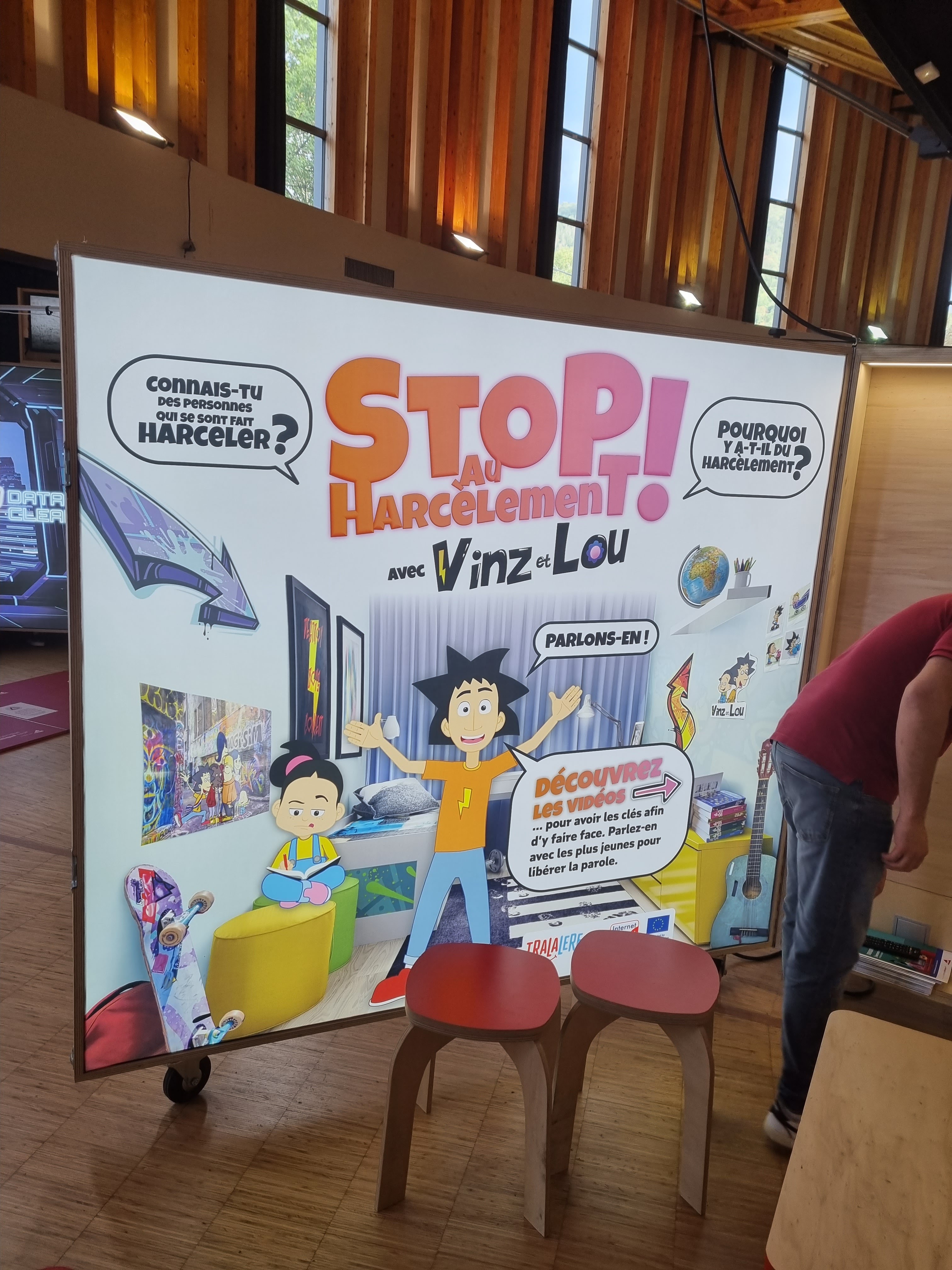

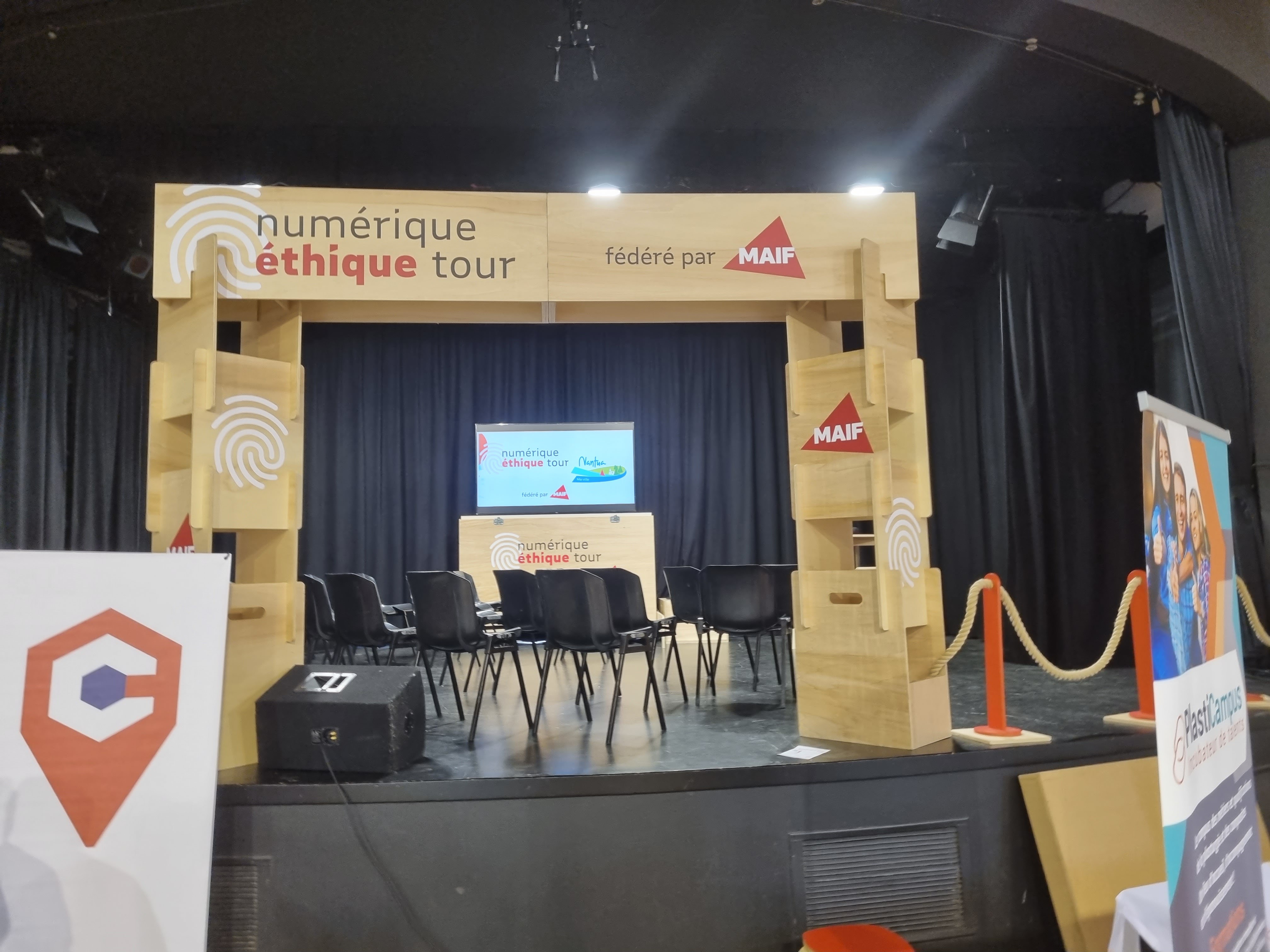


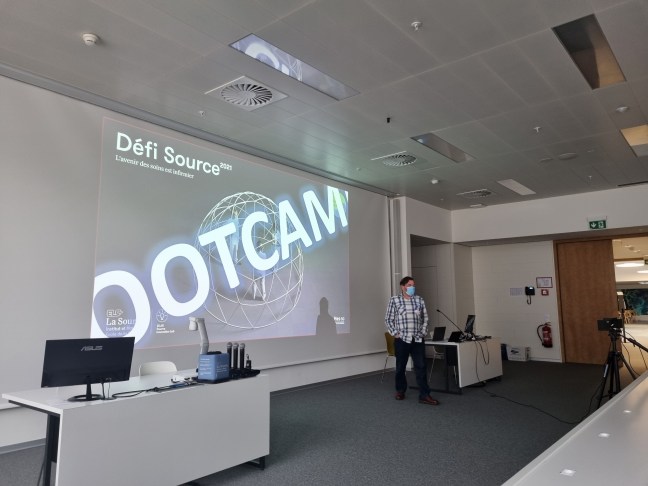

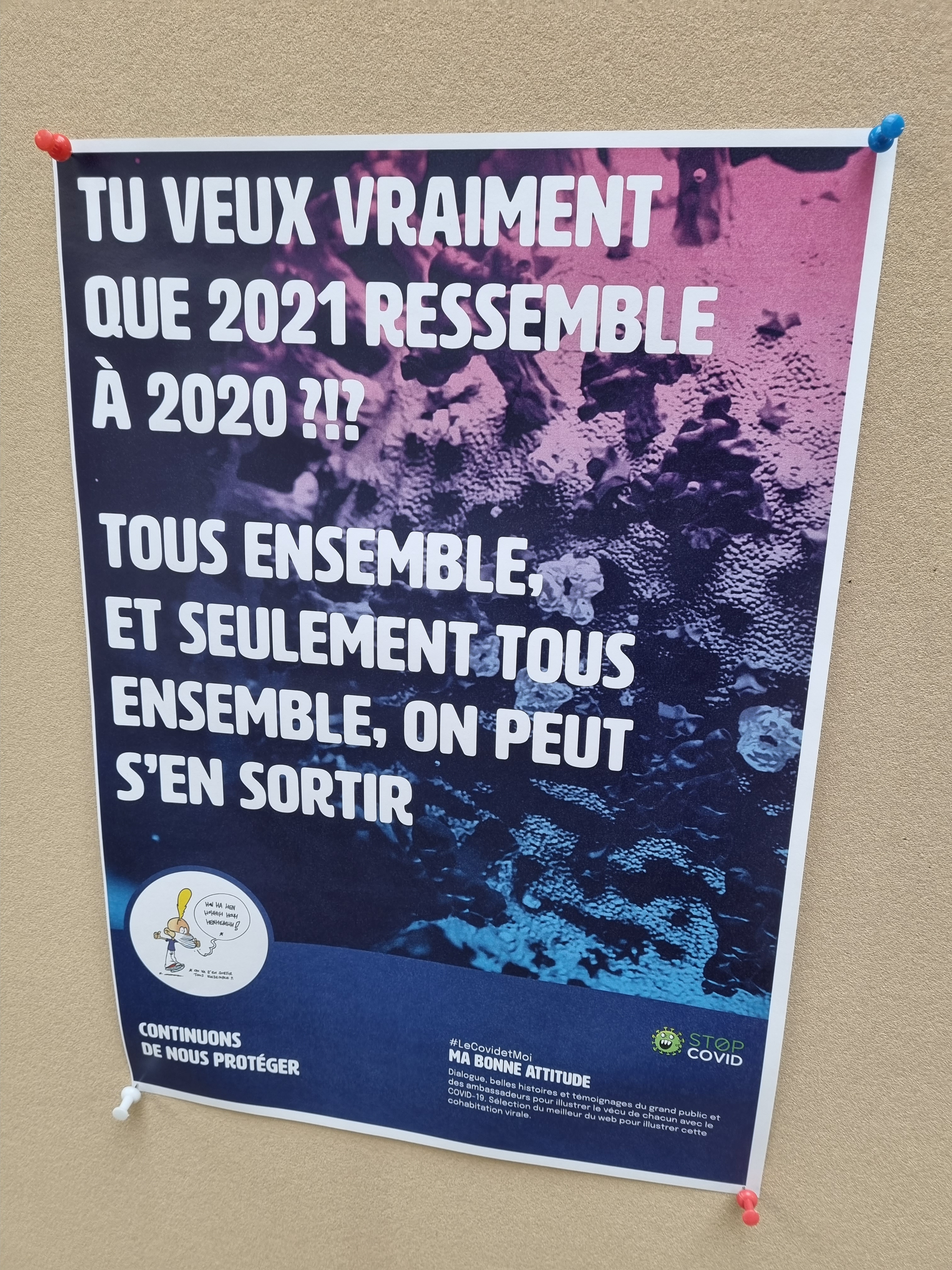





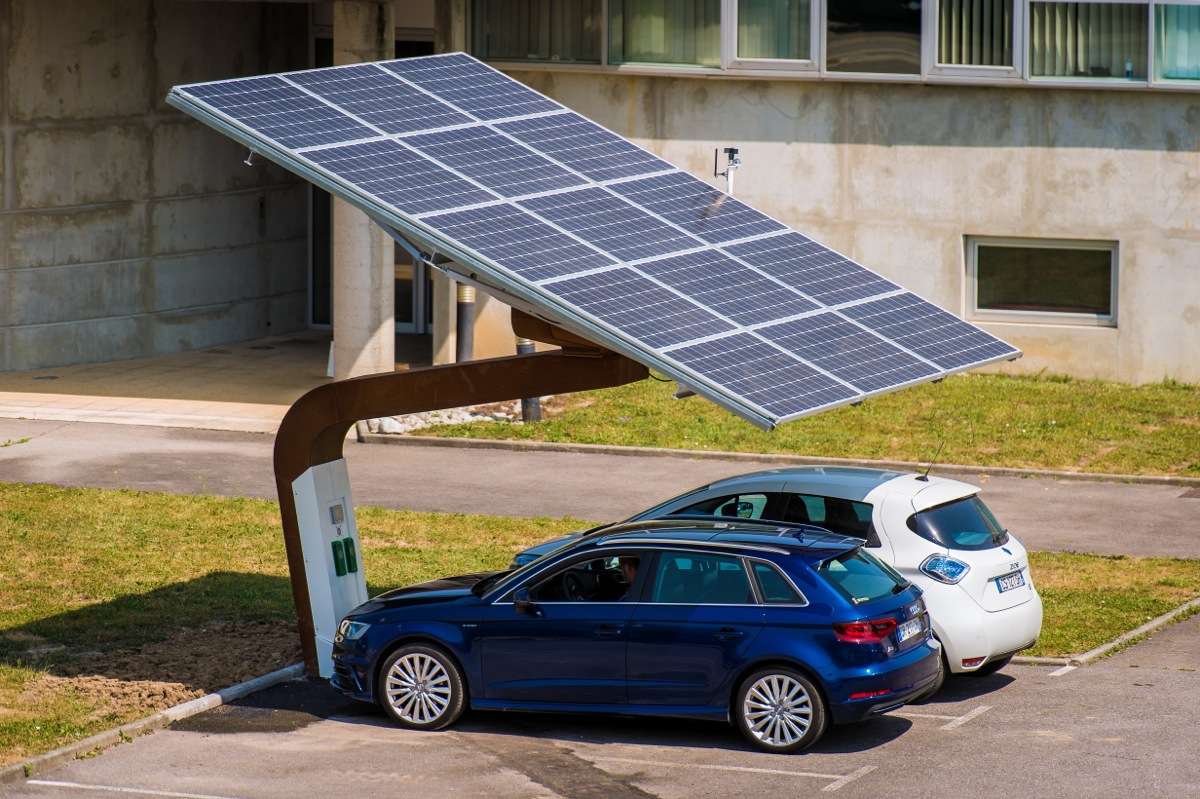


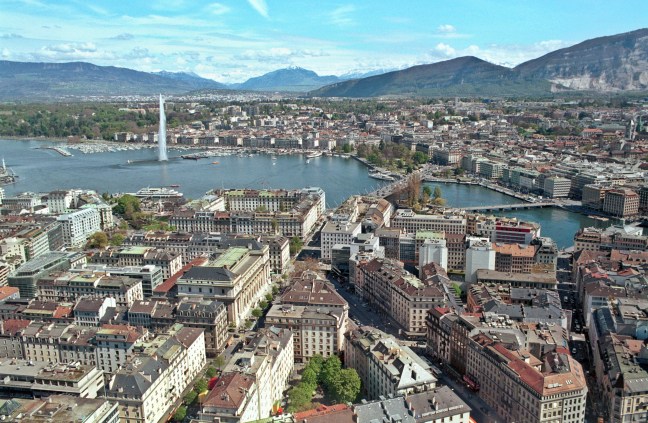







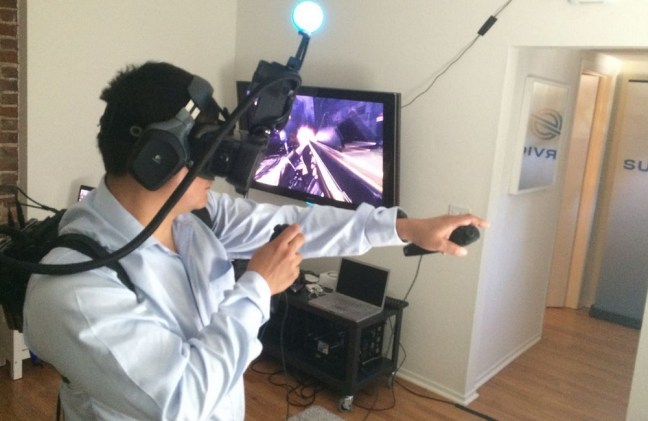


 Shaping tomorrow
Vous devez être connecté pour poster un commentaire.