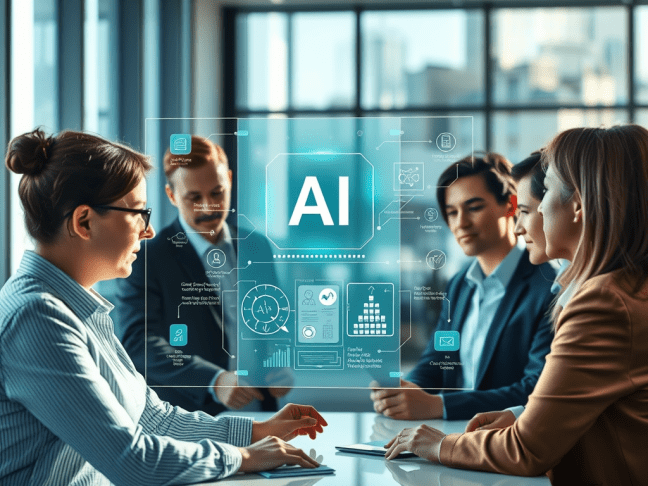
Cultivating cognitive collaboration with AI

It is not about deploying AI tools

The rapid adoption of AI, exemplified by ChatGPT’s unprecedented growth, presents a clear inflection point.

While many organizations are focused on simply deploying AI tools, the true competitive advantage lies in developing a cognitive collaboration with AI.

This shift in mindset from implementation to collaboration is essential for fundamentally enhancing human problem-solving capacity and unlocking substantial productivity gains.


The Gap: AI Literacy vs. Productivity Gains

Current data highlights a stark contrast: a significant majority (74%) of individuals lack AI literacy, yet a large percentage (88%) of AI collaborators report substantial productivity gains. This indicates that the benefits of AI are not reserved for a tech-savvy elite. Instead, they are accessible to those who learn to effectively partner with these tools. The key is to move beyond viewing AI as a simple tool and instead see it as a partner in a cognitive process. This partnership allows for a synergistic relationship where the AI augments human strengths, and humans provide the context, creativity, and critical thinking that AI currently lacks.


The synergy: faster completion and higher quality

MIT research validates this synergistic effect, showing that AI collaboration leads to a 40% faster completion time and an 18% superior output quality.

This is not about the AI doing the work for us; it’s about the combined effort of human and machine.

Consider a data analyst using an AI to quickly process and visualize a massive dataset.

The AI handles the computational heavy lifting, identifying patterns and generating charts, while the human provides the domain expertise to interpret the findings and derive strategic insights.

This is a powerful example of AI as a cognitive co-pilot.


The strategic shift: from tools to capabilities

Organizations that only ask about AI implementation are focused on the « how-to » of tool deployment, which is a transactional approach.

They are merely adopting new software. In contrast, organizations that ask about AI collaboration are focused on the « how-to » of building new cognitive capabilities within their workforce.

This strategic insight explains the 13.8% productivity improvements seen in these forward-thinking organizations.

They are not just leveraging a tool; they are developing a new way of working that fundamentally alters their problem-solving capacity.


Our approach: developing cognitive collaboration

To foster this cognitive collaboration, organizations and individuals must focus on three key areas:

  • Upskilling in AI Literacy: This goes beyond basic familiarity with AI tools. It involves understanding the strengths and limitations of AI, knowing how to formulate effective prompts, and critically evaluating AI-generated outputs. It is about learning to speak the language of AI.
  • Developing a Collaborative Mindset: Encourage a culture where AI is seen as a partner, not a replacement. Promote experimentation and shared learning. This shift in mindset is crucial for fostering an environment where individuals feel empowered to explore how AI can augment their unique skills.
  • Integrating AI into Workflows: Rather than using AI as a standalone tool, integrate it directly into existing problem-solving workflows. This could involve using AI to brainstorm ideas, analyze complex data, draft initial documents, or even simulate different scenarios. The goal is to make AI a seamless part of the cognitive loop, where humans and machines continuously inform and enhance each other’s work.

By embracing this strategic shift from simply deploying tools to actively building enhanced cognitive capabilities, organizations can move beyond mere adoption and truly leverage AI to solve problems in ways that were previously unimaginable.

The future of work is not about humans vs. AI, but about humans with AI. 

The AI advantage

Mastering Negotiation in the Digital Age

Negotiation. It’s an art as old as commerce itself, a delicate dance of give and take that has shaped human interaction for millennia. From ancient bazaars to modern boardrooms, the core principles have remained remarkably consistent. But what if the very essence of this age-old art is on the cusp of a revolutionary transformation? What if the future of negotiation isn’t just about human skill, but about leveraging the unparalleled power of artificial intelligence?

The answer lies in « The AI Advantage: Mastering Negotiation in the Digital Age, » an essential guide that reveals how AI isn’t just a futuristic concept, but a present-day game-changer for anyone involved in high-stakes interactions.

This groundbreaking e-book goes far beyond traditional negotiation tactics, demonstrating how cutting-edge AI empowers you to win like never before.

Unlocking Unprecedented Insights

Imagine having the ability to sift through mountains of data – from intricate market trends to exhaustive counterparty profiles – at speeds that are simply impossible for the human mind.

AI makes this a reality. It can uncover unprecedented insights, giving you a panoramic view of the negotiation landscape.

This isn’t just about knowing more; it’s about knowing everything relevant, allowing you to enter discussions armed with a level of understanding that was previously unimaginable.

Predicting outcomes with uncanny accuracy

Ever wish you could peek into the future of a negotiation?

AI brings you remarkably close. Through powerful predictive analytics, you can simulate countless scenarios, testing different offers and counter-offers to identify the optimal path forward.

This capability allows you to anticipate reactions from the other side with uncanny accuracy, reducing uncertainty and enabling more strategic decision-making. No more guessing games; just data-driven foresight.

Automating routine, elevating strategy

Let’s be honest: some aspects of negotiation are tedious.

Contract review, initial communications, and basic information gathering can consume valuable time and energy.

AI can automate routine tasks, streamlining these processes and freeing you up to focus on what truly matters: high-value strategy, creative problem-solving, and cultivating strong relationships.

This isn’t about replacing the human element, but about enhancing it.

Enhancing your human intuition

Perhaps one of the most exciting aspects of AI in negotiation is its ability to enhance your human intuition.

By analyzing communication styles, subtle emotional cues, and behavioral patterns, AI provides data-driven insights that can make you a more empathetic, perceptive, and ultimately, more effective negotiator. It’s about augmenting your natural abilities, not diminishing them.

You become a sharper observer and a more astute communicator.

Real-World Impact and a Glimpse into the Future

« The AI Advantage » isn’t just theoretical; it explores real-world case studies demonstrating AI’s tangible impact across various fields, including procurement, sales, and legal negotiations.

You’ll see how organizations and individuals are already leveraging AI to secure better terms and maximize value.

Looking ahead, the book offers a thrilling glimpse into the future of negotiation, envisioning hyper-personalized strategies, advanced emotional AI that understands and responds to nuanced human emotions, and even autonomous negotiation agents capable of executing agreements with minimal human intervention.

Most importantly, this e-book teaches you how to embrace the « augmented negotiator » mindset. This isn’t about choosing between human skill and AI power; it’s about seamlessly combining AI’s analytical prowess with your unique human empathy, creativity, and strategic thinking.

Whether you’re a seasoned dealmaker looking for an edge or new to the intricate art of persuasion, « The AI Advantage: Mastering Negotiation in the Digital Age » provides the definitive blueprint for securing better terms, maximizing value, and achieving unparalleled success in our rapidly evolving digital world. Don’t just negotiate; master it with the AI advantage.

Share this invaluable resource with your network!

This e-book is just one piece of the puzzle!

  • About the Author: Want to learn more about my background, expertise, and what drives my passion for helping professionals like you succeed?
  • Visit my Author profile here. https://www.amazon.com/stores/Yves-Zieba/author/B0FJWXC2XF
  • Discover my collections: We have a wealth of resources, articles, and other e-books designed to help you master various aspects of your professional life.

Share your thoughts in the comments below!

Proposition quotidienne de rédaction
Si vous pouviez faire revenir un dinosaure, lequel choisiriez-vous ?

Note : 1 sur 5.

Unlock Your Career Potential: 100 AI Tools and Strategies


Discover « 100 AI-Powered Career Management Use Cases » E-book!


Are you ready to redefine your career in the age of AI?

Artificial Intelligence isn’t just a buzzword; it’s your new co-pilot in navigating the complexities of the modern job market. Imagine having a secret weapon that helps you find dream opportunities, build in-demand skills, and showcase your unique talents like never before.

That’s exactly what you’ll find in our brand new, comprehensive e-book: « 100 AI-Powered Career Management Use Cases. »


Why you need this e-book NOW:

In today’s fast-paced world, staying ahead means leveraging every tool at your disposal.

This isn’t just theoretical fluff; it’s 100 practical, actionable ways you can use AI, right now, to transform your professional journey.

  • For Job-Seekers: Stop endless scrolling. Discover hidden opportunities and tailor your applications with laser precision.
  • For Early-Career Professionals: Accelerate your growth, build essential skills, and make an impact from day one.
  • For Seasoned Experts: Adapt to new industry trends, expand your influence, and future-proof your expertise.
  • For Freelancers & Entrepreneurs: Streamline your operations, find new clients, and build your personal brand with unprecedented efficiency.
  • For Managers & Leaders: Empower your teams, optimize performance, and lead with AI-driven insights.

If you’re serious about taking control of your career and thriving in the AI-driven future of work, this e-book is your ultimate guide.


What’s inside? A sneak peek at how AI will supercharge your career:

We’ve broken down AI’s power into digestible, actionable use cases, each designed for immediate application. Here’s a glimpse of the transformative areas covered:

1. Finding Opportunities (1-15)

  • Identify Emerging Job Roles: Stay ahead of the curve and pinpoint where your skills will be most valued in the coming years.
  • Personalize Job Alerts: Ditch the noise and get highly relevant job recommendations tailored just for you.
  • Research Company Culture & Values: Find the perfect fit by using AI to understand a company’s true ethos.

2. Building Your Brand (16-25)

  • Craft a Powerful Personal Brand Statement: Articulate your unique value proposition in a way that resonates.
  • Optimize LinkedIn Profile for Searchability: Get found by recruiters with AI-suggested keywords and compelling content.
  • Develop a Content Strategy for Thought Leadership: Become an industry authority by sharing AI-assisted insights.

3. Upskilling & Learning (26-40)

  • Identify Skill Gaps for Career Advancement: Pinpoint exactly what you need to learn to reach your next professional milestone.
  • Recommend Personalized Learning Resources: Get tailored course suggestions, articles, and videos that match your learning style and goals.
  • Summarize Complex Technical Concepts: Grasp intricate ideas in minutes, not hours.

4. Application Materials (41-50)

  • Tailor Your Resume to a Specific Job Description: Beat the Applicant Tracking Systems (ATS) and make every application count.
  • Draft a Compelling Cover Letter: Write persuasive letters that showcase your enthusiasm and fit.
  • Proofread and Grammar Check All Materials: Ensure flawless applications every time.

5. Interview & Assessment (51-60)

  • Prepare for Behavioral Interview Questions: Craft powerful STAR method answers that highlight your strengths.
  • Simulate Mock Interviews (Chat-based): Practice under pressure and refine your responses with AI as your interviewer.
  • Generate Questions to Ask the Interviewer: Impress hiring managers with insightful inquiries.

…and 40 more game-changing use cases across Onboarding, Productivity, Leadership, and Career Transitions!


Your AI Co-Pilot awaits – Invest in your future!

This e-book is designed to be your quick-start guide, packed with immense value for your career. Each use case includes:

  • Why it matters – the problem it solves.
  • How AI helps – the core mechanism.
  • Example tools – software or services you can use (like ChatGPT, Gemini, Microsoft Copilot, LinkedIn, Notion AI, and more!).
  • Quick-start steps – a tiny workflow you can adopt today.
  • Pro tips – advanced or cautionary advice.

No complicated setups, no obscure software needed. Just practical, immediate ways to put AI to work for YOUR career. Think of this as your personal career consultant, available 24/7.


Ready to revolutionize your career?

Don’t get left behind. The future of work is here, and AI is your most powerful ally.

This e-book is your essential investment in staying ahead.

Share this invaluable resource with your network! Help your friends, colleagues, and connections supercharge their careers too.

Loved this deep dive into AI and career management? This e-book is just one piece of the puzzle!

What career challenge are you hoping AI will help you solve first? Share your thoughts in the comments below!

Proposition quotidienne de rédaction
Si vous pouviez faire revenir un dinosaure, lequel choisiriez-vous ?

Note : 1 sur 5.

The Tiny Team Revolution: Redefining Success for Innovative Projects


Small teams, big results

For years, the sheer size of a company’s workforce was often seen as the ultimate badge of honor, a clear signal of success. The bigger the headcount, the more impressive the achievement.

But as we stand in 2025, amidst the revolutionary wave of artificial intelligence and the rise of lean startups, that narrative has fundamentally shifted.

The focus is no longer on how many people you employ, but on how much a small, agile team can accomplish.

This isn’t merely about cutting costs; it’s a complete paradigm shift in how companies are built and what success truly looks like. We’re entering the age of the tiny team: lean, focused, and incredibly impactful. The question for anyone embarking on an innovative project today is, are you ready for it?


The New Formula: Small Teams, Big Results

Gone are the days when growth was exclusively measured in employees. Today, the metric that truly matters is productivity per person.

Consider the example of Gamma, a company that serves 50 million users with a mere 28 employees, has raised $23M, and has been profitable for over 15 months.

This isn’t magic; it’s leverage. Each team member is a generalist, empowered by powerful AI tools, operating without the traditional silos or managerial bloat.

This clear, high-output execution is rapidly becoming the blueprint for success.


Why Big Teams are now a Red Flag

Where investors once applauded a large headcount, they now scrutinize it.

A bulky team often signals inefficiency, outdated thinking, and a resistance to the rapid changes demanded by today’s landscape.

We’re on the cusp of a world where zero-employee, billion-dollar companies are no longer a fantasy.

Today’s venture capitalists are actively seeking speed, adaptability, and leverage.

They aren’t interested in funding cumbersome organizations. They want focused operators equipped with the right tools, not suffocated by hierarchies.

You no longer need a team of data analysts; you need someone adept at prompting GPT.

You don’t need ten marketers; you need one who deeply understands growth strategies and automation.


Flexibility over Rigid Structures, embracing FLUX

The traditional startup model often mirrored factory assembly lines: specialized roles, multiple layers of management, and rigid processes.

However, AI doesn’t conform to traditional organizational charts. It thrives on initiative, flexibility, and autonomy.

Companies like Gamma succeed because their team members are player-coaches – simultaneously executing tasks and leading their areas. This model champions agility and sound judgment over strict adherence to procedure.

For these tiny, innovative teams, frameworks like FLUX are particularly appropriate. FLUX, standing for Fast, Liquid, Uncharted, and eXperimental, encapsulates the very essence of what makes small teams thrive in today’s dynamic business environment.

  • Fast: Tiny teams, unburdened by bureaucracy, can move with incredible speed, making rapid decisions and executing quickly. This aligns perfectly with the « Fast » principle of FLUX, emphasizing quick adaptation and responsiveness.
  • Liquid: Small teams are inherently more adaptable and less rigid than large organizations. They can easily reconfigure, pivot, and flow with changing market demands, embodying the « Liquid » aspect of the framework.
  • Uncharted: Innovative projects often venture into unknown territories. Tiny teams are better equipped to navigate these « Uncharted » waters, as they can collectively explore, learn, and iterate without the complexity of coordinating numerous stakeholders.
  • eXperimental: The lean nature of tiny teams fosters a culture of continuous experimentation and learning from failures, which is core to the « eXperimental » principle of FLUX. This allows them to rapidly test hypotheses and discover effective solutions.

By embracing the FLUX framework, tiny teams naturally cultivate the agility, collaboration, continuous learning, and forward-thinking mindset necessary to not just survive but truly thrive amidst constant change.


The strategic edge of tiny teams

Founders of innovative projects should actively resist the temptation of early bloat. Staying small for as long as possible offers a significant competitive advantage. Why?

  • Speed: Small teams move faster, with less friction.
  • Focus: Alignment is easier. Distractions are fewer.
  • Tool Leverage: AI tools empower fewer people to accomplish far more.
  • Resilience: Generalists can cover multiple roles when needed.
  • Efficiency: Lean teams use capital wisely, something investors value more than ever.

What investors prioritize in 2025

The venture capital mindset has undergone a profound transformation. The « scale-at-all-costs » mentality is out. Instead, investors are asking:

  • How much can this team achieve before they need to expand?
  • How efficient are they per person, per euro, per hour?
  • Are they obsessed with their product or their organizational structure?

Impact per head is the new north star.


The One-Person Startup: A future closer than you think

While we celebrate small teams today, tomorrow we might be applauding solo founders building entire companies from their laptops – not just hobby projects, but legitimate, investor-backed businesses. This isn’t science fiction. With the explosive pace of AI development, it’s already possible to:

  • Build and launch software without writing a single line of code.
  • Generate content, manage marketing campaigns, and handle customer support.
  • Oversee operations, analyze data, and conduct UX testing – all solo.

Soon, one person will effectively replace ten. Eventually, perhaps none will be needed for many tasks.


What this means for your innovative and organic project

If you’re launching an innovative project in 2025, it’s time to ask yourself some critical questions:

  • Am I hiring to look impressive, or because there’s a genuine, indispensable need for the help?
  • Can the combination of AI and highly capable generalists outperform the larger team I initially envisioned?
  • Am I chasing vanity metrics, or am I focused on achieving real, impactful traction?

In today’s landscape, you don’t win by being big. You win by being lean, fast, and remarkably sharp.

Unlock growth with RPA: Learn from the Automated CEO

🚀 New eBook Launch: The Automated CEO – Your Guide to Robotic Process Automation (RPA)

We’re thrilled to announce the release of our latest eBook, The Automated CEO — a must-read for today’s forward-thinking C-suite leaders who want to harness the full potential of Robotic Process Automation (RPA) to drive innovation, agility, and growth.

💡 What’s inside?
This comprehensive guide is more than theory — it’s packed with 100 actionable “power plays” that show you exactly how RPA can:

✅ Streamline operations and eliminate inefficiencies
✅ Slash costs and increase profit margins
✅ Enhance customer experiences through faster, smarter processes
✅ Free up human capital to focus on creativity, strategy, and value creation

Whether you’re leading in finance, human resources, supply chain, or cutting-edge industries like aerospace, fashion, or climate tech, this book gives you the strategic lens to reshape your business with intelligent automation.

📈 Build your RPA roadmap
Learn how to assess automation readiness, design scalable workflows, measure ROI, and inspire buy-in at every level of your organization. The Automated CEO walks you through the journey from pilot projects to enterprise-wide transformation.

🔥 Bust the myths – Embrace the future
Still think RPA is just about bots handling repetitive tasks? Think again. This eBook debunks common myths and reframes automation as a driver of human-centric, innovation-led growth.

Who should read this?

  • CEOs & Founders
  • CIOs, CTOs, COOs
  • Transformation leaders
  • Automation strategists
  • Innovation officers
  • Consultants and advisors

If you’re shaping the future of your organization, this guide is your blueprint.


🎯 Ready to Lead in the Age of Automation?

Download The Automated CEO today and become the visionary leader your business needs.

👉 https://www.amazon.fr/dp/B0FJT82649


More e-books available here : https://www.amazon.fr/s?i=digital-text&rh=p_27%3AYves%2BZieba&s=relevancerank&text=Yves+Zieba&ref=dp_byline_sr_ebooks_1

#RPA #Automation #DigitalTransformation #Leadership #FutureOfWork #Innovation #TheAutomatedCEO #CIO #COO #AI #Robotics #BusinessStrategy

Réduire son empreinte carbone : Scope 3 simplifié pour TPE/PME/ETI

Décarbonation du Scope 3 pour les TPE/PME/ETI : Un guide pratique pour agir

Votre TPE ou PME dans le secteur des services souhaite s’engager concrètement pour le climat ? Le Scope 3 vous semble complexe et intimidant ? Vous n’êtes pas seul ! La majorité de votre empreinte carbone est indirecte, provenant de vos achats, de vos déplacements et de vos activités numériques. Heureusement, nous avons une solution pour vous : l’e-book « Décarbonation du Scope 3 pour les TPE/PME ».

Pourquoi le Scope 3 est-il si important ?

Le Scope 3 inclut toutes les émissions de gaz à effet de serre (GES) générées par les activités de votre entreprise, mais qui ne sont pas directement sous votre contrôle. Cela englobe :

  • Les achats : matières premières et services que vous acquérez.
  • Les déplacements professionnels : voyages d’affaires, transports de vos employés.
  • La gestion des déchets : comment vous traitez vos produits en fin de vie.
  • La consommation numérique : le poids carbone de vos activités en ligne.

En comprenant et en mesurant ces émissions, vous pouvez agir de manière significative pour réduire votre impact environnemental.

Ce que vous allez découvrir dans cet E-Book

Une compréhension simplifiée du Scope 3

Cet e-book démystifie le concept de Scope 3, en le rendant accessible et pertinent pour les TPE/PME. Vous apprendrez :

  • Les enjeux spécifiques à votre secteur.
  • Comment identifier d’où proviennent vos émissions indirectes.

50 idées concrètes pour mesurer vos émissions

Vous trouverez des méthodes pratiques pour :

  • Collecter des données sur vos achats et vos déplacements.
  • Évaluer les trajets domicile-travail de vos employés.
  • Analyser votre gestion des déchets et votre consommation numérique.

Ces outils vous aideront à identifier vos « points chauds » carbone, avec des exemples adaptés à votre réalité.

50 Actions pratiques pour atteindre le « Net Zéro »

Le guide propose également des stratégies éprouvées pour réduire vos émissions, telles que :

  • Achats responsables : privilégier des fournisseurs locaux et écoresponsables.
  • Mobilité durable : encourager le télétravail et les transports en commun.
  • Gestion des déchets : mettre en place des solutions de recyclage efficaces.
  • Numérique sobre : optimiser vos outils numériques pour réduire leur empreinte.

Chaque action est détaillée pour faciliter son implémentation, avec une attention particulière portée aux initiatives locales et transparentes.

Pourquoi agir sur le Scope 3 ?

Atteindre le net zéro n’est plus une option, mais une nécessité. En agissant sur votre Scope 3, vous :

  • Renforcez votre image de marque.
  • Attirez de nouveaux talents.
  • Fidélisez vos clients.
  • Devenez un acteur clé de la transition écologique dans votre région.

Pour qui est cet e-book ?

Ce guide est destiné à tous les dirigeants, managers et employés de TPE/PME qui souhaitent passer de l’intention à l’action.

Avec des conseils pratiques et une vision claire, il vous permettra de générer un impact positif sur votre entreprise et l’environnement.

Conclusion

Ne laissez pas la complexité du Scope 3 vous freiner.

Téléchargez dès maintenant l’e-book « Décarbonation du Scope 3 pour les TPE/PME » et préparez votre entreprise pour un avenir plus durable et résilient.

Chaque petite action compte et peut contribuer à un changement significatif. Ensemble, agissons pour un climat meilleur !

L’IA pour un maintien à domicile sécurisé et autonome

Le maintien à domicile représente un enjeu crucial pour de nombreuses personnes âgées ou en situation de dépendance, leur permettant de préserver autonomie et qualité de vie.

Cependant, cette aspiration est souvent confrontée à des défis de taille pour les aidants familiaux et les professionnels de santé, notamment en matière de sécurité, de surveillance et de coordination des soins.

Et si l’intelligence artificielle (IA) était la solution pour surmonter ces obstacles et offrir un soutien sans précédent ?


L’IA au service d’un maintien à domicile serein et épanoui

Imaginez un quotidien où la technologie travaille de concert avec l’humain pour garantir sécurité, autonomie et bien-être.

C’est précisément la promesse de l’IA appliquée au maintien à domicile.

Loin des spéculations futuristes, l’IA déploie déjà des solutions concrètes et éprouvées qui révolutionnent le soutien aux personnes âgées et dépendantes.


Comment l’IA transforme le soutien aux personnes âgées et dépendantes

Je suis ravi d’annoncer le lancement de mon nouvel eBook, « Découvrez comment l’IA transforme le soutien aux personnes âgées et dépendantes ». Cet ouvrage vous plonge au cœur des innovations les plus prometteuses qui redéfinissent le maintien à domicile.

Vous y explorerez les applications concrètes de l’IA, de la domotique intelligente aux assistants vocaux personnalisés, en passant par les systèmes de détection de chutes et les plateformes de télémédecine.

Dans cet eBook, vous découvrirez en détail :

  • Comprendre les fondamentaux : Qu’est-ce que l’IA et comment ses différentes branches (apprentissage automatique, vision par ordinateur, traitement du langage naturel) sont-elles appliquées au maintien à domicile ?
  • Sécurité renforcée : Explorez les solutions d’IA qui préviennent les accidents domestiques, détectent les situations d’urgence et alertent instantanément les aidants, offrant une tranquillité d’esprit inégalée.
  • Autonomie accrue : Découvrez comment l’IA aide à gérer les tâches quotidiennes, à suivre les traitements médicamenteux et à faciliter la communication, permettant aux individus de conserver leur indépendance plus longtemps.
  • Santé et bien-être connectés : Apprenez comment les dispositifs portables et les capteurs intelligents, alimentés par l’IA, surveillent les signes vitaux, analysent les habitudes de sommeil et identifient les changements subtils dans l’état de santé, permettant une intervention rapide.
  • Soutien aux aidants : Comprenez comment l’IA peut alléger le fardeau des aidants en fournissant des informations précieuses, en automatisant certaines tâches et en offrant un soutien émotionnel.
  • Les défis et perspectives : Abordez les questions éthiques, de confidentialité et d’accessibilité liées à l’intégration de l’IA dans les soins à domicile, et projetez-vous dans l’avenir de cette technologie révolutionnaire.

Cet eBook est une ressource essentielle pour toute personne souhaitant mieux comprendre le potentiel de l’IA pour améliorer la qualité de vie et le bien-être des personnes âgées et dépendantes, ainsi que le quotidien de leurs aidants.

Téléchargez dès aujourd’hui votre exemplaire et découvrez comment l’IA ouvre de nouvelles perspectives pour un maintien à domicile digne et sécurisé !

Comment l’intelligence artificielle aide les médias traditionnels à se réinventer

À l’heure où le numérique redéfinit nos usages, les médias traditionnels (presse écrite, radio, télévision) sont confrontés à un double défi : garder leur audience tout en adaptant leurs formats, leur vitesse de traitement de l’information et leurs modèles économiques. L’intelligence artificielle (IA) apparaît aujourd’hui comme un levier puissant pour opérer cette transformation. Loin de remplacer les journalistes, elle les assiste, accélère les processus et ouvre la voie à de nouveaux récits.

1. Une rédaction augmentée : l’IA au service du journaliste

L’IA transforme le travail rédactionnel en automatisant certaines tâches répétitives. Grâce à des outils de traitement du langage naturel (NLP), les rédactions peuvent :

  • Générer des dépêches automatiquement (résultats sportifs, données boursières, météo) à partir de bases de données structurées.
  • Traduire et résumer des textes pour gagner du temps lors de la veille internationale.
  • Reformuler ou réécrire des contenus pour les adapter à différents canaux (site web, réseaux sociaux, newsletters).

Des médias comme The Washington Post ou Associated Press utilisent déjà des algorithmes pour publier plus rapidement, tout en laissant aux journalistes humains le soin de produire des enquêtes, des analyses et des récits à forte valeur ajoutée.

2. Une meilleure compréhension de l’audience

Grâce au machine learning, les médias peuvent analyser finement les comportements de leurs lecteurs, auditeurs ou téléspectateurs :

  • Quels sujets génèrent le plus d’engagement ?
  • À quel moment publier pour maximiser l’audience ?
  • Quelles thématiques fidélisent ou font fuir ?

Ces données permettent de personnaliser les contenus proposés à chaque lecteur, à la manière d’un Netflix de l’information. L’IA joue ici un rôle d’assistant marketing, permettant d’optimiser les titres, les formats et même les angles éditoriaux.

3. L’innovation dans les formats narratifs

L’IA permet aussi d’explorer de nouveaux types de narration :

  • Podcasts enrichis par synthèse vocale, avec des voix générées automatiquement.
  • Reportages immersifs en réalité virtuelle, construits à partir de modèles 3D créés par IA.
  • Infographies et visualisations de données dynamiques et interactives, générées à partir de grandes bases d’informations.

Ces innovations offrent aux médias la possibilité de se différencier, en rendant l’information plus vivante, plus immersive et plus accessible.

4. La lutte contre la désinformation

Paradoxalement, alors que l’IA peut être utilisée pour générer de faux contenus (deepfakes, fake news), elle constitue aussi une réponse puissante pour les détecter :

  • Détection automatisée des incohérences factuelles
  • Analyse de la source et de la propagation d’un contenu
  • Vérification croisée des citations, images et vidéos

De nombreux médias collaborent aujourd’hui avec des startups spécialisées dans la vérification automatisée des faits, pour rétablir la confiance avec leur public.

5. Un nouveau modèle économique en construction

Enfin, l’IA aide les médias à identifier de nouvelles sources de revenus :

  • Paywalls dynamiques qui adaptent l’offre d’abonnement en fonction du profil du lecteur.
  • Publicité programmatique intelligente, plus ciblée et plus rentable.
  • Production de contenus sponsorisés assistée par IA, avec un meilleur équilibre entre valeur éditoriale et impératifs commerciaux.

Ces pistes permettent de sortir du modèle unique basé sur la publicité, aujourd’hui fragilisé, pour construire des sources de revenus diversifiées et durables.


Conclusion

L’intelligence artificielle ne signe pas la fin des médias traditionnels, bien au contraire : elle leur offre une opportunité unique de se réinventer, en réconciliant rigueur journalistique et agilité technologique.

Dans cette nouvelle ère, le rôle du journaliste évolue vers celui d’un curateur, d’un analyste, d’un conteur augmenté. L’IA est un outil, pas un substitut — et c’est dans l’alliance entre intelligence humaine et artificielle que réside l’avenir du journalisme.

The Dawn of Regeneration

How Geneva is redefining economic progress

We’re witnessing a profound shift that promises to reshape our economic future: the move from compliance-driven sustainability to innovation-driven regeneration.

For too long, « sustainability » has been viewed as a set of rules, a box to tick, a cost to bear.

Companies have strived to reduce their negative impact, often driven by regulations and the fear of penalties. While essential, this approach inherently frames environmental and social responsibility as a limitation.

The Industrial Renaissance Project is flipping that script entirely.

It’s about recognizing that the future of economic progress isn’t a zero-sum game between people, planet, and profit. Instead, it’s a systems-level redesign opportunity – one where innovation becomes the engine of positive impact.

This is where our transformative Innovation Labs come in. These immersive strategy spaces are where the magic happens, allowing participants to:

Prototype entirely new business models that are inherently regenerative, generating value for all stakeholders.

Unlock novel financing architectures, moving beyond traditional funding to fuel truly impactful ventures.

Reimagine supply chains as dynamic systems, not linear flows, fostering circularity and resilience.

What does this mean for a canton like Geneva?

For a region renowned for its international organizations, finance, and innovation, this shift is monumental. Geneva is uniquely positioned to lead this charge:

From Burden to Opportunity: We can move beyond merely adhering to environmental standards to actively fostering businesses that create positive environmental and social impact. This opens doors for entirely new industries and job creation in green tech, circular economy solutions, and regenerative agriculture.

Economic Diversification & Resilience: By embracing regeneration, Geneva can diversify its economic base, reducing reliance on traditional sectors and building a more robust, future-proof economy. Our Innovation Labs will be crucial in nurturing these nascent industries.

Enhanced Global Attractiveness: In a world increasingly focused on responsible practices, Geneva’s commitment to innovation-driven regeneration will amplify its appeal as a magnet for ethical investment, top talent, and conscious tourism. We become a global beacon for what a truly regenerative economy looks like.

Leveraging Our Strengths: Geneva’s strong academic institutions, its financial prowess, and its role as an international hub provide fertile ground for this evolution. We can leverage these assets to become a living laboratory for sustainable urban development and responsible business.

The time for incremental change is over. The Industrial Renaissance Project calls for a bold, innovative leap forward.

Here in Geneva, we’re ready to answer that call, turning challenges into unparalleled opportunities for a truly regenerative future.

Yves Zieba

#IndustrialRenaissance #InnovationDrivenRegeneration #CircularEconomy #SustainableDevelopment #GenevaInnovation #FutureOfBusiness #RegenerativeEconomy

Master Sustainable IT: Actionable Insights from New E-Book

Announcing « Sustainable IT Use Cases: A Comprehensive Framework » by Yves Zieba

Are you ready to transform your organization’s IT into a powerful force for environmental sustainability and economic resilience? In an era where digital transformation accelerates alongside the urgent demand for climate action, IT stands at a critical crossroads. Traditional IT practices contribute significantly to carbon emissions, e-waste, and resource depletion. But what if your technology infrastructure could become a cornerstone of your sustainability strategy, driving both ecological responsibility and profound business value?

We are thrilled to announce the upcoming e-book, « Sustainable IT Use Cases: A Comprehensive Framework, » by acclaimed author Yves Zieba. This groundbreaking work is set to revolutionize the way organizations approach their digital future, providing a definitive guide to achieving the crucial balance between technological advancement and environmental stewardship.

Yves Zieba distills complex concepts into 100 actionable use cases, offering a complete blueprint for implementing Green IT across every layer of your enterprise.

From strategic governance and data center optimization to software development, cloud management, and end-user engagement, this book covers it all.

Inside, you will discover:

  • Strategic Roadmaps: Master Green IT governance, policy development, and carbon footprint measurement to embed sustainability at your organization’s core.
  • Operational Excellence: Optimize data centers with advanced cooling, virtualization, and DCIM systems for unparalleled energy efficiency.
  • Software & Data Solutions: Learn how to write green code, minimize data storage, and leverage AI for sustainable outcomes.
  • Circular Economy Integration: Implement responsible e-waste management and embrace circular procurement for IT hardware.
  • Future-Proofing: Explore emerging trends like green digital twins, ethical AI, and IT disaster recovery for climate resilience.
  • Tangible Benefits: Uncover how Green IT not only reduces your environmental impact but also cuts costs, boosts efficiency, enhances reputation, and ensures regulatory compliance.

Whether you’re a CIO, IT manager, sustainability lead, or a tech professional passionate about making a difference, « Sustainable IT Use Cases: A Comprehensive Framework » empowers you with the practical knowledge and proven strategies to build a truly sustainable and resilient digital future.

Stop viewing IT as an environmental burden and start leveraging it as your greatest asset for sustainability. Get ready to transform your organization’s IT landscape and contribute to a greener, more resilient world.

Today is the official release date of « Sustainable IT Use Cases: A Comprehensive Framework » and prepare to unlock the power of Green IT!

Transform your IT, transform your future !

You can access the e-book in Kindle format by clicking here: