
A l’occasion de la nuit de l’entrepreneuriat, et autour d’un panel, venez imaginer avec nous l’éducation du futur.
Nuit de l’entrepreneuriat, imaginons ensemble l’éducation de demain.


A l’occasion de la nuit de l’entrepreneuriat, et autour d’un panel, venez imaginer avec nous l’éducation du futur.


The connected car is equipped with internet connections and software that enable us to stream music, look up movie times, be alerted of traffic and weather conditions, and even power driving assistance services such as self parking or alerting systems in situation of accidents. This market is growing at a five-year compound annual growth rate of 45%, i.e. ten times as fast as the automotive market. 75% of the estimated 92 million cars globally in 2020 will be built with internet-connection hardware. This creates a massive new business opportunity for investors, tech, telecom and mobile start ups and might disrupt the traditional market players in the automotive market. Connected cars prices remain high and are expected to drop significantly in the next few years.

In technology terms, two approaches prevail:
1- put the internet connection in the car.
2- relying on a secondary device.
Embedded connections don’t require a phone’s data plan to operate. Consumers and carmakers gain access to a wider variety of content and functionalities.
In the near future, we expect to see car companies pairing with wireless service providers to bring internet services to car. This diagram shows the go-to-market process for car apps.

With internet connections, multiples apps in the car, and now self-driving cars, our roads should be changed for the better. Among the expected benefits: Getting from and to places will be simple, quicker and easier, accidents number will drop, we should see fuel efficiency gains, and therefore fuel economy.
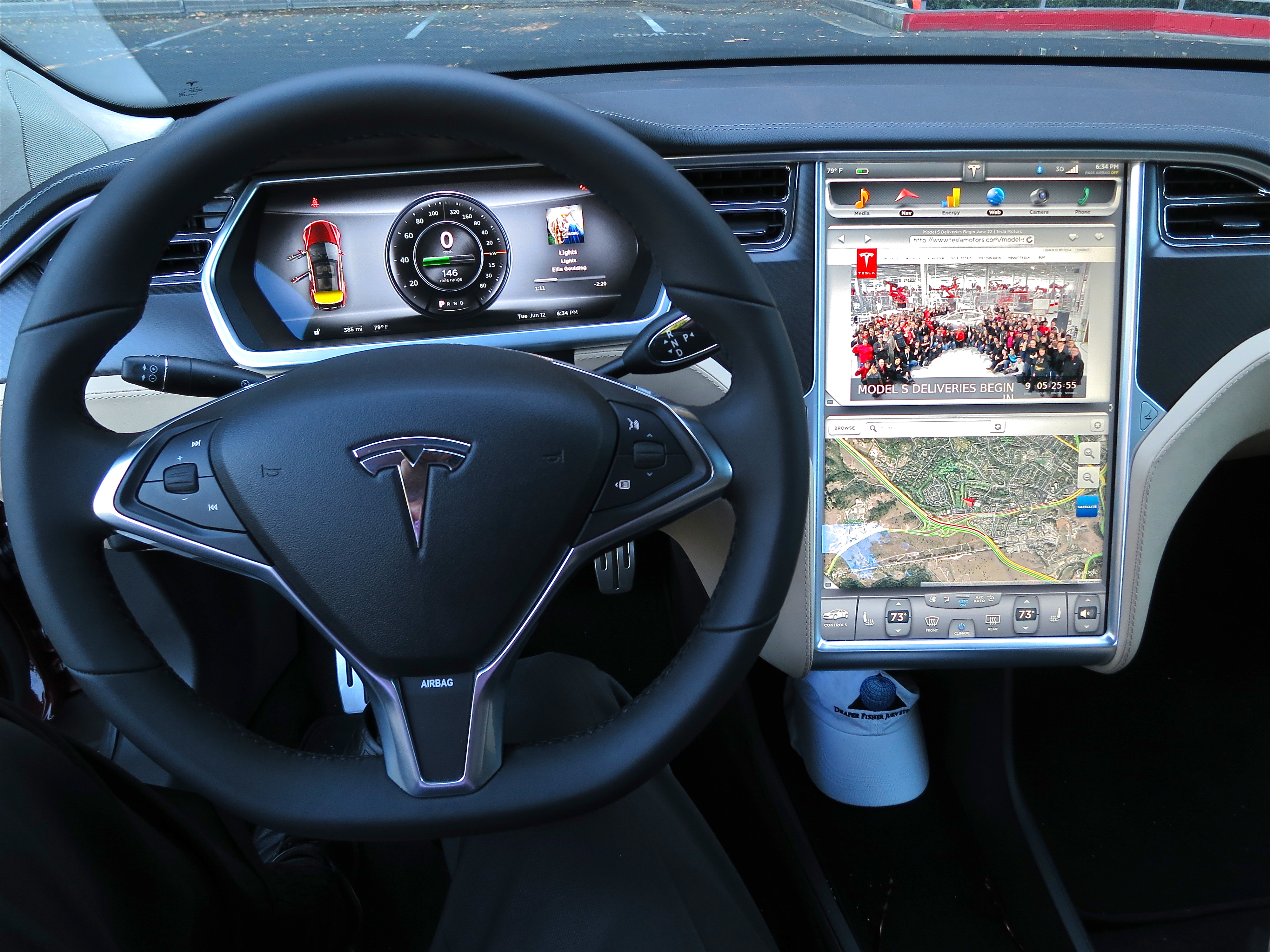
Mobility 4.0: will we see a new wave of start up companies benefiting from this new business opportunity ?
Apart from Apple and google, will we see the rising and transformation of intelligent mobility, and digital panels, developped by smart startups and entrepreneurs ?
Will we also see new renewable energy solutions and innovative urban design on the back of the « connected cars » emergence ?
The connected cars have a really massive potential to change many things in our cities and on our roads in the next ten to twenty years.

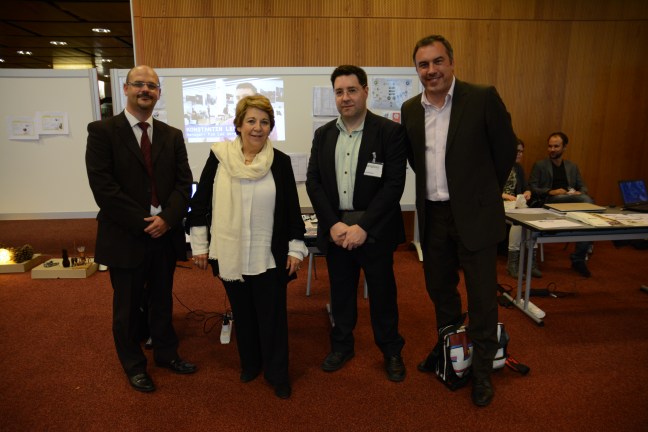
A l’occasion de la conférence #GreenandInclusive organisée au CICG par Green Cross International, nous avons eu la possibilité de présenter aux orateurs et aux participants, ses activités d’éco-efficacité et de classe inclusive.

Parmi les orateurs de renom, nous avons eu la joie d’accueillir Madame Corinne Lepage, extrêmement appréciée à Genève, notamment pour ses réussites dans les procès liés au nucléaire. Madame Lepage (@corinnelepage) a pris le temps d’échanger avec nous, de nous poser des questions sur nos projets de valorisation des déchets, d’économie responsable des ressources et sur nos activités favorisant l’enseignement inclusif. Suite à cet échange informel, elle a accepté de poser avec nous, sur notre stand, juste en face de celui des scouts du monde entier, avec lesquels Mme Lepage collabore pour faire porter aux jeunes générations, les messages clés de la campagne « Creating a better world », en préparation de conférence #COP21 à Paris, messages que vous pouvez suivre sur le hashtag #youcancountonus.

Un grand merci à l’équipe de Green Cross International pour cette belle opportunité de prise de parole en public.

Green Cross International are hosting this conference on a Green & Inclusive Economy. It’s close to our mission, so our team is participating, with our partners. Come and give us your ideas and post them to our idea wall. I will also be on site to talk about Universal Design, Universal Design Learning, as well as Inclusive Classroom.
More information at http://www.gcint.org/international-conference-for-a-green-and-inclusive-economy/
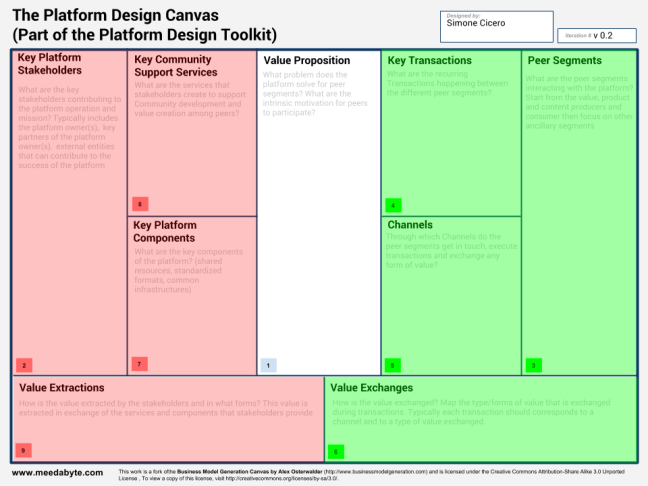
Great for anyone aiming at building a platform business
(Italian translation of the post can be found here)
In recent months, lots of my research has been devoted to develop and learn new visual analytical tools suited to different activities and phases of a business lifetime.
The most important of these tools, as you will probably know if you are a regular reader, is the Platform Design Canvas that I recently launched. This Platform Design Canvas (or PDCanvas) is a tool for product, service and venture design created for the social era. I created the Canvas in July and presented it for the first time during the Barcelona Design Thinking Week at the Elisava Design School. The Canvas and the related presentation were very favourably received by the community and I’ve reflected on the Canvas throughout all summer. I used the canvas a lot with some of my key clients and I also had the chance…
Voir l’article original 2 828 mots de plus
Coursera socialentrepeneur 2015(1)
Very proud of this certificate of achievement from Copenhagen Business School. I just completed this online course on Coursera on the topic of Social Entrepreneurship. Great opportunity to learn, to network, to work virtually with a team of talented entrepreneurs from Brazil, India, Thailand, South Africa, France, Switzerland and many more countries.I am pretty sure we will find ways to keep in touch !
We have applied what we learned to a real case project, very close to my heart (Inclusive Classroom and Universal Design Learning), and have publicised our ideas, and business plan on the Babele platform. Great experience and a fairly large time commitment for those of you willing to structure your learning on social entrepreneurship.
Today, I copied and pasted my LinkedIN profile into IBM Watson personality test. IBM Watson is arguably the most sophisticated artificial intelligence tool available and my LinkedIN profile is probably where I have collected the largest amount of information about me (passion, experience, recommendations…). Here are the results (for what it is worth!):
« You are inner-directed, skeptical and strict.
You are adventurous: you are eager to experience new things. You are imaginative: you have a wild imagination. And you are solemn: you are generally serious and do not joke much.
You are motivated to seek out experiences that provide a strong feeling of sophistication.
You consider achieving success to guide a large part of what you do: you seek out opportunities to improve yourself and demonstrate that you are a capable person. You are relatively unconcerned with taking pleasure in life: you prefer activities with a purpose greater than just personal enjoyment. »

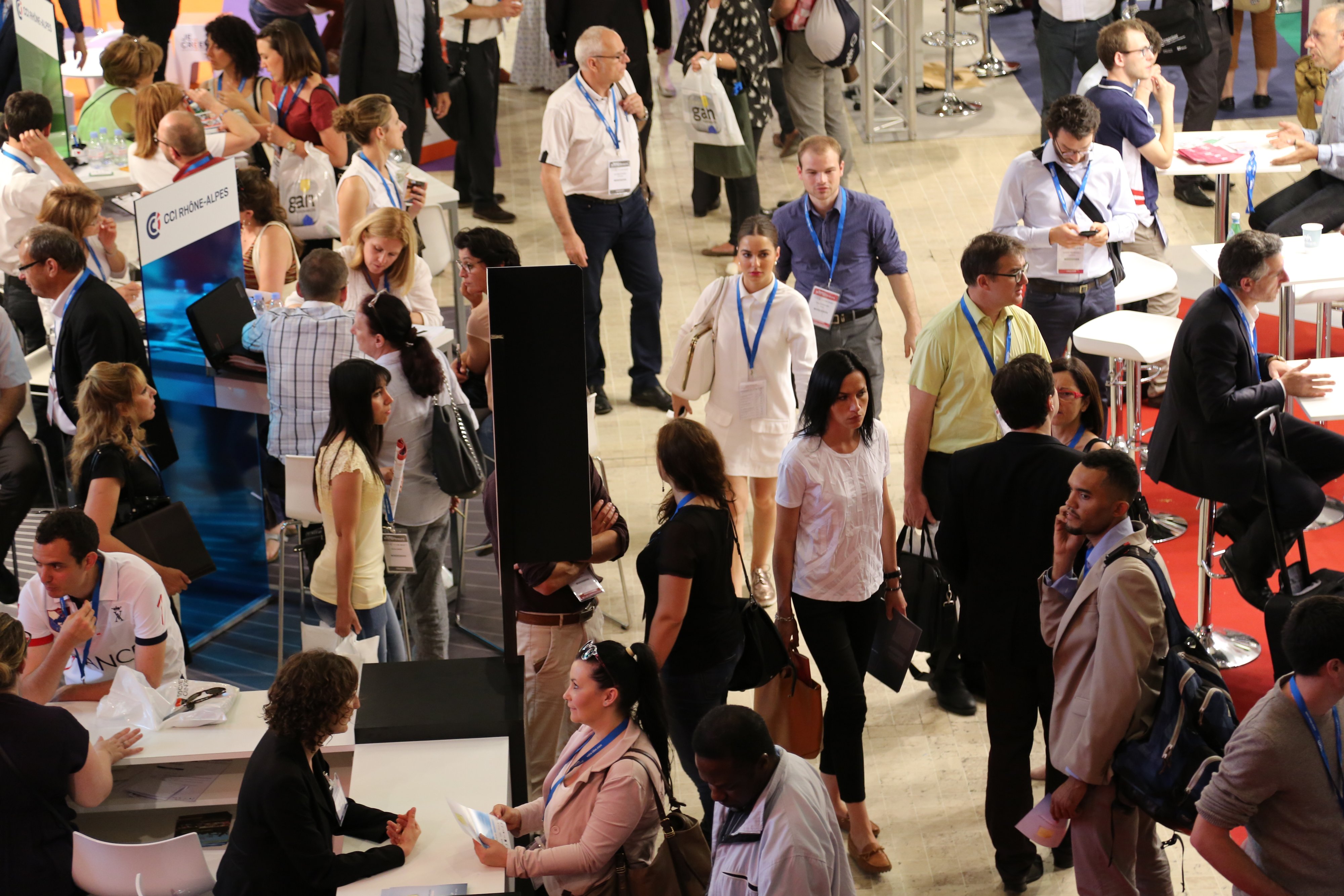
Ravi d’avoir pu découvrir le Salon des Entrepreneurs à Lyon, une foule immense, (sommes nous déjà tous des entrepreneurs ?) la presse, les clubs VIP, les hommes politiques en campagne, quelques 400 structures d’accompagnement (ça fait beaucoup pour tous les rencontrer) . L’occasion aussi et surtout de découvrir des thèmes importants pour les entrepreneurs (fiscalité, protection sociale, levée de fonds), pas mal de conférence « standard » (business plan, business model…) mais aussi, et plus intéressant, ce que sont les nouvelles formes d’innovation ouverte: Crowdjobbing, crowdwisdom, crowdtesting, crowdcare, crowdsourcing & authenticity, crowdsourcedcuration.


Je serai lundi 25 Mai à Fribourg à l’ancienne gare à partir de 19h pour participer aux Swiss Tech Talk.
https://www.facebook.com/events/105837533083315/
Un grand merci à Xavier Bertschy pour l’invitation. Ce talk s’adresse à toutes celles et tous ceux qui :
– conçoivent des cours en ligne ou des curriculum.
– pensent que l’éducation, c’est toute la vie.
– s’intéressent aux technologies de l’éducation, celles d’aujourd’hui et de demain.
– s’intéressent aux techniques de gamification.
– veulent se créer des opportunités et en créer pour leurs enfants et pour leurs proches.
Inscription obligatoire via notre site internet: http://www.swisstechtalks.com/calendar/
Venez nombreux.
Voici le manifeste des tiers-lieux, co-rédigé par Antoine Burret et Yoann Duriaux, et plus que jamais d’actualité pendant la semaine des tiers-lieux et la biennable du Design à St Etienne.

These topics will clearly have an influence on the future of education and will create many jobs around the teacher:
-Biometrics Technologies
-Cloud Engineering
-Cloud Security
-Cloud Computing
-Cloud Gaming
-Computational Intelligence
-Computer Architecture and Design
-Cryptography and Data Protection
-Data Compression
-Data Management in Mobile Networks
-Distributed and Parallel Applications
-Data Embedding and Watermarking
-Data Stream Processing in Mobile/Sensor Networks
-E-Commerce Security
-E-Business
-E-Technology
-Embedded Systems and Software
-Forensics, Recognition Technologies and Applications
-Fuzzy and Neural Network Systems
-Image Processing
-Information Content Security
-Information and Data Management
-Mobile Networking, Mobility and Nomadicity
-Mobile, Ad Hoc and Sensor Network Management
-Multimedia Computing
-Network Security
-Real-Time Systems
-Semantic Web and Ontologies
-Signal Processing, Pattern Recognition and Applications
-User Interface and Usability Issues for Mobile Applications
-User Interfaces, Visualization and Modeling
-Web Services Architecture, Modeling and Design
-Web Services Security
-Wireless Communications
-Wireless Sensor Networks

Which ones do you think will have the biggest impact ?

Je serai aujourd’hui et demain à Lancy, près de Genève en Suisse, avec des intervenants prestigieux à la conférence SGIS pour animer quatre ateliers en français et en anglais sur le thème: « Enseignez différemment ». Pour obtenir le programme de l’évènement, veuillez cliquer ici et pour la brochure veuillez cliquer ici. J’espère vous y retrouver nombreux pendant les ateliers et vous croiser lors du gala.

Hi,
we will be meeting in Geneva on March 24th for the second time to get organised for the first WikiStage Geneva Innovation event. If you are available, please join us at CrossRoads and register here.
Yves
“What are you trying to say?”
Language, communications and technology in the 21st century learning environment
I will attend the Annual SGIS Conference and I very much look forward to meeting
Over the years, SGIS has endeavoured to ensure that the Annual SGIS Conference themes and topics are both relevant and stimulating for its members.
We will be asking ourselves the following key questions and issues:
For more information about the event, please click here.

Many European countries have introduced important reforms in their innovation policies since the year 2000. Countries with traditionally « mission-oriented » policies have introduced many new « diffusion-oriented » instruments, and vice-versa. Are we witnessing a trend towards convergence of innovation policies, and ultimately of innovation systems?
The answer is very simple, and yet quite complex. Simply put the answer is no, we are not witnessing a convergence of policies or innovation systems if that is understood as a unison move towards the same end-point. Innovation policies and systems remain largely diverse in many dimensions: the socio-economic dimension with distinct industrial profile and dynamics; as well as the socio-political dimension with centrally placed actors’ preference for some specific solutions and distaste for others.
What we are witnessing is a series of simultaneous and significant trends towards national reforms of innovation policies, with more or less depth, and with more or less impact in their respective innovation…
Voir l’article original 322 mots de plus
You can find everything we discuss during the WikiStage Kick Off Meeting and you can also like our new Facebook Page.
If you want to become a speaker, get in touch !
Yves Zieba
p.a. AIS
Chemin de Mourlaz 1
1232 Confignon / Genève
Suisse
Tél: 0795611054

Introduction
Government officials, academics, corporates, NGOs, associations, journalists and students and consultants gathered to discuss about Corporate Social Responsibility. A consensus among participants quickly expressed that Geneva has the right ecosystem for CSR and for such an event on global ethics and social innovation. Among the key concepts discussed during the workshop:
Definition of CSR
It is always important to define CSR. Some students attending the workshop mentioned to us that many of their peers do not know what CSR means at all. There is still a lot of room for improvement to clarify the CSR concept. There is a lot of terminology issues, with English vocabulary being not understood. For instance, in countries like India, Latin America, the relationship between business ethics and CSR is not understood the same way.
CSR cannot be an anglosaxon push, it has to be local, from the roots movements to succeed.
Definitions worth looking at, include ISO 26000, the European Union definition, GRI G4 guidelines.
The panel suggests key points to put some structure and help the CSR understanding.
I- CSR : an historical perspective to explain the current situation
How to do business in a responsible way ? How to overcome greed ? are topics which have been very documented. It is not new. What we know about CSR today is built from hundreds yeards of work.
CSR actually is not a new topic. In Geneva for instance, Calvin said yes to economy but in a social and environmentally responsible way. This has continued with the development of capitalism, the anti apartheid movement.
Then we have seen the rise of CSR reporting with all sorts of reports. The priority became the reports. Deviation happened with corporates producing reports not reflecting the true picture of their companies.
II- CSR Nowadays
Enterprises realise that they cannot do CSR alone. We cannot ask one actor, one market players to do CSR if its competitors are not doing CSR as well. Everybody has to be a citizen, to create social value of work and compete in a fair way. In some cases, it means making less profit or less money.
Corporates, present at the panel, have explained to us, that when they do proper governance and good CSR, they “lose” some of their business to other companies who are less vigilant about CSR, their sourcing… This leads in turn to some form of short term competitive advantage to the least responsible companies. It is at least the way it is perceived.
There are certain difficulties to explain to sales departments for instance, who are losing customers or deals, that this is for the good of the company and that in the longer term it is good for the business. Sales individuals are very rarely incentivised properly to support the company’s overall CSR objectives.
This advocates a holistic approach, not at the enterprise level, but a wider lobbying effort at the industry level. It is not only a company which needs to become better at corporate responsibility, but the entire system that needs to change.
This is particularly true for SMEs. SMEs (up to 10000 employees) are special and have special needs in terms of CSR. That is the reason why special literature and White Papers exist for SMEs.
Examples of good CSR practices, mentioned during the workshop
Encouraging spontaneous movements:
Huge Climate Change March in New York
Companies:
Safaricom in Africa
McKinsey
Unilever
Nike
Starbucks
IKEA
Timberland
III- CSR future outlook
Should CSR be top down or a bottom up ?
Students participating in the workshop challenges the efficiency of top down approach. They consider that most students don’t know what it means when they finish faculty. It is a big problem. It is probably not taught properly.
CSR has to be endorsed by CEO and top management to have any chance of success.
That said, if CSR is only a top down approach, it fails miserably. It cannot be English only and it cannot be perceived as a top down approach.
Different shifts happen simultaneously
1- Rise of the reputation economy.
In certain business, we estimate that up to 60% of value is driven by reputation.
2- Difference in what attracts younger employees.
A shift with the new generation. Employees who are 20-30 years old today are less driven by money and profit and more driven by purpose and by the cause.
3- A shift in leadership with the rise of the holistic approach
Companies like Unilever or McKinsey exemplify this holistic approach.
More and more companies understand that doing good mean good business.
This changes the way supply chain is organised, what they do with profit, how they invest.
4- The rise of impact investing
Rockefeller divests from fossil fuel.
Google divests from companies denying climate change.
This represents opportunities for all of us to explore.
Contacts:
Yves Zieba, 0041795611054, yveszieba@ik.me
Reflecting on the good things I have done in the past by updating my Goodwall Profile
If you have some time to help with Typhoon Ruby, here is a good way to do it.
Dear MicroMappers,
Super Typhoon Ruby (Hagupit) just made landfall in the Philippines. The United Nations Office for the Coordination of Humanitarian Affairs (OCHA) in Manila has activated MicroMappers to augment their important damage and needs assessments on the ground. Our mission is to identify tweets that refer to urgent needs, infrastructure damage and humanitarian aid. We’ve also been asked by the UN to identify pictures posted on Twitter that show disaster damage. This is exactly the same request we received in response to Typhoon Haiyan last year, which you can read more about here. Anyone who has an Internet connection and speaks some English can join this digital humanitarian effort. You don’t need prior experience or super-hero skills to be a Digital Humanitarian (also known as a Digital Jedi).
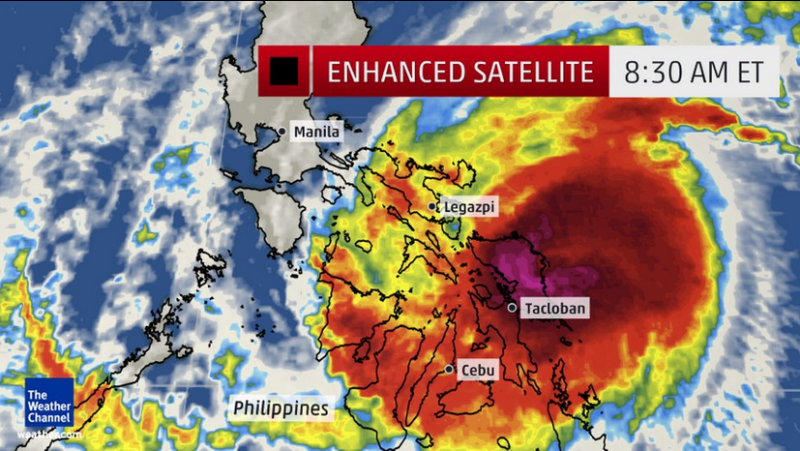
We have created two MicroMappers « Clickers » to very easily and quickly tag tweets and pictures; we call these the « Text Clicker » and…
Voir l’article original 275 mots de plus

J’interviens demain sur ce thème, auprès d’un groupe d’Executive MBA, spécialisé sur les opérations, la supply chain, la planification et l’analyse des systèmes.

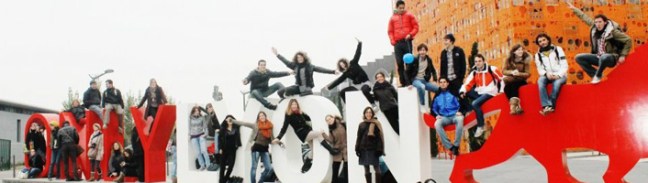
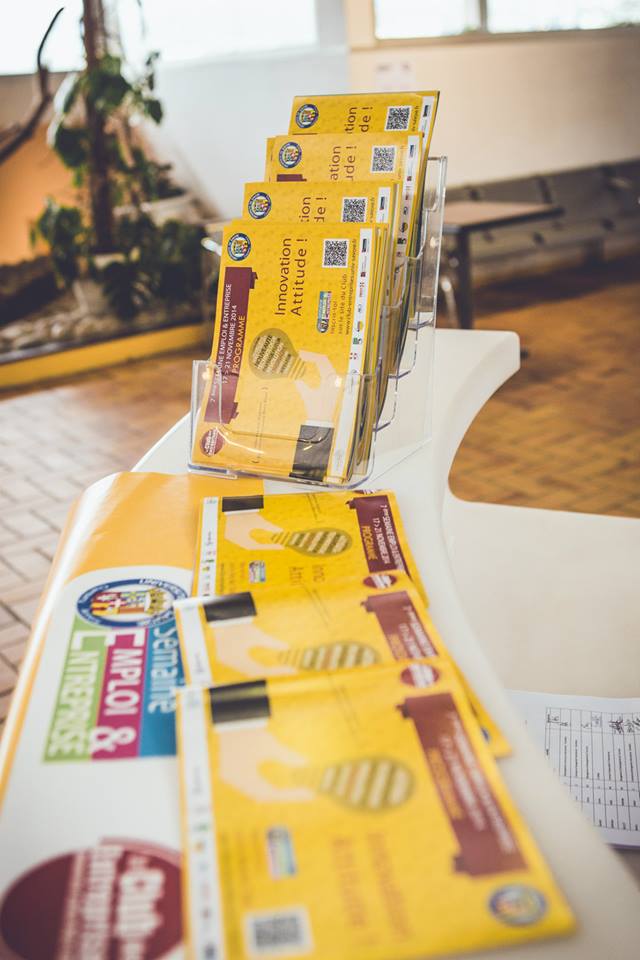
Nous en avons discuté à l’IAE Savoie Mont-Blanc sur le campus de Chambéry lors de la séance pour les étudiants dans le cadre de la semaine « Emploi et Innovation ». Panel remarquable, avec des enseignants, des entrepreneurs, des agences de communication numériques, des représentants des guides et animateurs, et les offices de tourisme.

Nous avons débattu de ce thème lors de la table ronde organisée par Softweb (Aurore, Laura, Clara), en utilisant le smartphone comme exemple principal.
Je participe à une table ronde, la semaine prochaine, au Bourget sur l’Open Innovation avec des grands acteurs de la région et devant une audience d’étudiants passionnés ! L’occasion de parler d’innovation ouverte, d’écouter les opinions des jeunes et de présenter notre livre openmodels.fr


 Shaping tomorrow
Vous devez être connecté pour poster un commentaire.