
Hi,
we will be meeting in Geneva on March 24th for the second time to get organised for the first WikiStage Geneva Innovation event. If you are available, please join us at CrossRoads and register here.
Yves

Education

Hi,
we will be meeting in Geneva on March 24th for the second time to get organised for the first WikiStage Geneva Innovation event. If you are available, please join us at CrossRoads and register here.
Yves
“What are you trying to say?”
Language, communications and technology in the 21st century learning environment
I will attend the Annual SGIS Conference and I very much look forward to meeting
Over the years, SGIS has endeavoured to ensure that the Annual SGIS Conference themes and topics are both relevant and stimulating for its members.
We will be asking ourselves the following key questions and issues:
For more information about the event, please click here.

Many European countries have introduced important reforms in their innovation policies since the year 2000. Countries with traditionally « mission-oriented » policies have introduced many new « diffusion-oriented » instruments, and vice-versa. Are we witnessing a trend towards convergence of innovation policies, and ultimately of innovation systems?
The answer is very simple, and yet quite complex. Simply put the answer is no, we are not witnessing a convergence of policies or innovation systems if that is understood as a unison move towards the same end-point. Innovation policies and systems remain largely diverse in many dimensions: the socio-economic dimension with distinct industrial profile and dynamics; as well as the socio-political dimension with centrally placed actors’ preference for some specific solutions and distaste for others.
What we are witnessing is a series of simultaneous and significant trends towards national reforms of innovation policies, with more or less depth, and with more or less impact in their respective innovation…
Voir l’article original 322 mots de plus
You can find everything we discuss during the WikiStage Kick Off Meeting and you can also like our new Facebook Page.
If you want to become a speaker, get in touch !

Introduction
Government officials, academics, corporates, NGOs, associations, journalists and students and consultants gathered to discuss about Corporate Social Responsibility. A consensus among participants quickly expressed that Geneva has the right ecosystem for CSR and for such an event on global ethics and social innovation. Among the key concepts discussed during the workshop:
Definition of CSR
It is always important to define CSR. Some students attending the workshop mentioned to us that many of their peers do not know what CSR means at all. There is still a lot of room for improvement to clarify the CSR concept. There is a lot of terminology issues, with English vocabulary being not understood. For instance, in countries like India, Latin America, the relationship between business ethics and CSR is not understood the same way.
CSR cannot be an anglosaxon push, it has to be local, from the roots movements to succeed.
Definitions worth looking at, include ISO 26000, the European Union definition, GRI G4 guidelines.
The panel suggests key points to put some structure and help the CSR understanding.
I- CSR : an historical perspective to explain the current situation
How to do business in a responsible way ? How to overcome greed ? are topics which have been very documented. It is not new. What we know about CSR today is built from hundreds yeards of work.
CSR actually is not a new topic. In Geneva for instance, Calvin said yes to economy but in a social and environmentally responsible way. This has continued with the development of capitalism, the anti apartheid movement.
Then we have seen the rise of CSR reporting with all sorts of reports. The priority became the reports. Deviation happened with corporates producing reports not reflecting the true picture of their companies.
II- CSR Nowadays
Enterprises realise that they cannot do CSR alone. We cannot ask one actor, one market players to do CSR if its competitors are not doing CSR as well. Everybody has to be a citizen, to create social value of work and compete in a fair way. In some cases, it means making less profit or less money.
Corporates, present at the panel, have explained to us, that when they do proper governance and good CSR, they “lose” some of their business to other companies who are less vigilant about CSR, their sourcing… This leads in turn to some form of short term competitive advantage to the least responsible companies. It is at least the way it is perceived.
There are certain difficulties to explain to sales departments for instance, who are losing customers or deals, that this is for the good of the company and that in the longer term it is good for the business. Sales individuals are very rarely incentivised properly to support the company’s overall CSR objectives.
This advocates a holistic approach, not at the enterprise level, but a wider lobbying effort at the industry level. It is not only a company which needs to become better at corporate responsibility, but the entire system that needs to change.
This is particularly true for SMEs. SMEs (up to 10000 employees) are special and have special needs in terms of CSR. That is the reason why special literature and White Papers exist for SMEs.
Examples of good CSR practices, mentioned during the workshop
Encouraging spontaneous movements:
Huge Climate Change March in New York
Companies:
Safaricom in Africa
McKinsey
Unilever
Nike
Starbucks
IKEA
Timberland
III- CSR future outlook
Should CSR be top down or a bottom up ?
Students participating in the workshop challenges the efficiency of top down approach. They consider that most students don’t know what it means when they finish faculty. It is a big problem. It is probably not taught properly.
CSR has to be endorsed by CEO and top management to have any chance of success.
That said, if CSR is only a top down approach, it fails miserably. It cannot be English only and it cannot be perceived as a top down approach.
Different shifts happen simultaneously
1- Rise of the reputation economy.
In certain business, we estimate that up to 60% of value is driven by reputation.
2- Difference in what attracts younger employees.
A shift with the new generation. Employees who are 20-30 years old today are less driven by money and profit and more driven by purpose and by the cause.
3- A shift in leadership with the rise of the holistic approach
Companies like Unilever or McKinsey exemplify this holistic approach.
More and more companies understand that doing good mean good business.
This changes the way supply chain is organised, what they do with profit, how they invest.
4- The rise of impact investing
Rockefeller divests from fossil fuel.
Google divests from companies denying climate change.
This represents opportunities for all of us to explore.
Contacts:
Yves Zieba, 0041795611054, yveszieba@ik.me
If you have some time to help with Typhoon Ruby, here is a good way to do it.
Dear MicroMappers,
Super Typhoon Ruby (Hagupit) just made landfall in the Philippines. The United Nations Office for the Coordination of Humanitarian Affairs (OCHA) in Manila has activated MicroMappers to augment their important damage and needs assessments on the ground. Our mission is to identify tweets that refer to urgent needs, infrastructure damage and humanitarian aid. We’ve also been asked by the UN to identify pictures posted on Twitter that show disaster damage. This is exactly the same request we received in response to Typhoon Haiyan last year, which you can read more about here. Anyone who has an Internet connection and speaks some English can join this digital humanitarian effort. You don’t need prior experience or super-hero skills to be a Digital Humanitarian (also known as a Digital Jedi).
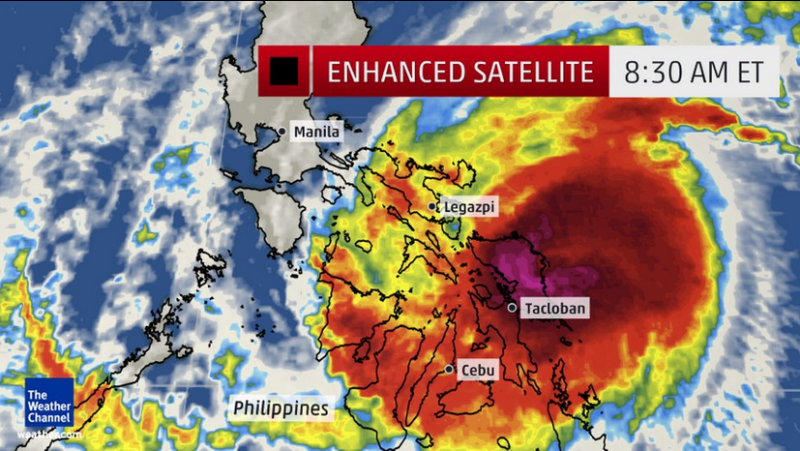
We have created two MicroMappers « Clickers » to very easily and quickly tag tweets and pictures; we call these the « Text Clicker » and…
Voir l’article original 275 mots de plus

Nous avons débattu de ce thème lors de la table ronde organisée par Softweb (Aurore, Laura, Clara), en utilisant le smartphone comme exemple principal.
Je participe à une table ronde, la semaine prochaine, au Bourget sur l’Open Innovation avec des grands acteurs de la région et devant une audience d’étudiants passionnés ! L’occasion de parler d’innovation ouverte, d’écouter les opinions des jeunes et de présenter notre livre openmodels.fr

Le livre Open Models est sorti,
Vous pouvez désormais tout savoir sur les business models de l’économie ouverte. #openmodels
De nombreux contributeurs se sont rassemblés pour produire ce livre, coordonné par Louis-David Benyayer et Without Model.


Je rejoins avec grand plaisir le conseil consultatif de Softweb autour d’Aurore Bui et de sa talentueuse équipe.
Voici ma dernière vidéo sur les fusions acquisitions dans le domaine de l’optique, avec notamment les #smartlenses, les #googleglass, l’acquisition d’Oculus Rift par Facebook.

Voici une belle semaine à Paris, avec visite d’incubateurs, rencontres avec des entrepreneurs passionnants, et participation au Grand Jury de #MadeinESCPEurope (voici d’ailleurs le résumé),

Participation ensuite à « Changer d’ère » (#FCE2014), avec en point culminant la vision à 100 ans du philosophe @VincentCespedes.Voici le résumé de la journée.

Première participation à MediaLab session, dans un décor de rêve, un bagel avec les habitués du Open Coffee Club et pour couronner le tout, une nouvelle formation sur l’accessibilité de luxe.
I attended the local WordPress User Group MeetUp, and heard about the latest development, we also shared experience about themes, child themes and plugins. Great group, I am thinking I am going to attend as often as I can.
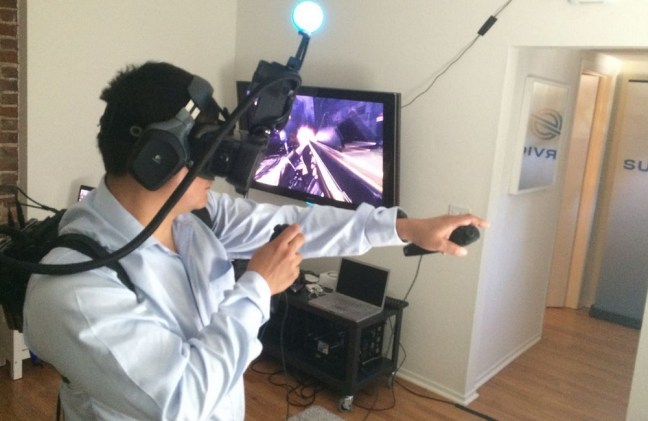
Great video about virtual reality

See on Scoop.it – Educational Technology News
A precise definition of distance education would benefit educators and students but is technology moving too fast?
Retrouvez mon article dans le blog des MOOCs francophones, tout commentaire est le bienvenu.


 Shaping tomorrow
Vous devez être connecté pour poster un commentaire.