
Unlocking AI Value for SMEs and Public Sectors

Rewiring for value: How SMEs and the Public Sector can seize the AI advantage

The era of AI experimentation is over.

According to McKinsey’s “The State of AI: Global Survey 2025,” organizations are moving past pilots and fundamentally “rewiring” their core operations to capture trillions in potential economic value.

With over 88% of organizations now reporting AI use in at least one business function—and the adoption of Generative AI (Gen AI) spiking across the board—the competitive landscape is shifting rapidly.

For Small and Medium-sized Enterprises (SMEs) and Public Sector organizations, this shift presents both an existential challenge and a massive opportunity.

The 2025 survey highlights that the true advantage lies not in adopting the technology, but in the transformation it drives.


1. AI for SMEs: Bridging the Adoption Divide

The McKinsey survey is clear: larger organizations (those with over $500 million in revenue) are accelerating their AI transformation faster than smaller counterparts. This trend signals a growing AI divide, largely because extracting value requires structural changes—including redesigning workflows, dedicating C-suite oversight, and making significant talent investments—which often strain the limited resources of SMEs.

The SME Strategy: Focus on Targeted, High-Impact Gen AI

Instead of attempting enterprise-wide overhauls, the successful SME must focus on adopting AI in strategic areas where low-cost Gen AI tools can deliver immediate, measurable impact:

  • Customer Operations: Deploying Gen AI assistants to deflect routine queries and reduce customer handle time is a low-barrier-to-entry use case cited in the survey findings. This frees human staff to handle complex issues, a direct path to improving customer satisfaction and competitive differentiation.
  • Marketing and Sales: Leveraging AI for content creation, personalized customer outreach, and audience modeling can dramatically boost marketing performance and accelerate time-to-market without requiring large, dedicated teams.
  • Software Engineering (for tech-focused SMEs): Gen AI coding assistants significantly augment developer productivity, allowing small teams to achieve disproportionate output.

From Technology to Transformation

The most crucial takeaway for SMEs is that the value of AI is unlocked through workflow redesign. Simply layering AI onto existing broken processes will yield minimal results. SMEs must:

  1. Prioritize Reskilling: The report notes that organizations are increasingly focused on upskilling existing staff rather than just hiring scarce AI talent. For SMEs, this is vital. Retraining employees to work alongside AI tools (e.g., prompt engineering, data literacy) is more feasible and cost-effective than a large-scale hiring spree.
  2. Adopt Hybrid Governance: Smaller organizations are more likely to use hybrid or partially centralized models for AI adoption. This flexible approach, which distributes some resources across functions while maintaining central oversight for data standards, allows SMEs to adapt quickly without the rigidity of a massive Center of Excellence.

2. The Public Sector: Scaling Efficiency and Trust

For Public Sector organizations, AI’s potential is measured not just in EBIT (Earnings Before Interest and Taxes) impact, but in improved citizen services, operational efficiency, and strengthened compliance. While the Public Sector was not exclusively detailed, the survey’s findings on the necessity of governance and structural change apply directly to government bodies and agencies.

AI’s Value Proposition in Governance and Operations

Public Sector entities must focus on the AI use cases that streamline complex, high-volume processes and enhance decision-making:

  • Operations and Efficiency: Implementing AI for predictive maintenance (e.g., infrastructure), smart scheduling (e.g., transport, resources), and automated workflows can cut operational downtime and dramatically improve throughput—core drivers of public service value.
  • Risk and Compliance: AI-driven anomaly detection strengthens fraud prevention and enhances regulatory reporting capabilities, a critical function for maintaining public trust and fiscal responsibility.
  • Citizen Engagement: Using Gen AI for service portals can deflect routine citizen queries (e.g., license renewals, benefits information), ensuring 24/7 service availability and reducing the burden on human staff.

The Imperative of Responsible AI Governance

A standout theme in the 2025 survey is the maturation of Responsible AI (RAI). As AI scales, so do risks related to:

  • Inaccuracy/Hallucination in Gen AI outputs.
  • Data privacy and cybersecurity vulnerabilities.
  • Ethical concerns around bias and explainability.

For the Public Sector, where services must be equitable and transparent, formal AI governance is non-negotiable. McKinsey notes that executive ownership of AI governance is a key differentiator for success. Public sector leaders must follow suit, moving beyond awareness to implement robust model monitoring tools, formal review boards, and transparency standards for every AI application. Responsible deployment builds the critical public trust necessary for widespread AI adoption in government services.


Conclusion: Transformation, not just technology

The McKinsey “State of AI: Global Survey 2025” serves as a rallying cry:

AI is no longer a side project; it is now a strategy lever.

Whether it’s an SME looking to maximize a small team’s output or a government agency aiming to serve millions more efficiently, success hinges on the willingness to fundamentally redesign workflows and treat AI as a core organizational design question.

The organizations that are succeeding are those focused on embedding AI into their corporate strategy, prioritizing reskilling, and building robust governance frameworks. For SMEs and the Public Sector alike, the future advantage belongs to those who adapt now and start the essential work of rewiring their enterprises for the age of artificial intelligence.

Navigating the future

We are thrilled to announce the publication of a groundbreaking new framework by Yves Zieba, designed to help organizations thrive in an era of unprecedented change.

This work introduces a new paradigm for leadership and strategy, offering a fresh perspective on how to navigate the complexities of today’s business environment. Adaptability is key. leaders must embrace new skills for transforming challenges into opportunities.


What is the framework?

The framework is a strategic model built on core principles, each addressing a key aspect of modern challenges:

  • In a world of continuous and compounding change, the framework emphasizes agility and real-time adaptation. Leaders must foster a culture where teams can pivot quickly in response to new information.
  • It recognizes the dissolution of traditional industry boundaries and the blurring of sectors. Success hinges on collaboration and the creation of fluid ecosystems.
  • As we enter the AI era, historical data and conventional models may fail. This principle highlights the need for strategic experimentation and foresight to navigate uncertainty.
  • The framework advocates for a test-and-learn mindset over linear planning. It encourages organizations to embrace a non-linear approach, seeing failures as learning opportunities.

Harnessing AI: Opportunities for Media Success

Riding the wave or drowning in disruption?

The media industry, still grappling with the aftershocks of digital disruption, now faces an unprecedented challenge: an AI tsunami. This isn’t just another technological tremor; it’s an economic earthquake threatening to sweep away traditional business models and reshape the very foundations of how content is created, distributed, consumed, and, most crucially, monetized.

For news organizations, the stakes couldn’t be higher. Eroding revenues, talent drain, and an increased vulnerability to misinformation are just a few of the perilous costs of inaction. But what if this impending wave isn’t just a threat, but an opportunity?

In his urgent and insightful ebook, « The AI Tsunami, » Yves Zieba, a leading expert in ethical innovation and digital transformation, dissects the profound impact of AI on media, offering not just a stark warning, but a strategic roadmap for survival and success.

Beyond the Hype: Unpacking AI’s Transformative Power

Yves Zieba’s work dives deep into the tangible ways AI is already reshaping the media landscape:

  • Hyper-Personalization and Deep Engagement: Imagine content so perfectly tailored to individual preferences that it fosters unparalleled loyalty and retention. AI-powered models are driving this hyper-personalization, creating deeply engaging experiences that traditional methods simply can’t match. This isn’t just about recommending the next article; it’s about building lasting relationships with audiences.
  • Scaled Efficiency and Niche Domination: The promise of AI extends to drastically reducing production costs and expanding reach. By automating mundane tasks, generating preliminary content, and optimizing workflows, media organizations can achieve scaled efficiency, allowing them to dominate niche markets that were once economically unfeasible.
  • Precision Monetization: New Frontiers of Revenue: The days of broad-brush advertising are numbered. AI unlocks new frontiers in precision monetization, from advanced, highly targeted advertising to the lucrative potential of data licensing and the development of novel, AI-powered products. This shift demands a rethinking of revenue streams, moving towards more intelligent and data-driven approaches.

The Perilous Cost of Inaction

While the opportunities are vast, the cost of standing still is catastrophic.

Traditional media outlets risk eroding revenues, losing top talent to more innovative competitors, and finding themselves increasingly vulnerable to the spread of misinformation in an information ecosystem increasingly shaped by AI. The wave is coming, and those unprepared will be overwhelmed.

An Ethical Compass for a New Era

Crucially, Yves Zieba emphasizes that navigating this AI-powered future isn’t just about technological adoption; it’s about ethical responsibility. « The AI Tsunami » provides a robust ethical compass for media organizations, guiding them through the moral landscape of AI. This includes ensuring transparency in AI’s role, actively combating bias in algorithms and content, and ultimately, protecting user trust in an increasingly complex and algorithmically driven world.

A Strategic Roadmap for Survival and Thrival

« The AI Tsunami » isn’t just an analysis; it’s a call to action. Yves Zieba offers a strategic roadmap for media organizations – from global giants to independent outlets – to not only survive but thrive by embracing AI responsibly. This means understanding the forces at play, identifying actionable pathways, and building resilient, ethical, and impactful media in the age of AI.

Don’t just watch the wave – learn how to ride it.

For media executives, journalists, and anyone concerned about the future of informed societies, « The AI Tsunami » is a vital guide to understanding the profound changes underway and charting a course for a future where AI empowers, rather than diminishes, the vital role of media.

Follow the author https://www.amazon.com/stores/Yves-Zieba/author/B0FJWXC2XF

Unlocking new avenues for growth

The Importance of AI for Entrepreneurs

In today’s fast-paced business environment, the integration of artificial intelligence (AI) is no longer a luxury; it is a necessity.

Entrepreneurs, who are often tasked with wearing multiple hats, can leverage AI to streamline operations, enhance decision-making, and ultimately drive growth.

In this article, I will delve into the significance of AI for entrepreneurs and explore how it can transform their businesses.

Understanding AI’s Role in Entrepreneurship

AI encompasses a range of technologies, from machine learning to natural language processing, that enable machines to mimic human intelligence. For entrepreneurs, this means accessing tools and insights that can significantly improve business efficiency and customer engagement.

1. Enhanced decision-making

One of the most critical aspects of entrepreneurship is making informed decisions. AI can analyze vast amounts of data quickly, providing entrepreneurs with actionable insights. By utilizing predictive analytics, entrepreneurs can forecast market trends, identify customer preferences, and assess risks with greater accuracy. This data-driven approach empowers entrepreneurs to make decisions grounded in evidence rather than intuition.

2. Automating routine tasks

Entrepreneurs often find themselves bogged down by repetitive administrative tasks. AI-powered tools can automate these mundane activities, freeing up valuable time for entrepreneurs to focus on strategic initiatives. From automating customer inquiries through chatbots to managing inventory with AI algorithms, entrepreneurs can enhance productivity and efficiency across various aspects of their operations.

3. Personalizing customer experiences

In an age where customer experience is paramount, AI can help entrepreneurs create tailored interactions that resonate with their audience. By analyzing customer data, AI can identify preferences and behaviors, enabling businesses to personalize marketing strategies and product recommendations. This level of customization not only improves customer satisfaction but also drives loyalty and repeat business.

4. Enhancing marketing strategies

AI is revolutionizing the marketing landscape. Entrepreneurs can leverage AI tools to analyze consumer behavior and optimize their marketing campaigns. With AI-driven insights, entrepreneurs can segment their audience more effectively, target potential customers with precision, and allocate marketing budgets more efficiently. This data-centric approach ensures higher returns on investment and minimizes wasteful spending.

5. Facilitating innovation

Entrepreneurs thrive on innovation, and AI can be a powerful catalyst for creative thinking. By analyzing market gaps and emerging trends, AI can provide entrepreneurs with insights that inspire new product development or service enhancements. Moreover, AI can simulate various scenarios, allowing entrepreneurs to test ideas before launching them in the market.

6. Scalability and growth

As businesses grow, the complexity of operations increases. AI provides entrepreneurs with scalable solutions that can adapt to changing business needs. Whether it’s scaling customer service through AI chatbots or leveraging machine learning algorithms for supply chain optimization, AI helps entrepreneurs manage growth without compromising on quality.

Challenges and considerations

While the benefits of AI are substantial, entrepreneurs should also be aware of potential challenges. Implementing AI solutions requires a clear strategy, investment in technology, and a willingness to adapt to new processes. Additionally, ethical considerations regarding data privacy and bias must be taken into account to ensure responsible AI use.

Learn about AI use cases for entrepreneurs

The importance of AI for entrepreneurs cannot be overstated. By embracing AI technologies, entrepreneurs can unlock new avenues for growth, enhance customer experiences, and improve operational efficiency.

As the business landscape continues to evolve, those who harness the power of AI will be better equipped to navigate challenges and seize opportunities.

As I continue to advocate for the integration of AI in entrepreneurship, I encourage fellow entrepreneurs to explore the potential of AI in their ventures.

Unlocking Potential: Announcing My Latest E-Book in the « 100 AI Use Cases » Collection

In the dynamic landscape of entrepreneurship, adaptability and innovation are key to success. As I continue to explore the transformative power of artificial intelligence, I am thrilled to announce the release of my latest e-book, « 100 AI Use Cases: Empowering Entrepreneurs. »

Why This E-Book?

Entrepreneurs often face numerous challenges, from identifying market opportunities to optimizing operations. This e-book is designed specifically for those who are looking to harness the power of AI to streamline processes, enhance decision-making, and drive growth.

What’s Inside?

The e-book features:

  • Practical Applications: Real-world examples of how entrepreneurs are using AI to solve problems and seize opportunities.
  • Actionable Insights: Step-by-step guides on implementing AI tools tailored to various business models and industries.
  • Expert Advice: Contributions from industry leaders sharing their experiences and strategies for integrating AI into their ventures.

Who Should Read This?

Whether you’re a startup founder, a seasoned business owner, or an aspiring entrepreneur, this e-book is for you. It offers insights that can help you stay ahead in a competitive market and leverage AI as a catalyst for innovation.

How to access the e-book

The e-book is available for download.

Join the Conversation

I’d love to hear your thoughts! Share your experiences with AI in your entrepreneurial journey using the hashtag #AIForEntrepreneurs.

Let’s create a community where we can learn from each other and drive the future of business together.

Thank you for your continued support, and I hope this e-book becomes a valuable resource in your entrepreneurial toolkit!

Together, we can drive innovation and shape the future of business in a rapidly changing world.

Best,

Yves Zieba

Announcing « Beyond the Click »

Your Blueprint for B2B Digital Marketing Domination!

Are your B2B digital marketing efforts falling short in a rapidly evolving landscape? Is your corporate struggling to break through the noise, generate high-quality leads, and demonstrate tangible ROI? We’re thrilled to announce the launch of « Beyond the Click: Ignite Your B2B Digital Marketing with 100 Game-Changing Strategies! » — your definitive guide to transforming your B2B digital strategy from conventional to cutting-edge.

In today’s competitive environment, simply « getting clicks » isn’t enough. You need conversions, loyal customers, and a clear path to measurable growth. This essential e-book moves past basic tactics, offering 100 actionable use cases designed specifically for corporates aiming for unparalleled growth.


What Awaits You Inside « Beyond the Click »?

« Beyond the Click » isn’t just theory; it’s a practical blueprint for innovation. We’ve meticulously crafted chapters that delve deep into the most critical areas of modern B2B digital marketing:

Master Hyper-Personalization & ABM

Discover how to implement AI-driven content recommendations, dynamic website experiences, and tailored outreach that treats every target account as a market of one. Move beyond generic messaging and connect with your audience on a truly individual level.

Unleash the Power of AI & Advanced Analytics

Leverage predictive lead scoring, churn prevention, and multi-touch attribution to make data-driven decisions that save money and drive revenue. Understand your data like never before and make every marketing dollar count.

Optimize Content & Distribution

Craft interactive content, harness short-form video, and atomize your messaging for maximum impact across all channels. Learn how to create content that captivates and converts, then distribute it effectively to reach your ideal audience.

Elevate Customer Experience & Advocacy

Build seamless onboarding, proactive support, and powerful referral programs that turn clients into loyal advocates. Happy customers are your best marketers – discover how to nurture them into powerful advocates for your brand.

Maximize Social Media & Emerging Tech

Drive thought leadership on LinkedIn, explore VR/AR for product demos, and use chatbots for instant engagement. Stay ahead of the curve by leveraging the latest social media trends and emerging technologies.

Forge Seamless Sales & Marketing Alignment

Implement shared dashboards, automated lead routing, and joint KPIs for unified revenue growth. Break down silos and create a cohesive strategy that drives both sales and marketing towards shared objectives.

Boost Website & SEO Performance

Apply advanced technical SEO, personalized landing pages, and voice search optimization for unrivaled organic visibility. Ensure your website is a powerful lead-generating machine, easily found by your target audience.

Dominate Digital Advertising

Master programmatic ads, LinkedIn Matched Audiences, and geofencing for precision targeting and optimized ROAS. Get the most out of your ad spend with strategies designed for maximum return on investment.

Build a Future-Proof Tech Stack

Unify data with a CDP, automate with a MAP, and secure your operations with robust cybersecurity. Learn how to select and implement the right technologies to support your marketing efforts now and in the future.


Each use case in « Beyond the Click » is designed to help your corporate accelerate its digital marketing maturity, streamline operations, and ultimately, unlock immense financial gains by saving costs and significantly boosting revenue.

Stop settling for clicks and start securing conversions. Transform your B2B digital marketing, one powerful strategy at a time.


Ready to ignite your B2B digital marketing?

How Artificial Intelligence will transform Human Resources

AI in HR : 100 transformative use cases

In today’s rapidly evolving business landscape, artificial intelligence (AI) is not just a buzzword; it’s a powerful tool reshaping various sectors, including Human Resources (HR).

The integration of AI into HR processes is set to revolutionize how organizations attract, hire, and manage talent. Let’s explore how AI is changing the HR landscape and why you should consider reading our comprehensive e-book on the various use cases of AI in HR.

The Impact of AI on Human Resources

1. Streamlined Recruitment Processes

AI-powered tools can significantly enhance the recruitment process. By automating resume screening and shortlisting candidates based on predefined criteria, HR professionals can save time and focus on engaging with top talent. Machine learning algorithms can analyze historical hiring data to identify patterns and predict the success of candidates in specific roles.

2. Enhanced candidate experience

Chatbots and virtual assistants are becoming commonplace in HR. These AI-driven tools can answer candidate queries in real-time, provide updates on application statuses, and even schedule interviews. This not only improves the candidate experience but also allows HR teams to manage multiple applicants efficiently.

3. Data-Driven Decision Making

AI enables HR teams to gather and analyze vast amounts of data related to employee performance, engagement, and turnover. By leveraging these insights, organizations can make informed decisions about employee development, retention strategies, and workforce planning.

4. Personalized learning and development

AI can help tailor learning and development programs to individual employee needs. By analyzing skills gaps and career aspirations, AI systems can recommend personalized training resources, ensuring employees receive the support they need to grow within the organization.

5. Improved employee engagement

AI tools can measure employee engagement levels through sentiment analysis and feedback collection. This allows HR teams to identify areas of concern and take proactive measures to foster a positive workplace culture.

6. Predictive analytics for retention

By leveraging predictive analytics, AI can help HR professionals identify employees who may be at risk of leaving the organization. This insight allows for timely interventions, such as career development discussions or improved workplace conditions, to enhance retention rates.

Discover more in my e-book

These are just a few examples of how AI is transforming HR practices. To dive deeper into the myriad of use cases and learn how your organization can benefit from AI in HR, we invite you to read our detailed e-book.

In this e-book, you’ll find:

  • In-depth case studies of successful AI implementations in HR
  • Practical tips for integrating AI into your HR processes
  • Insights from industry experts on the future of HR with AI

Download the E-Book now!

Join the conversation about the future of HR and discover how AI can elevate your HR practices to new heights. Embrace the change and stay ahead of the curve!


By understanding and utilizing AI in HR, organizations can not only enhance their operational efficiency but also create a more engaging and productive work environment.

Don’t miss out on the opportunity to transform your HR strategy—download my e-book today!

Artificial Intelligence: 100 use cases for corporates

Unlocking potential: multiple use cases for corporates to leverage AI

Artificial Intelligence (AI) is no longer a futuristic concept; it’s a transformative force reshaping the corporate landscape. Businesses across various industries are harnessing AI to streamline operations, enhance customer experience, and drive innovation. In this article, we’ll explore the multiple use cases for corporates to leverage AI, unlocking new possibilities for growth and efficiency.

1. Customer Service Automation

Chatbots and Virtual Assistants

AI-powered chatbots are revolutionizing customer service by providing instant responses to inquiries, resolving issues, and guiding users through processes. Virtual assistants can handle a variety of tasks, from scheduling appointments to providing product recommendations, enhancing customer satisfaction while reducing operational costs.

2. Predictive Analytics

Data-Driven Decision Making

Companies can utilize AI to analyze historical data and predict future trends. This capability allows businesses to make informed decisions regarding inventory management, marketing strategies, and resource allocation. By anticipating customer behavior and market shifts, organizations can stay ahead of the competition.

3. Personalized Marketing

Tailored Customer Experiences

AI enables companies to create personalized marketing campaigns by analyzing consumer data and preferences. Through targeted advertising and customized content, businesses can engage customers more effectively, resulting in higher conversion rates and improved customer loyalty.

4. Fraud Detection and Risk Management

Enhanced Security Measures

Financial institutions and e-commerce platforms are leveraging AI to detect fraudulent activities in real-time. Machine learning algorithms can analyze transaction patterns and identify anomalies, allowing companies to mitigate risks and protect their assets with greater accuracy.

5. Supply Chain Optimization

Streamlined Operations

AI can optimize supply chain processes by predicting demand, managing inventory, and improving logistics. By analyzing various factors, such as market trends and consumer behavior, businesses can enhance efficiency, reduce costs, and ensure timely delivery of products.

6. Human Resources Management

Efficient Recruitment Processes

AI tools can streamline the recruitment process by screening resumes, assessing candidate fit, and even conducting initial interviews. This allows HR teams to focus on strategic initiatives and enhance the overall candidate experience.

7. Product Development

Accelerated Innovation

AI can aid in product development by analyzing market trends and consumer feedback. Companies can utilize AI to simulate product performance, identify potential improvements, and accelerate the development cycle, ensuring that new products meet customer needs effectively.

8. Financial Analysis

Intelligent Financial Insights

AI can assist finance teams in automating routine tasks, such as data entry and report generation. Additionally, advanced algorithms can provide insights into financial health, budgeting, and forecasting, enabling better financial decision-making.

9. Natural Language Processing

Enhanced Communication

Natural Language Processing (NLP) allows businesses to analyze and understand human language. This technology can be used for sentiment analysis, enabling companies to gauge customer opinions from reviews and social media, thereby informing marketing strategies and product improvements.

10. Workplace Productivity

Intelligent Automation

AI can automate repetitive tasks, freeing up employees to focus on higher-value work. From scheduling meetings to managing emails, intelligent automation enhances overall productivity and job satisfaction.

Conclusion

The possibilities for leveraging AI in corporate environments are vast and varied. By embracing these technologies, businesses can unlock new levels of efficiency, innovation, and customer satisfaction. As the landscape continues to evolve, companies that adapt and integrate AI into their strategies will be well-positioned to thrive in an increasingly competitive market.

To enable your organisation to use AI and optimize, here is my e-book with more information and a free review:

The connected car: what the future could look like.

connected cars

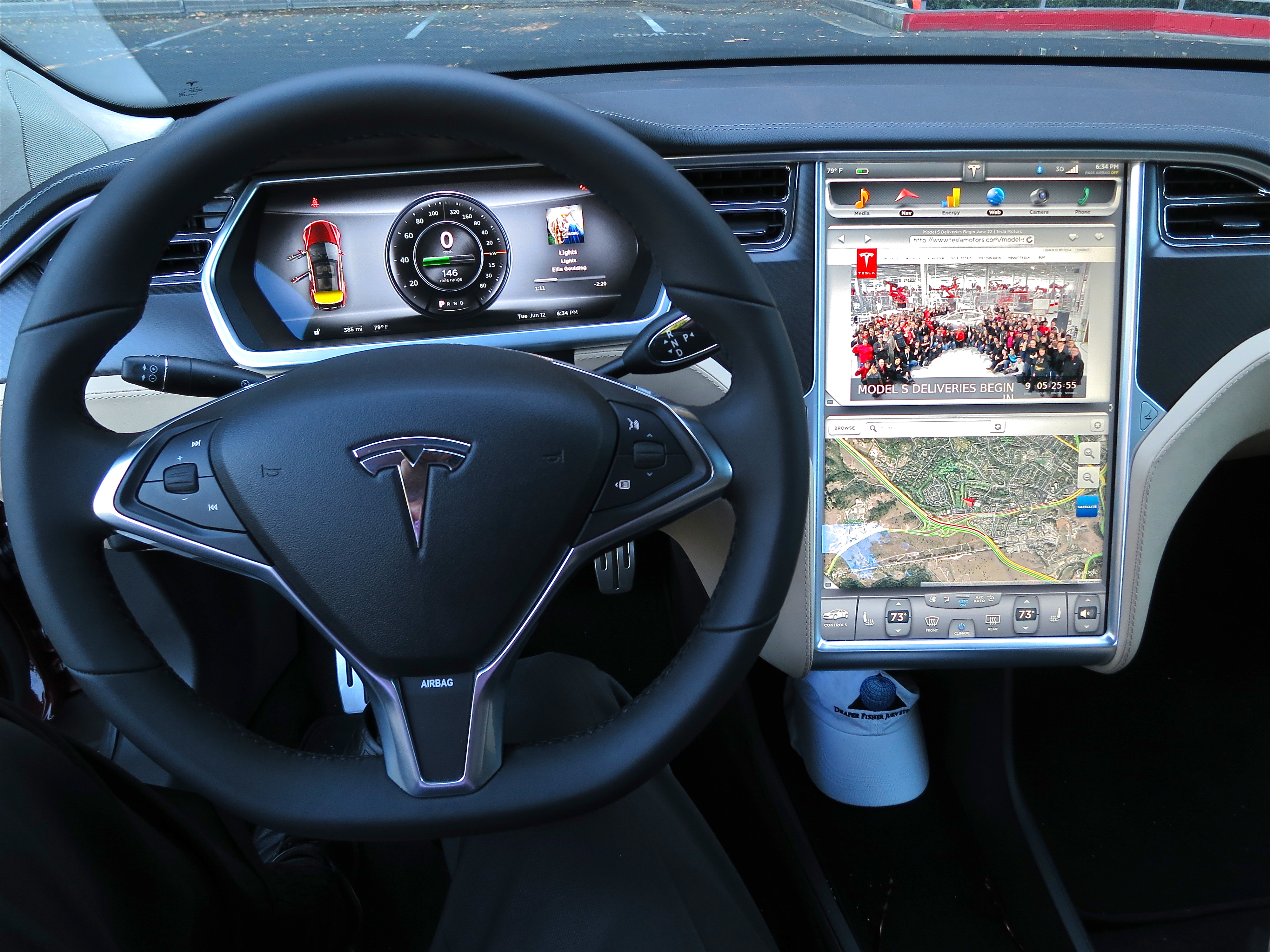
The connected car is equipped with internet connections and software that enable us to stream music, look up movie times, be alerted of traffic and weather conditions, and even power driving assistance services such as self parking or alerting systems in situation of accidents. This market is growing at a five-year compound annual growth rate of 45%, i.e. ten times as fast as the automotive market. 75% of the estimated 92 million cars globally in 2020 will be built with internet-connection hardware. This creates a massive new business opportunity for investors, tech, telecom and mobile start ups and might disrupt the traditional market players in the automotive market. Connected cars prices remain high and are expected to drop significantly in the next few years.

DB9

In technology terms, two approaches prevail:

1- put the internet connection in the car.

2- relying on a secondary device.

Embedded connections don’t require a phone’s data plan to operate. Consumers and carmakers gain access to a wider variety of content and functionalities.

In the near future, we expect to see car companies pairing with wireless service providers to bring internet services to car. This diagram shows the go-to-market process for car apps.

Go to market process for car apps

With internet connections, multiples apps in the car, and now self-driving cars, our roads should be changed for the better. Among the expected benefits: Getting from and to places will be simple, quicker and easier, accidents number will drop, we should see fuel efficiency gains, and therefore fuel economy.

Tesla_Model_S_digital_panels

Mobility 4.0: will we see a new wave of start up companies benefiting from this new business opportunity ?

Apart from Apple and google, will we see the rising and transformation of intelligent mobility, and digital panels, developped by smart startups and entrepreneurs ?

Will we also see new renewable energy solutions and innovative urban design on the back of the « connected cars » emergence ?

The connected cars have a really massive potential to change many things in our cities and on our roads in the next ten to twenty years.

300px-Ombrière_SUDI_-_Sustainable_Urban_Design_&_Innovation