

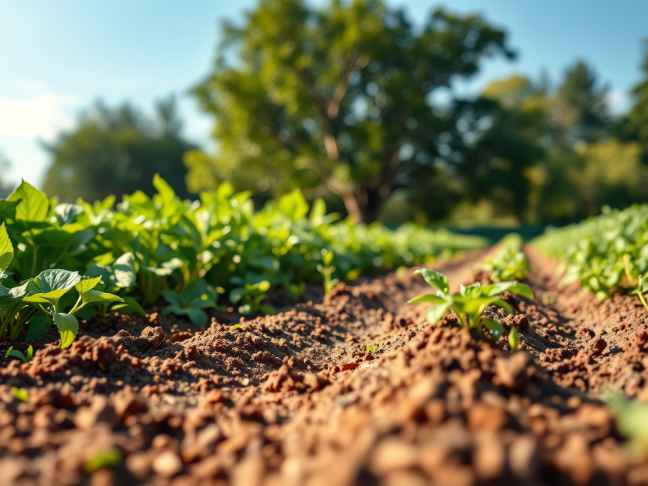
Unlocking a Sustainable Future with FLAG and Certifications
In the vast, interconnected world of food, every meal tells a story. It’s a story of soil, water, farmers, and supply chains that stretch across continents. But as consumers, we’re becoming more aware of another, more urgent part of that story: its impact on our planet.
The global food system is at a critical turning point. It’s not just about what we eat, but how it’s grown, processed, and delivered. This is where two powerful concepts are leading the charge for change: the FLAG emissions framework and sustainability certifications. Together, they are helping the food industry navigate its journey toward a truly green plate.
Why Sustainability is No Longer Optional
For decades, the environmental footprint of our food went largely uncounted. But the numbers are now impossible to ignore. Agriculture, forestry, and other land use activities are a major source of global greenhouse gas (GHG) emissions—think of methane from livestock, nitrous oxide from fertilizers, and vast amounts of carbon released by deforestation for farmland.
This isn’t just an abstract environmental concern; it’s a business imperative. Consumers are demanding transparency, investors are scrutinizing climate risk, and new regulations are making companies accountable for their entire supply chain. For any food business aiming for long-term success, sustainability is no longer a « nice-to-have » but a strategic necessity.
Decoding FLAG: The New Standard for Emissions
To tackle the problem, you first have to measure it. That’s the core idea behind the Forest, Land and Agriculture (FLAG) emissions framework. Developed by the Science Based Targets initiative (SBTi), FLAG provides a specialized, science-based methodology for companies in land-intensive sectors to measure and reduce their emissions.
FLAG is so important because it separates land-based emissions from other sources, giving a much clearer picture of a company’s true climate impact. It focuses on three key areas:
- Land Use Change (LUC) Emissions: The big one. This is the carbon released when forests or wetlands are converted into farmland. Think of deforestation for cattle ranching or soy production.
- Land Management Emissions: The day-to-day. This includes the potent GHG emissions from farming practices like fertilizer use and livestock’s digestive processes (enteric fermentation).
- Carbon Removals: The good news. This accounts for activities that actively pull carbon from the atmosphere, such as regenerative farming practices and reforestation.
For food companies, FLAG is a game-changer. It forces them to look beyond their factories and measure their impact all the way back to the farm, addressing what is often their largest source of emissions.
Certifications: Your Guide to Verified Action
While FLAG provides the « what » (the data and targets), sustainability certifications provide the « how » (the roadmap for action). These are independent, third-party seals that verify a product or company meets specific environmental, social, and ethical standards.
Think of them as shortcuts for trust. Instead of just taking a company’s word for it, you can look for labels like:
- Organic: Verifies farming practices that prohibit synthetic pesticides, herbicides, and GMOs.
- Fair Trade: Guarantees fair prices and working conditions for producers in developing countries.
- Rainforest Alliance: Focuses on biodiversity conservation and sustainable livelihoods.
- Regenerative Organic Certified (ROC): The gold standard for practices that go beyond sustainability to actively improve soil health and sequester carbon.
- Certified Humane: Ensures the ethical and humane treatment of farm animals.
These certifications provide a structured, verifiable way for companies to implement sustainable practices and communicate their efforts to you, the consumer.
The Power of Working Together
The magic happens when FLAG and certifications work in synergy. FLAG provides the data that helps a company understand where its biggest impacts are, and certifications offer the pre-vetted, on-the-ground solutions to address them. A company using FLAG might find that its biggest emissions come from fertilizer use; it could then choose to pursue an Organic certification as a verifiable way to reduce those emissions.
This combined approach is the most powerful tool we have for meaningful change. It offers the rigor of science-based measurement alongside the transparency of third-party verification, helping to combat greenwashing and build genuine trust with everyone in the food system.
The challenges are real—from collecting granular data across complex supply chains to providing financial support for farmers to transition to new practices.
But the future is bright with innovation. From precision agriculture and alternative proteins to blockchain for traceability and new carbon farming markets, the food industry is ripe for a sustainable revolution.
More info in my latest ebook
In the same collection : https://www.amazon.fr/dp/B0FK2X51G4
From the same author : https://www.amazon.fr/stores/Yves-Zieba/author/B0FJWXC2XF


 Shaping tomorrow