

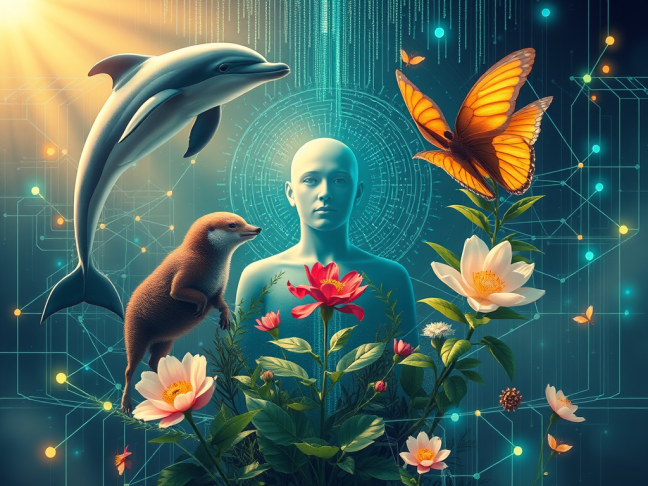
Embracing « Intelligence(s) »: A Journey Through Human, Animal, Plant, and Artificial Intelligence
In an age where the boundaries of knowledge are constantly expanding, the concept of « Intelligence(s) » invites us to explore the diverse forms of intelligence that shape our world. This multifaceted exploration encompasses not only human intelligence but also the remarkable capabilities of animals, plants, and artificial systems. Each form of intelligence offers unique insights and perspectives, enriching our understanding of life on Earth and beyond.
Human Intelligence:
The Power of Thought and Emotion intelligence is characterized by our ability to think critically, solve complex problems, and navigate the intricacies of social relationships. It encompasses cognitive functions such as reasoning, learning, and emotional intelligence—the ability to understand and manage our own emotions and those of others.
As humans, we possess a unique capacity for creativity and innovation, allowing us to develop technologies, art, and philosophies that reflect our experiences and aspirations. Yet, with this power comes responsibility. We must harness our intelligence to address pressing global challenges, from climate change to social inequality, ensuring that our progress benefits all of humanity.
Animal Intelligence: The Wisdom of Nature
Animal intelligence, though different from our own, showcases a remarkable array of adaptations and problem-solving skills. From the intricate communication systems of dolphins to the social structures of elephants, animals exhibit intelligence that is often deeply attuned to their environments.
Studies in animal cognition reveal insights into their emotional lives and social behaviors, challenging our preconceived notions of intelligence. For instance, crows are known for their tool-making abilities, while octopuses demonstrate problem-solving skills that rival those of many mammals. By understanding animal intelligence, we gain a deeper appreciation for the interconnectedness of life and the importance of biodiversity.
Plant Intelligence: The Silent Sentinels
While often overlooked, plant intelligence represents a fascinating frontier in our understanding of life. Plants possess sophisticated mechanisms to sense and respond to their environment, from the way they grow towards sunlight to their ability to communicate with one another through chemical signals.
Recent research has shown that plants can exhibit behaviors akin to learning and memory. For instance, some plants can « remember » past environmental conditions and adjust their growth accordingly. This silent intelligence challenges our traditional views of sentience and highlights the intricate web of life that connects all living beings.
Artificial Intelligence: The New Frontier
Artificial intelligence (AI) has emerged as a powerful tool that mirrors certain aspects of human intelligence. Through machine learning and neural networks, AI systems can analyze vast amounts of data, recognize patterns, and even generate creative content. From virtual assistants to advanced robotics, AI is transforming industries and reshaping our daily lives.
However, as we develop these technologies, ethical considerations arise. We must ask ourselves: How do we ensure that AI serves humanity and promotes social good? By fostering collaboration between researchers, policymakers, and the public, we can guide the development of AI in a direction that aligns with our values.
The Path Forward: Integrating Intelligence(s)
As we explore these diverse forms of intelligence, we find that they are not mutually exclusive. Instead, they interact in complex ways, influencing one another and enriching our understanding of life. The challenge lies in integrating these perspectives to create a holistic view of intelligence.
Education plays a pivotal role in this integration. By fostering curiosity and encouraging interdisciplinary approaches, we can inspire future generations to appreciate the richness of intelligence in all its forms. Collaborative initiatives, such as community science projects and interdisciplinary research, can bridge gaps between disciplines and promote a deeper understanding of our world.
Conclusion: A Shared Journey
The exploration of « Intelligence(s) » is a shared journey that invites us to reflect on our place within the web of life. By recognizing the value of human, animal, plant, and artificial intelligence, we can cultivate a more compassionate and informed society. Together, let us celebrate the diversity of intelligence and work towards a future where all forms of life thrive in harmony.


 Shaping tomorrow